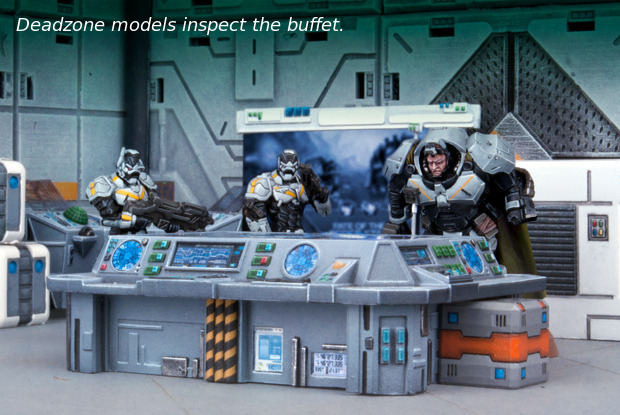
 One of the things that distinguishes Mars Attacks from Deadzone is the way it deals with the different levels of model. In Deadzone everyone is an individual with some degree of importance, much as in the real military. Different duties that all go together to make the military machine work. The difference between leaders, troopers and specialists is their job rather than their level of fame and glory (as it were). DZ is thus based on a realistic¹ view of the world.
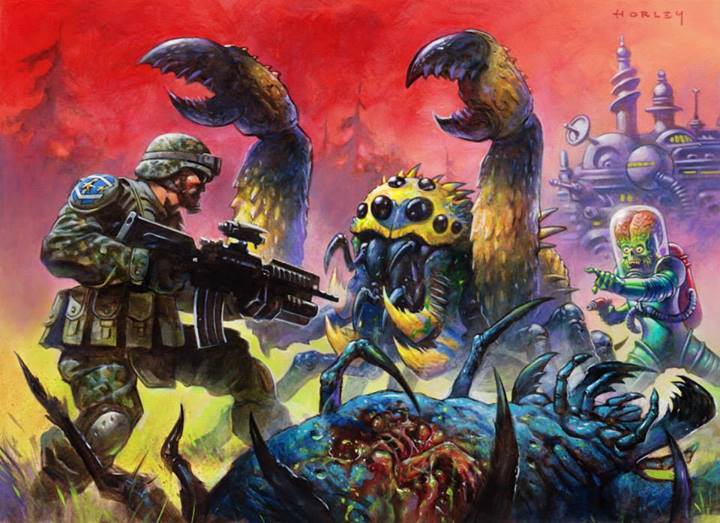
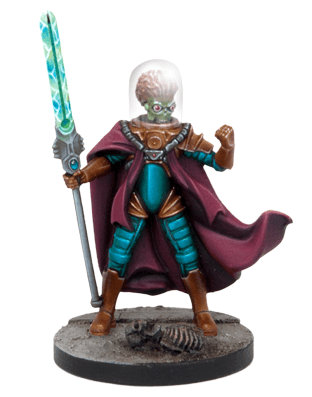 Mars Attacks comes from a brash and exaggerated comic style universe and so everyone is divided into two camps: the heroes around whom the story is built, and everyone else. The “everyone else” department often makes up the bulk of the headcount in a scenario, but they are really just there to show how great the heroes are, either by falling to their mighty attacks or by threatening them so they can use their wit and cunning to escape. Just as with any pulp novel, classic comic, or blockbuster movie, you need the plebs to make the heroes look good. This is not a realistic view of the world.
Coming from these two disparate views of the universe, both games naturally need to do different things to best reflect their own world.
We’ve talked about DZ before, so let’s look at Mars Attacks.
Invasion!
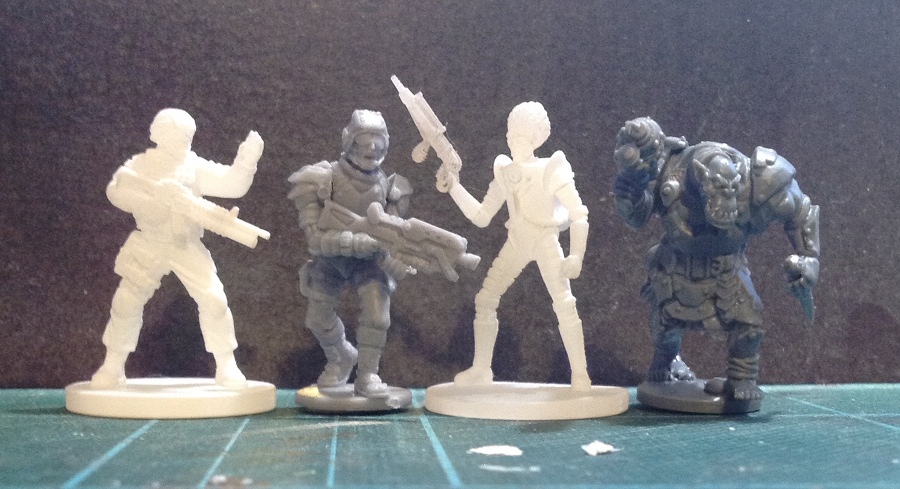
Mars Attacks divides models into Soldiers and Heroes. If you’ve played the beta then you’ll have seen the soldiers in action. They are versatile and skilled, but have a nasty habit of dying very quickly and in droves. Each one is interchangeable with the others of that type. They work en masse.
 Heroes, on the other hand, are all different and tend to work quite happily as individuals (or very occasionally as pairs). Some are fighters like the bulk of the soldiers, but better. Others are leaders and can inspire the soldiers (or other heroes) to greater feats of arms. Still others have more unusual skills such as repairing alien weaponry and equipment, hot-wiring cars, negotiation, stealth, first aid, and so on. This description hides a further level of variety. Even those heroes who share a type of ability may well achieve it in a different way. For example, a hero with a rocket launcher is a fighting hero, as is a skilled brawler. On the tabletop they work very differently though, and the missions you’d really want them to help with aren’t the same.
Of course, every hero shares the same stats as the soldiers as well, so they may have some skill at arms even when their main focus is in repair or acrobatics.
The way Mars Attacks defines these skills is by giving each hero an additional stat called Smarts. This basically means what makes them a stand-out hero in the first place and can vary between models. It isn’t a number, but a special trick they can do under certain circumstances.
I’ll be coming back to the heroes later and we can talk about some specific examples then. For the moment, just be aware that the larger-than-life world of Mars Attacks includes plenty of larger-than-life heroes 🙂

1: Yes, I know, “realism” in SF. Tsk, tsk! What was he thinking?
Obviously the Warpath universe isn’t real. In this context “realistic” is simply a shorthand meaning consistent and credible, conforming to a consistent set of physical laws and with people that behave in a recognisable and reasonable manner. Or something like that. If aliens, space ships, blasters, travel to extra-solar planets and so on were real, then it could work like this.
Also, the definition of what is “real” may offend some of the philosophers in the audience, in which case I apologise for making sweeping statements. I know it’s far more nuanced than that in real reality 😉

 The first saturday of the month is almost upon us again, and normally that would mean a God of Battles day over at Foundry. However, on the 2nd of November the Foundry crew are all over in Antwerp at the Crisis event and so won’t be on hand to open the store. That means no event.
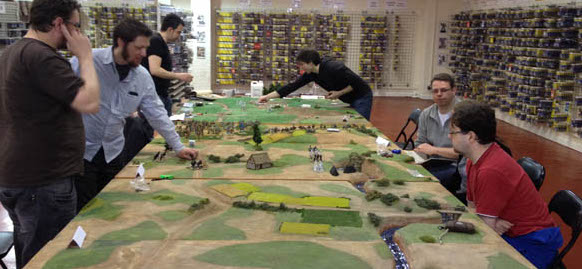 Apologies to anyone who is missing their fix of GoB. You’ll just have to fight amongst yourselves! As I’m feeling bold, I’m having a game today against the winner of the tournament we had the other day. Let’s see how the Orcs fare 😉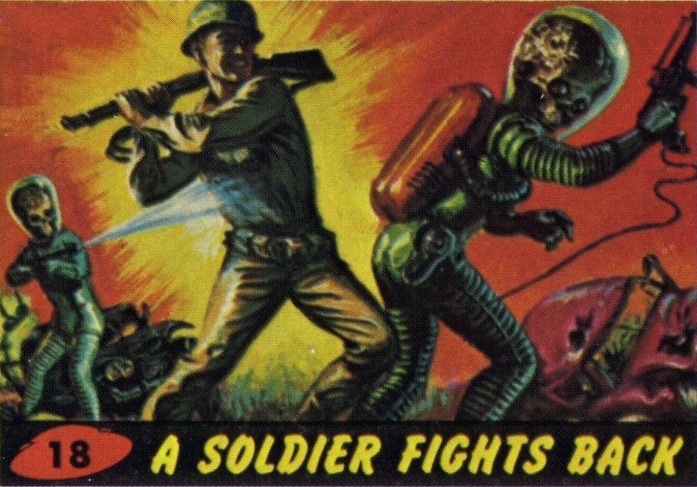





 Quirkworthy