Trollslaying Sonnet

Back when I was talking haikus, I mentioned that I had written some sonnets about Trollslayers. I did say don’t ask, but some of you insisted so here’s the first of them for your amusement:

Trollslayer

A silver glitter arcs across the gloom
The answer rains in blood across the floor
And every fighter struggling in the room
Is spattered with the ichor and the gore

He does not quail to enter in the tomb
Or flee in terror from the Dragon’s roar
To fight the largest monsters is his doom
And none but Death is there to keep the score

He’s fighting not for clan or hearth or home
But purging stains his honour can’t ignore
And though the love of kinfolk in him blooms
He’ll never more see welcome at their door

The bravest of them all who stands so fast
Fears every shameful breath except his last


Posted in Random Thoughts | 5 Comments

Orc Warlords Army Diary – Part 3: Tiny Steps Forwards

I was supposed to get some painting done for today’s post, and failed in that. I actually got the stuff out, and then thought that with a new airbrush due to arrive tomorrow it would be a bit pointless trying to work out how to paint the Orcs with a brush when the whole idea was to use the fancy new toys.

So I put them away again.

I have made a little progress though, working out what needs converting among the orcs and ordering (or trying to order) some Red Box goblins. They’ve got a KickStarter up for just those models in plastic, and though it’s a good deal I’m hoping that I’ll be finished well before the September delivery date, so I’ve gone for the metal ones. No reply from the local stockist to 3 emails though 😦

Oh, and I’ve got some procreate too so I can try that instead of green stuff.

One thing that I didn’t do before, but which I can do now, is to tell you about the army composition. Now the God of Battles rules are public I don’t have to keep things under my hat any more 🙂

So, the 24 point Orc Warlords force I’ve gone for is as follows:

Main Force Units

  • 2 x war orcs @ 6 points each = 12 points
  • 2 x goblin rabble @ 3 points each = 6 points
  • 2 x goblin pests @ 3 points each = 6 points

Total = 24 points

Command & Support

  • 1 x greenskin shaman @ 17 points
  • 1 x goblin wolf chariot @ 6 points

Total = 23 points

Total models = 57 + 1 chariot

So I have 1 point unused from C&S, but that’s not a worry.

In The Mix

I’ve tried exactly this force out once recently, and it did well on the tabletop. That was something of a (re)training scrap as neither of us had played in ages, and my opponent never very much. It was fun though, and worked much as I recalled: fast and bloody.

This force is also a good core army with a lot of solid, simple units and none of the fancy stuff from the main force (ironskins, wolf riders, raptor riders). That means that I’ve got a firm foundation of battle-worthy units to build on if I want to expand the army to 36 points or more later.

The C&S selection is a little harder to be certain about, and some orclings and bolt throwers are tempting. The great thing is that it’s only a handful of models to tinker with the army like that. Once you’ve got a core force painted then adding extras or variant army builds is (as I designed it to be) relatively inexpensive in both money and time.

Of course, as I really want to keep the shaman in the mix I’m going to have to expand the army size if I want to give him a bodyguard of nutters or include a mountain troll. They’re both too good and too many points to squeeze everything into just 24. Again, this decision making requirement is all part of the design 🙂

Posted in Painting & Modelling | 13 Comments

A Different Kind of Magazine

Continue-masthead-rounded-cuts2

These days a shiny new KickStarter campaign appears over the horizon every few days – or at least it seems so. There are a plethora of worthy projects clamouring for your attention and it can be easy to miss out on some of the cool ones.

continue pages 2Today I’d like to point out one project that I think you might want to have a look at: Continue magazine. I’ll let them tell you about why this is a different kind of gaming magazine, and only add the thought that I think they’re right. Continue is gorgeous to look at and is indeed full of a kind of article we see all too few of. They’ve got some examples on the site for you to see for yourself.

Anyway, let them explain.

Continue pages


Posted in Random Thoughts | 4 Comments

DreadBall Results Tracker

DB logoHere’s something to stir debate.

A tech-savvy DB fan called Alex has set up this elegant online database to track and collate results of DB games worldwide.

It’s a simple, 3 step process:

  1. Play your game.
  2. Input your results.*
  3. Ponder over the collated data.

DB database collated

This is potentially really useful for me, and interesting to you. If you play a game then I’d urge you to add the data here. The more we can collect, the more useful it will be.

I’ll be coming back to this when it’s got some more results. Intriguing stuff though, and great work Alex!

line

*if you are playing in a league I’d suggest that your league sponsor inputs the results. This way we avoid duplicate entries for the same game which will skew the results.


Posted in DreadBall - The Futuristic Sports Game | 20 Comments

God of Battles Designer’s Notes: Basing

GoB_LOGO on white webOccasionally, even designers of fantasy games have to face up to reality.

Nice as it might be to imagine everyone dropping their current game system and flocking to your latest work of (undoubted) genius, in the real world this probably won’t happen. Some will be intrigued, others may dabble and a few will take to it entirely. This is simply the way of things and applies to everything, not just games.

This being the case, I thought that it seemed like a really dumb idea to try to enforce a new and rigid basing policy on people. And what is the need anyway? The more I considered this the less important I thought the basing was. In the end God of Battles has such a freeform and open system that pretty much any basing system can be used.

This doesn’t mean that there isn’t an ideal basing method. Far from it. It just means that you don’t have to feel like you have to rebase anything to play.

The Ideal

As a statement of basic principles let me first say that I think bases are mainly there for two purposes: (1) to stop the model falling over, and (2) to look good. I am personally experimenting with using clear bases on my new orc warlords army, which takes care of 2. For the rest, the bases just have to be big enough to keep the model upright. How big that is really depends on the make, type and pose of each model. There is no reason why every model has to use the same base size, even within the same unit (though variations may make ranking up Formed models more of a fiddle).

Apart from that, this is the way I would recommend you base things if you are doing it purely for GoB. Assume, to start with, that all models are based individually.

Formed units: as the unit needs to rank up, the obvious thing to do is base them on squares. This also makes it simple to work out the 90 degree arcs (front, flanks, rear) when you need to.

Loose units: as the models never rank up, I’d suggest putting them on round bases. This acts as a visual reminder of their 360 front arc, but is at least partly due to a personal preference for round bases on skirmishing units. It’s also useful because this is different from the Formed ones and makes them stand apart. Great for sorting the models out quickly when it comes to packing away.

Multiple bases: these are only really useful for Formed units where you could include some 2, 3 or 4 model bases for speed of movement, casualty removal or to make a cool looking mini-diorama. Even here they are not necessary if you have a movement tray for the unit.

Base sizes: in some ways you might think that I have been a little foolish here in assuming that people are going to behave like grown ups. By not listing exact required base sizes am I not leaving all this open to being horribly exploited? Well, perhaps not as much as you’d think.

To start with the real extremes of two foot wide bases are just stupid and anyone who expects a game with that sort of nonsense would be in for a nasty shock round here. Normal social graces should ensure that this sort of nonsense stays in the scope of amusing “what if’s”.

On a more practical scale, what if people just push things slightly? Well I don’t think that matters either. For the sake of argument, let’s assume that the norm is the old Warhammer standbys as that’s what most people will be familiar with: 20mm squares for humans and 25mm for bigger things like orcs. If that is what works for the rules as is, what happens if I was to put my humans on 30mm bases? 40? Does the game creak? Actually, no. For Loose units this makes no real difference at all. For Formed units, when you weigh up the pros and cons, I think that it’s more of a problem than a help.

On the positive front it allows you to cover more of the tabletop, which reduces your flanks. It gives Formed units a wider Threat Area, and so you can potentially control your foe a little better. So there would be a few benefits. The downsides are more problematical.

Bigger Formed units still have no more movement or manoeuvrability – they just get in the way of everyone more. This is probably more of a problem for your own side than the enemy (who tend to go through your troops rather than round them).

Bigger Formed units have no more combat power, but now have to hold a greater area of the battle line simply because of their size. In effect, this just weakens your line, allowing the enemy to more easily focus several of their units onto one of yours. If you want to do the same thing back then focussing two of your bloated units on his normal sized ones becomes very hard.

When I was playtesting with various army basing systems I learned to instinctively go for the smaller bases when I had the choice. Is that a problem? Well if we assume that you’ve got to fit a model on the base then again, not really. You can only squeeze a 28mm model down so much. Of course, if you wanted to play this with 10mm models then you’d need to think about this a bit, but I don’t intend to and this isn’t really what GoB is for. That’s something for people to house rule if they want to play with other scales.

Many & Various

During playtesting we used all manner of armies and models pinched from a wide mixture of fantasy and historical armies – many for different games with different basing conventions.

Formed units are uncaring as long as they can all huddle together. Skirmishers looked like they might have more trouble, but in the event we used units with models based on 4 figure stands, other times they were in twos, singles or whatever. As long as you can tell where the Leader is then it doesn’t really matter.

It’s actually quite liberating to be able to forget about basing from a rules viewpoint. Build your models from a “what looks best” perspective and they’ll work fine.

Posted in Uncategorized | 6 Comments

God of Battles Designer’s Notes: What’s the Difference?

This article is sparked by a response to a comment Minitrol made on another GoB article. Rather than try to fit this whole ramble in the comments I thought I’d give myself a little more space, and make it easier for other people who might be interested to find it later.

So what’s it all about? Let’s start with Minitrol’s comment. It reads:

line

“I’ll admit I am slightly cautious about buying another Foundry release there seemed little love for Tribes of Legend – is the intent for it to be a one off or will there be more support? I really tried to drum up interest last time but it was a damp squid (tee hee).

I like the sound of the rules but forgive me for saying I am not yet seeing anything different that God of Battles offers that couldn’t be supplied via Kings of War or Hordes of the Things or even Realm FW which is free…

Don’t get me wrong I am all for rules sets that allow me to use my existing miniatures (that was my primary focus for 2012!) but could you provide a bit more info on what makes this set unique or what you feel makes it ideal. You have mentioned this was the rule set you were writing more for your self so why is that?

Thanks Jake I am a fan of nearly everything you write – hopefully some buzz does build and we get some other views as well!”

line

He makes a few points that I’d like to drag out and look at more closely:

  1. Support for games – how much is enough?
  2. What are the major differences between GoB and WFB, KOW, etc?
  3. What makes God of Battles “ideal”?

I’ll take them one at a time. Oh, and before you imagine that I’m having a go at Minitrol, this is not intended to be critical of him. He’s the messenger, and I don’t shoot them 😉

Support

The idea that games must have a constant flow of extras in order to be worth playing is an attitude I come across increasingly and was simply not around when I was a kid. These days it seems that games must bombard the individual with a constant stream of expansions and add-ons otherwise it is somehow not worth playing.

Why?

Is this simply the result of years of brainwashing by companies that must get the customer to buy something every month? GW’s cycle of replacing its core games, army books and ranges is the best known example of this, but it is not the needs of the game that drives it, but the needs of the balance sheet.

Let’s look at a few other games. DBA is a good example of a brilliant game that has not felt the need for a slew of additions over the years. It works as is so why clutter it up with extras? It has been given new editions as the game required rather than to a set timetable for releases.

When was the last major update for Chess? Aren’t they overdue for a new Black Army Book? I mean, white has all the advantages, what with going first and all. Clearly broken… yet people still play it.

My question, I suppose, is this: if a game is complete, and the model range is all there waiting, what else do you want? What else does the game actually need? Surely you just get on and play it. Why must it be continually fiddled with? Very, very often this commercially-driven flurry of expansions will make the game itself (as a playing experience) worse rather than better. As an extreme example of this ridiculous behaviour I was told by another designer of a time they were asked by a publisher to produce an expansion for a new game. He said there was no need as the game was designed to be complete as it was, but that he’d be happy to design another game if they wanted. No thanks, said the publisher, who then cut the original game in half so that they could release part of it as an “expansion” later, releasing the first half of the game in a state that essentially didn’t work and made little sense.

Personally, I think some games need expansions and others don’t. As I’ve said before, I see my own designs as a whole. Depending on how big that whole is, they might need to be chopped into 2 or 3 parts to be viable commercial products. DreadBall is a good example of my vision of the whole game being bigger than a single boxed set, hence Season 2, Ultimate and Xtreme. Other games, like Tribes of Legend, are complete as they stand. You can always add things if you have to, but what I’m talking about here is the natural size of the piece.

Now there is a big difference between this way of expanding a game (where all the expansions are part of the overall design from the outset) and the one that GW, Privateer and others seem to be using which is that you simply go round forever, doing new editions and replacing things in sequence so that you always have something new and shiny to sell. If that works for them, then that’s cool. I just don’t think it should be seen as a requirement because when you come at things from a stance of wanting the best game rather than steady products then it isn’t all that helpful.

My thinking is that there are always more cool games to make, and that you can easily maintain a series of shiny new toys by producing new things instead of unnecessarily faffing about with the old. For Mantic I have done DKH, DKH2, DKH3, PP, DreadBall, Season 2 and more is in the pipeline. We haven’t simply revised the first thing we thought of, nor is there any need to.

So what am I saying? It’s simple: GoB will have all the support it needs. ToL was supported by Foundry producing a complete range of models for every army and game in that set (the book has 3 games in it). As far as I’m aware there was nothing outstanding – in fact they made more things for several armies than were even listed. I don’t really see what support they were failing to provide.

Now that Foundry has a new management I can’t say what they will offer in support of God of Battles. What I do know is that just as with Tribes of Legend they have made models of everything you need for all 10 armies, and if they aren’t out now then I’d expect them to be released over the coming months. Naturally, with that many armies there will be variants, vignettes and other things that can be added in due course, but these will be small in number when you compare that to the work they’ve already done.

Many months ago I discussed a possible additional book with the previous management, but have no idea whether that will still be on the cards. Even so it is far from essential. God of Battles was written to be a complete, stand-alone product and it needs no add-ons. An extra book would mainly focus on adding depth to the background in a campaign.

Of course, whatever Foundry choose to do, I will be providing support here for God of Battles in the form of continued articles and a FAQ. I’ll also be doing articles on building an army or two and if I happen to play a scenario that might be fun then, well, you get the idea.

What’s the Difference?

I can, and will, go on at length about this, but I expect you want a summary. Actually, I’ll start with the summary that Ben posted in response to Minitrol. He is comparing GoB to KOW having played both games:

line

Both games are mass battle fantasy games and have some overlap in which armies they allow you to use (not a bad thing IMO). Both are unit-buy systems and utilise unit leaders for measuring distances and LoS (albeit in different ways) and both have streamlined movement and magic systems in comparison with WFB. Both games can also be played in a couple of hours or less. These are the similarities.

The primary difference between them as I see it is a fundamental difference in their approach to gameplay. KoW is an abstract system that provides its players with perfect information and is the nearest thing that a mass fantasy battle system gets to chess. GoB takes a more narrative approach and uses mechanics such as scenarios, strategems, alternate unit activation, weather, and the card-activated miracles system to achieve this. I certainly don’t see how anyone could play both games and conclude that the experience was the same. That said, given the overlap between some of the army lists you can easily play both games with the same army and get two entirely different playing experiences for the price of one. In that respect both systems are a bargain and I’d urge anyone playing KoW already to pick up GoB as you’ll likely be able to dive straight in.

line

I’d quibble about a detail or two, but on the whole I think Ben’s pretty much on the money there. Much the same could be said for HOTT as that is also a perfect informaiton game. GoB is decidedly not.

I think I’ll leave it there for now.

A Personal View

Is God of Battles the ideal fantasy battle game? For me, yes it is. For you?

When I designed God of Battles I was given almost completely free reign to make the game I wanted. Foundry needed a fantasy game to support their ranges, and as long as they could use it to bring the ranges together and give them a home then they had no particular axe to grind about the mechanics. I wrote a brief and then a short piece about key concepts and they were sold. Part of this ended up at the start of the book, and it might help to quote some of it here. This was what I was thinking when I sat down to design it:

line

“The key concepts that I wanted to focus on in God of Battles are:

  1. simple set of rules that is easily memorable so that, during a game, players can get on with playing and not have to look anything up.
  2. Constantly evolving challenges that require interesting tactical decisions from both players throughout the game.
  3. The constant involvement of both players with minimal waiting between turns.
  4. Battlefields that are as characterful as the armies, and for them to be integral to the game instead of being an afterthought.”
line

So that was the plan. Did I achieve that? I think I did. You need to try it out for yourself to know for sure. And I’d recommend trying it out, not just reading it. You really won’t see the excitement of the game and the challenge of the decisions on paper.

There’s lots more to why I like the game, though it all flows naturally from having the opportunity to design what I wanted. I like games to come to a natural end and not just stop because it’s turn 6, or we’ve had 90 minutes each. GoB does that. I like there to be an ebb and flow, for people to be able to outfox each other and for there to be a healthy lack of certainty – just like there is in real battle. GoB is like that. I like games that tell stories, and GoB does that too.

I suppose that one of the more telling facts is that of all the many, many projects I have pencilled in for my own self publishing efforts, a fantasy mass battle game is not one of them. I simply have no need.


Posted in God of Battles | 26 Comments

God of Battles Available Now!

GoB_LOGO on white webFoundry have added God of Battles to their website, so if you want to grab a copy now you can!

I’ll be posting some more articles on various aspects of the game design over the next few days. As ever, if you have any specific questions about it then ask away 🙂

Great to see it finally available!

Posted in God of Battles | 2 Comments

God of Battles Designer’s Notes: Formed and Loose

GoB_LOGO on white webOne of the core concepts for God of Battles is that all units fall into one of two broad types: Formed and Loose.

Formed units are the sort of regiment you’ve seen in Kings of War, Warhammer or any other game where troops fight in ranks and files, shoulder to shoulder (base to base). In God of Battles this has a fixed formation of 4 models wide with the Leader in the front rank. Depth depends on the number of models listed as part of the unit. This formation only changes as a result of losses in battle.

Loose isn’t a reference to their morals; it simply describes the unit’s formation which is loosely scattered. The models simply have to remain within 4 inches of their Leader and their positioning can change every turn. Easy. This is the classic skirmish unit and works equally well for the nymphs in Quithnilian’s armies and the psychotic beastmen of the Blood Gorged tribes.

Orcs_Vs_Elves

This picture shows a unit of mercenary ogre gunners (Loose) facing a couple of units of City Guard (Formed), deployed side by side to form a continuous line. The visual difference between unit types is clear, regardless of the exact models used in each unit. Rules are always easier to remember when they reflect something that’s plainly visible on the tabletop.

In the game the concept of Formed and Loose underlies many rules. Movement is more restrictive for Formed units, arcs different, numbers of models who can get to the front to fight change, and so on. As it makes a vast difference in how individuals fight in reality, so it does in the game. It’s also an excellent shorthand for other units like chariots and cannons. Small, light things generally count as Loose for movement, whilst heavy and cumbersome things count as Formed. It’s all straightforward and easy to remember and allows me to reduce the number of extra rules I need when adding war engines, chariots and monsters.

Loose units are easy to use with the ability to move in any direction and no flanks to worry about. They are fast and flexible. Formed units tend to be bigger and slower. They take more generalship to get the most out of, but when you know what you are doing with them you can shut down a predominantly Loose army completely.

Part of the trick with Formed units is understanding Threat Areas and how to use them. These are an imaginary area which every unengaged Formed unit projects 8 inches directly to its front. Within this zone an enemy unit can only move directly towards or directly away from the unit that projects it. This ability to pin and control the enemy units can be very potent indeed, though it takes a bit of practice to get the most out of it.


View From The Top

The interplay between Formed and Loose units within an army is an interesting puzzle. How many Formed units do you want for a battle line? More is better, but all will be vulnerable. One word: flanks. Dropping back the end unit of a Formed line can protect the flank of the next unit with its Threat Area, and this use of deployment in echelon works very nicely. But who guards their flank? The reason that most Ancient armies included a few light (Loose) troops is replicated here as they perform their historical duties of flank protection and baggage raiding.

One thing that has worked out very well in GoB is this mirroring of real tactics. Obviously it’s still a game with myriad abstractions, but in the main it is proper tactics and considerations that will help you most. The simple Formed/Loose breakdown allows that to be memorised early, and after that you are left to think like a general.

Command your army, not your men.

And armies are the level to consider this. One major difference between the various armies is their mix of Formed and Loose units. Some are entirely comprised of Loose units, such as the Blood Gorged or Godless. Their battle lines are fluid and ever-moving, adapting to the enemy’s actions like water round rocks. With less ability to hold a fixed line securely they often focus on attack.

A few armies are almost all Formed. Quithnilian’s elves are an example of this. However none lack even a single Loose option as these are so important for flanking duties. In the case of the imperial elves it is the nymphs who perform this duty. Even so, these armies rely on their Formed units to fight the bulk of their battles. They suit generals who want more predictable armies who follow set plans. Controlling the battlefield and the enemy is often an aim of such forces.

The majority of armies allow you to choose the mix of Formed and Loose units when you select the army from the list. There are enough choices to pick the kind of force you want to fight with today, against this foe, and you might find yourself tinkering with the army composition frequently, striving for that elusive perfect balance.

Posted in God of Battles | 15 Comments

Dropzone Commander Review: Post-Human Republic Starter Army Unboxing

PHR box front

This is the second starter set I’m looking at for the Dropzone Commander game from Hawk Wargames, and very pretty it is too. I’ll try not to repeat myself too much, so it might be worth you looking back at the first unboxing as a lot of the same things hold true here too.

So here we are: 500 (and a bit) points of smooth and sleek post-humans.

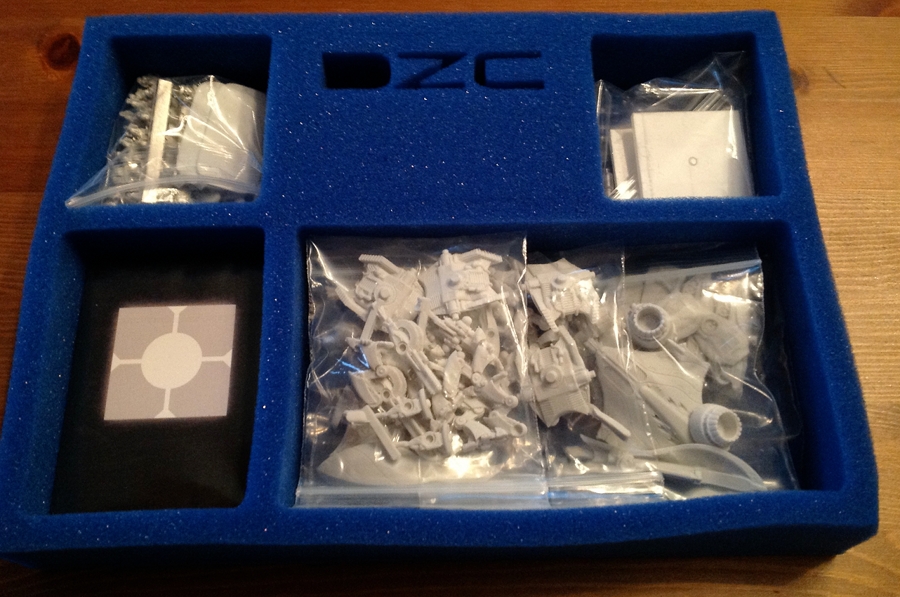
PHR box contents

Once inside we have the familiar blue KR foam tray laid out in exactly the same way as before: infantry top left with cards below, flight stands on the top right and the big pile of goodies in the front. Looking good so far.

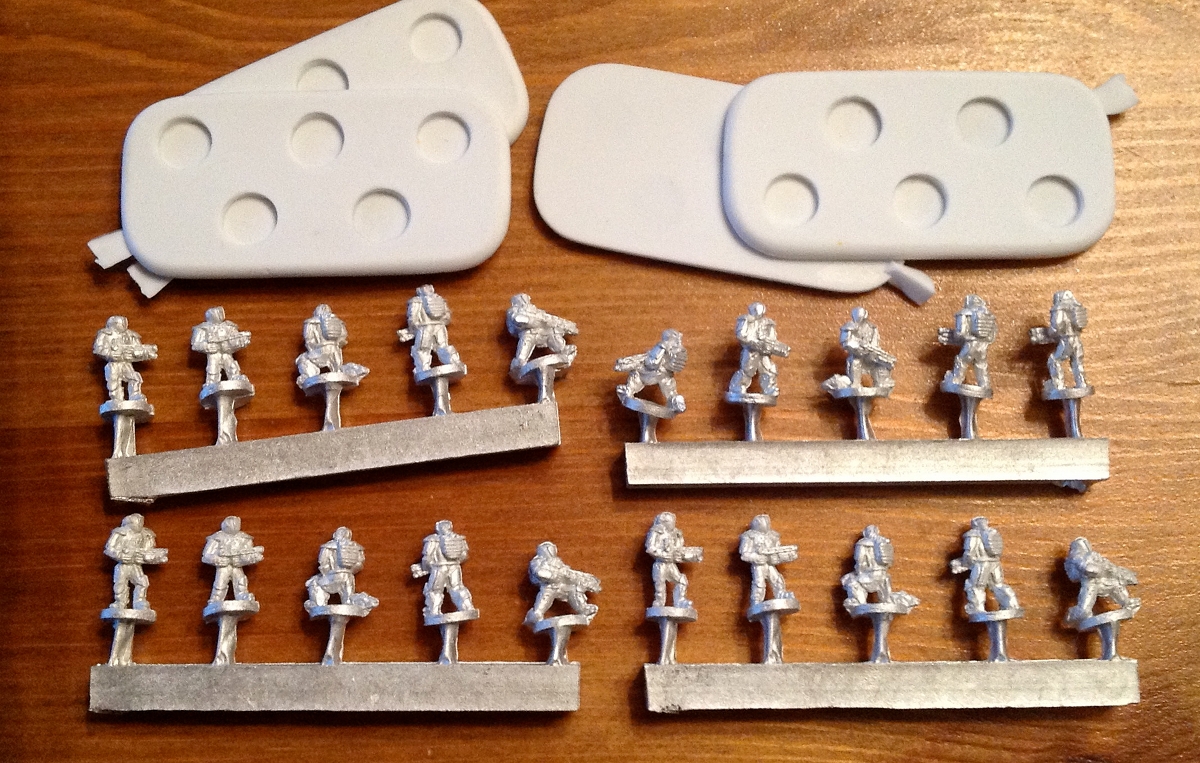
PHR inf

The PHR foot are a bit smaller than the Shaltari, so you get 5 to each base instead of 3. Again, the resin bases are made to fit this type of squad with no spare holes. Have a close look at the troopers. There’s a nice level of detail and a selection of different poses to make the stand look more interesting. I’m thinking of maybe mixing up the squad poses from each strip so that one base might be all standing up whilst another has collectively “taken a knee”. That would give each stand its own character which might look cool.

I’ll skip past the flight stands and cards which are of the same quality as in the other box. Just to be clear though: the cards are a different deck as each faction gets its own.

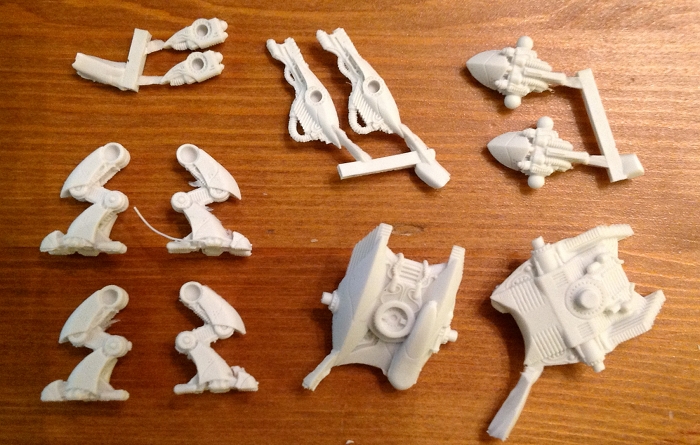
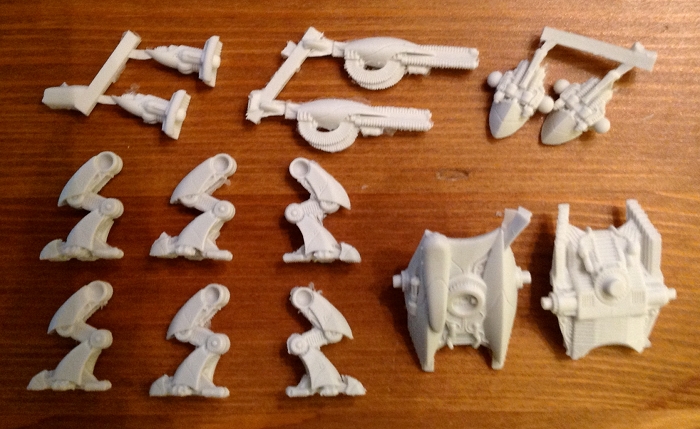
PHR walkers 1

Walkers.

PHR walkers 2

More walkers. I haven’t got the rulebook to hand so I can’t remember which walkers are which. One lot are Ares battle walkers and the others are Phobos. There’s two of each and the difference is in the weapons fit. Note in the second shot that I’ve got two extra right legs. The box was mispacked, but in my favour (as it were). The funny bit on the top right of each picture is the walker’s “pelvis”. Took me a moment to see that. As always with Hawk, there’s loads of nicely rendered detail all over these models, including in places you’ll probably never see once they’re assembled. The detail contrasts nicely with the faction’s signature smooth planes.

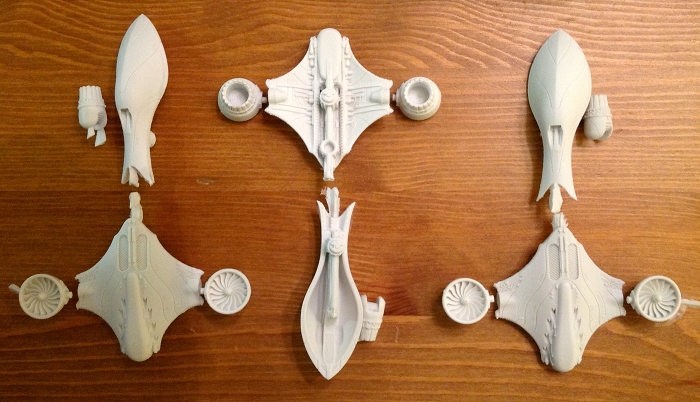
PHR Neptunes

Three sleek Neptune medium dropships. These puppies are actually quite large.

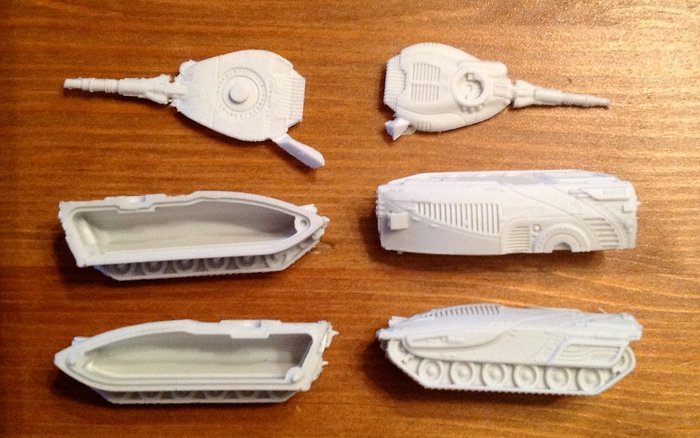
PHR Junos

And the lovely Junos. Always have a soft spot for tanks, even when they’re really IFVs.


Quality Control

Following the same logic as before, I want to have a look at the casting and general quality of the models themselves. Talking to the Hawk chaps it seems like I got a bit of a duff box here, though having said that there is only one piece that I would simply not try to fix. Even that is from a non-obvious bit of the model.

There are a few issues here. The first is with a couple of bubbles in the lift fans for the Neptunes. because the detail is so fine it would be a bit of a pain to fill these cleanly. Possible, but fiddly. Note that I’m talking about bubbles less than a mm across, possibly less than half that. But like I said, I’m letting my picky side out to push this a bit. I expect many people would either not notice or not care about this very minor bubbling, or simply count it as battle damage. I’ve seen as much in photos of models painted by other people.

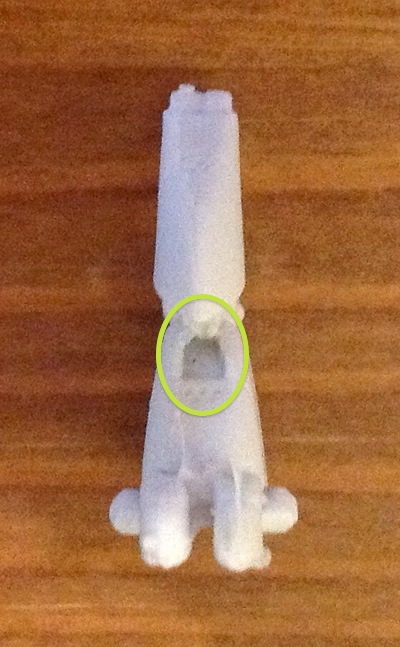
PHR leg as it should be

This is a close up of one of the walker’s legs from the front. The yellow circle shows a near rectangular slot into which the upper leg would fold as it bend forward (if it were real, of course).

About 70% of the legs in the set had this slot filled in to some degree or other. This is a sign of the moulds needing replacing, and Hawk have double checked and retired some. They said it should have been retired before this.  Again though, I’m being super picky. When the model is assembled and on the table you’ll have to be right down at the same level to see this because the upper leg and chassis overhangs and shadows it. Anyway, just saying. The rest of the leg was fine in every case. I mentioned this to Hawk as I thought that it might be helpful for their QC by saying something about the moulds (which it seems to have done), and told them so, but I wasn’t expecting replacements. They sent me a set anyway. To get back to the legs, you can also see in this poor picture, the small details such as a line of holes below the rectangle. Again, Hawk sticking detail where it’s all but invisible, just cos they can.

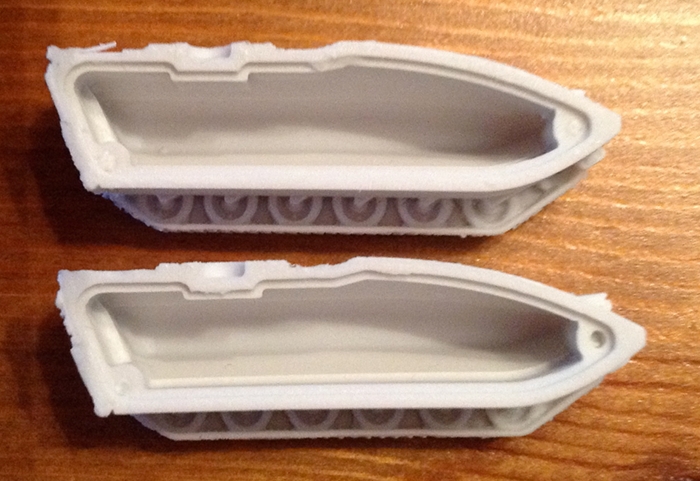
PHR Juno locating holes infilled

These are the left sides of the Junos. There should be two locating holes on each – one at the front and one at the lower back. You can see one on right of the lower one. You can also see that the other three holes have been infilled. I’ll come to the problems this causes in a minute. For the moment, it’s another example of an old mould.

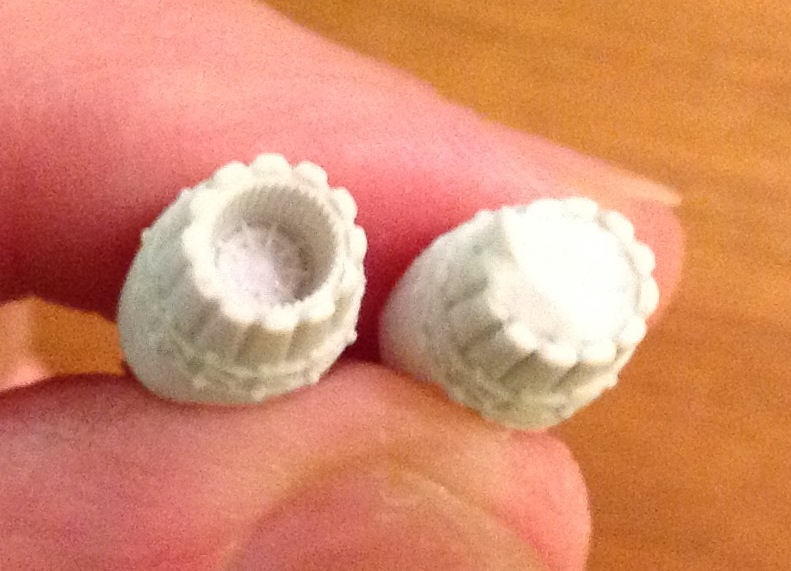
So far, so good. A little flashing and the odd bubble or infill. Nothing that normal clean up or a bit of a work around wouldn’t resolve. The next bit is the first of the real issues.PHR Neptune tail engine miscast

These are tail engine nacelles from a Neptune (they have one each). They live underneath at the back, so aren’t all that obvious. Anyway, the one on the left is fine. Despite my rubbish photography you can just make out all sorts of fine detail inside the nozzle. Very nice. The one on the right feels rough on the outside and is filled with what I can only describe as a scoop of resin that makes the whole thing look like a Mr Whippy ice cream. A clear miscast.

This was the only piece I thought was completely beyond fixing in terms of restoring it to what it should have looked like. I could actually have used it anyway, ignoring the roughness as being unnoticeable when painted in its mostly hidden position, and either painted the resin fill as smoke or flame or partially drilled it out and painted it black.

This doesn’t really bother me though. Hawk have exemplary customer services which makes any minor problems not problems at all. You might say that they shouldn’t have problems in the first place, but in the real world (especially with resin), bad things happen. How you deal with them is the real test.

Hawk responded to my emails courteously, promptly, and as soon as I told them of the miscasts they sent me back more replacements than I expected by return of post. What I also appreciated, and which people seldom bother to do, is that they told me a bit about why they had happened. I’m a curious fellow, and appreciate being treated like a grown up. Either way, top marks there.

Whilst I don’t have an issue with the odd miscast, and know that the finer detail you try to include the more work you make for yourself, the following problem is a design one and it is an issue for me. The Junos’ hulls are split along their length.

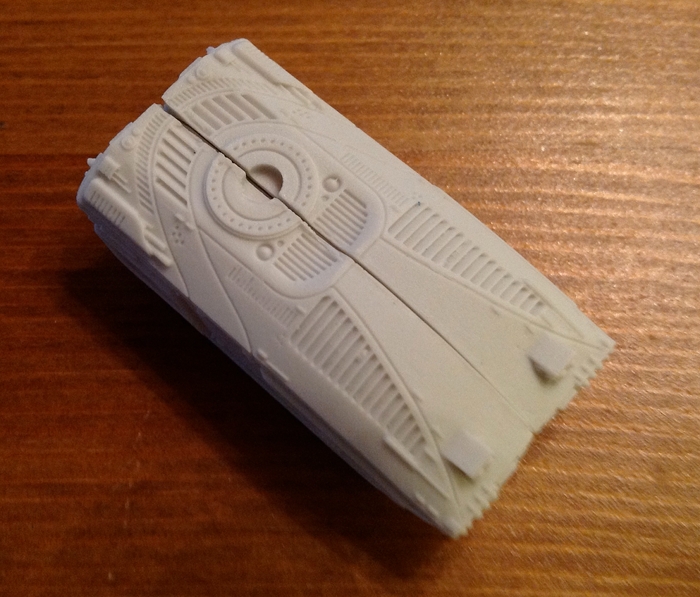
PHR Juno hull

This photo shows the general problem (dry fit, not properly assembled). The PHR’s most obvious visual identifier is their large, smooth surfaces. In the case of the Juno this is the gently sloping glacis plate.

Why do this? I’ve been wracking my brain for another model vehicle example from any other company , scale or period that is split like this and I can’t think of one. It’s just bizarre. Anyone else would have made the running gear separately and cast the hull as a single piece with the mould line horizontally around the edge. It would have made the hull a 3 part piece instead of a 2 part, but apart from that I cannot see a benefit to them for doing it this way. Maybe there’s some technical reason I’m missing. I can see a huge amount more work for me, the modeller, if I want to try and get anywhere near that lovely smooth front. You know, the lovely smooth surface with a major joint running slap-bang down the middle.

It is all the more weird because it just seems so careless and unhelpful which are not at all the vibes I get from the rest of either set. In many cases you get the sense that Hawk have really thought carefully about every detail, and then gone the extra mile to make it work well for the customer. And then there’s this. It’s just odd.

Now it’s obviously going to be fixable, it’s just adding a load of work that there’s no reason for. At least, not that I can see. If I fit it perfectly flush then it shouldn’t be too bad. I’m sufficiently careful and exacting about this sort of thing that I should be fine, but looking around the net images at other models and other modeller’s work I can see painted examples of these and other vehicles from Hawk where there is an obvious line down the middle. It’s clearly not helping the average modeller make models that show off Hawk’s nice designs to their best effect.


Conclusion

I love the design of the Junos and hate the way the models are built in two halves. Apart from that the rest of the set is excellent. Any minor casting issues I had were quickly resolved by Hawk who left me completely confident in purchasing anything from them. Whatever problems happened, they would be happy to sort them out. These are the kind of people you want to deal with. They clearly stand behind the quality of their product and are willing to put in some effort to make sure that the customer gets the product they should.

It’s just those Junos…

Posted in Review | 15 Comments

A Quick One

I was going to write some more about God of Battles, the design philosophy behind it, rule specifics, and so on. Rather than just ploughing on regardless like normal, I thought this time I’d ask if anyone had anything particular they’d like to know about. Or, perhaps, if you already know the game, if there was anything you thought particularly worth talking about and explaining to the uninitiated.

Of course, if nobody speaks up I’ll just have to ramble on at random…

Posted in God of Battles | 29 Comments