Xtreme Team-Building Part 3

I’ve looked at some of the background and some of the challenges for the team-building system in DBX. Now I want to go through the rules as they currently stand.


One-Off games

In a one-off game you have a choice. The simplest and quickest approach is to use the team I’ve made up for you already. Every team will have a balanced 100mc list that shows off the main focus of that Sponsor/Team and is like a main arena DB team – you just pick up and play.

Alternatively, you can use the full team-building rules (below) to create a team from scratch. Just pick a Sponsor and go from there.

Of course, you can also take a hybrid approach, by using one of the 100mc teams in the book as a starting point. Take away anything that doesn’t suit you and spend the “refunded” money on something else. This intermediate approach allows you to quickly tailor a team that’s almost what you’re after, or which you simply want to experiment with by tweaking slightly.


Full Team-Building Overview

A team is built around a Sponsor. By comparing the Groups that the chosen Sponsor and a player have on their stat line, you can see what that player type costs to hire. Sponsors then spend their budget of cash and Favours to hire players, buy Coaching Dice, cards and any other extras they want. Some of their money can be saved to bet with.

In a league, Sponsors (not players) gain experience, influence, power and generally get better at what they do. This improves the overall team because a Sponsor gets access to better players in the process. In effect the team does the same thing as normal when it goes through a league – a veteran team has better players than a new one – it’s just not necessarily the same individuals in the team that have improved.


Fresh Every Time

Players are listed as a type in the same way as you’re used to if you’ve played DB: Human Striker, Forge Father Jack, etc. In background terms a Sponsor is not very likely to have the same individual of a particular type in his team every time, though he might consistently field a Human Striker, etc. The casualty rate is too high for the vast majority of individual players to survive more than two or three matches before they are maimed or killed. A few, rare players do live long enough to significantly improve, and these are listed as a separate type: veteran Human Striker, for example.

You could, in theory, track individual player experience in the same way as DB, but this is a great deal more work and fiddle for very little benefit. As I said, they die off awful quickly. To keep the system clean, I’m ignoring these few, lucky players in terms of tracking, and sticking with the idea of a new team every time. If you like you can imagine that a veteran player is the same individual who survived last time. It won’t make any difference in rules terms.

Of course, having a team that is (in our fictional reality) comprised of different individuals each time doesn’t mean that you have to buy new models for every game. Not at all. As your Sponsor will have only slightly improved resources from one game to another you’re likely to recruit a team that includes a great many of the same types of players even if all the individuals are different. These can be represented with the same models as you used before.


Groups

Each Sponsor and player type have a number of Groups listed on their stat line. These are the people they associate with on a regular basis: the types of people they know and trust.  The more overlap between Sponsor and player, the more they have heard of each other and can trust that they are who they say. This is reflected in the cost to hire that player.

In the core DBX box, this process is simplified as we only have a small set of Sponsors and players to cross reference. This allows us to provide a list for each Sponsor with the price that each player comes at (obviously before any experience is gained by the Sponsor). There is, therefore, just a big shopping list to pick from and is very simple to use.

In the full version, when we have dozens of Sponsors and lots more player types, this is simply not practical to list in this format. At least, not in print. Instead, each player lists three prices he charges depending on whether the Sponsor who is looking to hire him is vaguelly familiar, a friend or a stranger.

The baseline price is familiar, meaning that there is one Group in common between Sponsor and player. He’s heard of him or seen him round the DBX circuit. He’s reasonably sure he’s not a police informant or DGB stool-pigeon.

Friends get special rates: “mate’s rates” as you might say. This is when there are at least 2 Groups in common, so both Sponsor and player move in the same circles and know the same people. Even if the Sponsor is a nutter, the player will know about it. There are no unpleasant surprises.

If the Sponsor and player have no Groups in common then they are strangers. In the illegal world of DreadBall Xtreme this is dangerous territory. Strangers could be undercover police, DGB informers or simply unbalanced psychos who’ll skin you alive rather than pay you for your skills. This is where Favours often come in as a way of persuading players who don’t know you that you’re worth trusting. Whatever the case, if a player will play for you they’re likely to want a great deal of cash as well.

This interaction between Sponsor and player types makes the pool of players that a single Sponsor could use very big, and gives a gamer as much freedom as possible (if they want it). However, Sponsors don’t all see this pool in the same way and a player that might be cheap for one could be expensive for another. This combination gives each Sponsor different choices and allows for their character and style to come out. This system also includes a way of making these players cheaper and easier to access over time which gives Sponsors (and teams) room to grow and develop – clearly an important feature in a league.


Favours

Sponsors start off with a very limited number of Favours they can do. This means that their starting team will be focussed on those that they share Groups with so that they can get cheaper players. In a league Sponsors will grow in power and influence and this gives them greater ability to do Favours for players who they might not otherwise be able to convince to play. This means that a team will grow and evolve over time, replacing familiar player types with more experienced versions or completely different races who do similar things. However, there will never be enough Favours to get everything you want, and the core players you started with will always be your cheapest option.


Extras

Just like normal DB there are extra bits and pieces you can get for your team. These include Coaching Dice, two types of card and more. In addition you can bet before the game, hoping for a jackpot to add to your base takings for the match.

So far in playtesting I have been using a flat fee for each of these. However, my intention is to tag them with Groups in the same way as players. This will allow me to have some Sponsors that are financially more savvy than others, and is another way to differentiate between and characterise them. As this uses exactly the same rules as hiring players it’s also a great way to add more depth without having to learn any more rules.


MVPs

The only difference between MVPs and normal players in DBX is that they’re named individuals. This means that a single team can’t have more than one of them, though the number of impostors and wannabes that float about the DBX circuit mean that both teams could field someone who claims to be the same person. Obviously one of them is lying, but that in-built grudge match only adds to the fun.


Round-Up

There are a number of additional tweaks and wrinkles that could easily be added to this system. Currently I’m resisting the temptation to expand on this core because it is, in some ways, already a bit more involved than the normal DB process (though I think it’s much more interesting). Nor do I feel that we really need any more. This allows for quite a depth of variation between individual players and Sponsors as well as a process by which Sponsors can gain experience and develop over time. That pretty much ticks all the boxes 😉

Posted in DreadBall - The Futuristic Sports Game | 12 Comments

Xtreme Team-Building Part 2

Having talked about the background of the game yesterday, it’s time to look a bit closer at the details we need to consider when replicating it on the board. The changes between DB and DBX in terms of play style as well as the differences in background throw up a number of issues that we need to address. These include:

1) The greatly decreased life expectancy and poor medical facilities in DBX makes using individual players as the basis for increasing a team’s overall experience impractical. A different approach is essential.

2) I want people to be able to pick up and play DBX as easily as DB. This means that team-building cannot be mandatory.

3) Hiring players for a team should not just be about money. A system that only uses money is too open to exploitation and the randomness of a single lucky win or unlucky loss. It doesn’t adequately allow for rewarding veteran Sponsors (people who have worked their way up the ladder over time). There needs to be an additional means to allow for longer term improvement.

4) Every Sponsor should be able to hire almost every player. At least in theory. A tiny minority (c5-10%) may refuse to work for someone under any circumstances, but the guiding principle should be that the team is up to the Sponsor to pick. All these options do not have to be available at the start, but they must be achievable in a league.

5) However, even with (4) being the case, the system cannot be so open that the forums decide on a single “best” team and gamers only play that. Different Sponsors should arrive at different teams based on their relationships with players (and the gamer’s preferred style of play). Which brings me to…

6) There needs to be a way to show the trust (or otherwise) that a player has in a Sponsor and this should make it easier or harder for a given Sponsor to hire an individual player.

7) Finally, Sponsors must be encouraged to field good teams rather than just fulfilling the minimum requirements (and there must be minimum requirements).


I resolve these issues as follows:

1) Focus on the Sponsor instead of the players. The Sponsor is a permanent feature and will not die. Increasing his overall game value increases his team regardless of the changes in individual players within it.

2) Every Sponsor/team combo in DBX comes with a recommended 100mc version that you can pick-up-and-play in the same way as the Trontek 29ers from the first DB book. You can use this for a one-off game or as the basis for a league, or ignore it completely and tailor your team to your own tastes. This gives a wider set of options for the gamer. However, because they all use the same basis to build a team you won’t be seriously disadvantaged if you choose to take the easy route.

3) Obviously players have a cost. However, you may also need to do a favour for them before they will play for you. Limiting the ability to do favours at the start of a league gives a Sponsor an ideal measure for showing his increase in power and influence alongside his increase in wealth.

4-6) By linking each Sponsor and each player to one or more Groups, and then having players charge less to the Sponsors they know (share Groups with) you can easily give each Sponsor the ability to access a wide variety of players without making all of them easy (or cheap) to afford. This also makes a given player a different option for each Sponsor, and this balance helps make Sponsors different.

7) Each team has minimum requirements in both numbers and cost (on mc). This ensures that every game is worthwhile. This also means that a Sponsor’s earnings for a match need to at least cover these minimums.


Having looked at the challenges and the some ways round them, tomorrow I’ll put it all together in a more traditional rules approach.

Posted in DreadBall - The Futuristic Sports Game | 7 Comments

Xtreme Team-Building Part 1

To start with, let’s talk a bit about the Xtreme background. This is what the rules reflect, so it’s worth understanding. So, how does hiring players work? What motivates Sponsors?

dreadball-colour-shot-template-3

Players

For players it’s all about trust. Trust and money.

In the illegal world of the DBX game you have to be careful who you talk to and who you believe. After all, there really are police and DGB spies lurking in the shadows, and both Sponsors and players have been busted before now. Many times. While the Sponsors may have enough power, influence and cash to buy their way out of trouble, most players don’t. A decade or two rotting in the slammer is not a happy prospect. A player’s best defence is not getting caught in the first place. Hence the trust.

Players want to play for people who will come through as promised. There will be a payday at the end of the match (assuming you survive), and if you don’t then you will get rezzed or your family/mates/local dog shelter will get the cash in your place. You need to believe that you aren’t taking all this risk for nothing.

Players trust the people they know best, and if they don’t know you then they’re going to need convincing. For some this is as simple as giving them more cash. For some, money talks. For others, this means proving yourself. If you claim to be legitimately corrupt, then show me. Do something that no DGB narc would do. Make me believe you are who you say.

Cash is simple. Every player needs to be well rewarded for taking his life in his hands, which is exactly what he does every time he steps out into the arena. The better the player the higher the price, just like anything else. The best players can command very large payments per match, as you’d expect. After all, even the best players don’t last long. At the other end of the scale, the more desperate players will take bigger risks playing for less money and for people they don’t really know. These are the folk who get arrested most often. Luckily there’s always another hopeful looking for a way to make some quick cash.


Sponsors

Scientist smlSponsors need the trust too, but really it’s about the money. In order to be a Sponsor you have to be powerful and wealthy already. This means that they have an infrastructure of henchmen and flunkies who will make troublesome people disappear into the recycling vats without any questions asked. Filtering out the spies and informers is all part of business as usual rather than a specifically DBX thing.

For a Sponsor, the main issue is money. There is a great deal of money to be made by putting a team onto the arena and sharing in the profits of the game being run. Then there’s all the betting scams and other more dubious financial dealings to arrange. A typical Sponsor will have their fingers in many pies.

A Sponsor wants to hire players that will make them look good. They have a reputation to maintain as well as cash to earn, and without the former the latter is much harder to do. On the one hand you might think that they’d want the cheapest players they could find, and sometimes they do use this ploy to save cash for later matches. More often, a Sponsor will buy the best team he can afford for a match. Winning is always better than losing and his standing among the shadowy folk who organise these Xtreme matches is only as good as his last match or two. Did he put on a good show that brought in the crowds? If he did then everyone else made money too, and that’s good. If he put a rubbish team out that got flattened in a couple of rushes then who’s going to want to see his next match? Nobody. And that means no money on the door, no percentage on the betting and so on.

All this makes Sponsors quite careful about who they hire. They don’t just pick the first person who comes along and says he can play. Not at all. He’ll have to prove himself in real or training matches. Maybe the Sponsor (or one of his flunkies) will watch the player in action in another Sponsor’s team; perhaps they’ll put them through their paces themselves. After all, there will be several teams’ worth of likely candidates that all need testing out. Pitting them against each other weeds out the unworthy pretty quickly, and also lets the Sponsor see who plays well in what role and which players gel together as something like a real team. Meanwhile, a Sponsor will be getting background checks done just in case. Trust isn’t the main issue, but they’d be foolish not to ask a few questions…

Posted in DreadBall - The Futuristic Sports Game | 5 Comments

Not Long Now…

extreme-logo-preliminary-3-isolatedWow, that went fast! There’s only three and a bit days left on the Dreadball Xtreme Kickstarter, so if you were trying to decide whether to jump in or not you need to think fast!

I’ve been busy writing Mars Attacks expansions and so I haven’t been keeping up with all the DBX developments. However, I’m hoping to get a final Beta version done that incorporates the last of the questions on the FAQ. I also wanted to talk a bit more about the team building and sponsors. I did write something for the Mantic blog, but that was only brief. If you read that then you should know the basic bones of the process, however I do like to talk about the whys as well, as regular readers will know 😉

Are there any other aspects of the game that people are wondering about before they decide?

Posted in DreadBall - The Futuristic Sports Game | 11 Comments

Nexus Psi

The KS backers got the digital download of this campaign supplement today. I’m putting this here in case anyone has any comments.

Posted in Deadzone | 27 Comments

Martians Everywhere

MA saucer invasion

If you were wondering where I’d got to the last few days, have no fear. The invasion has been contained. While you were getting all frenzied over on Kickstarter with DreadBall Xtreme, I was ducking and dodging among the ruins of Greenville, fighting off the Martian hordes.

Saturday saw us playtesting the second and third books for Mars Attacks, and the days before that were full of preparations: stat balancing and scenario checking and so on. Now I’m tidying up all the wreckage from the battles so it can sit neatly in the books and boxes of the range for when you guys start seeing saucers on the horizon. And what a lot of saucers! One of the scenarios has 4 of them, which is a bit scary. Not as bad as the 3 stompy robots that I keep trying to sneak into the last battle, but worrying enough.

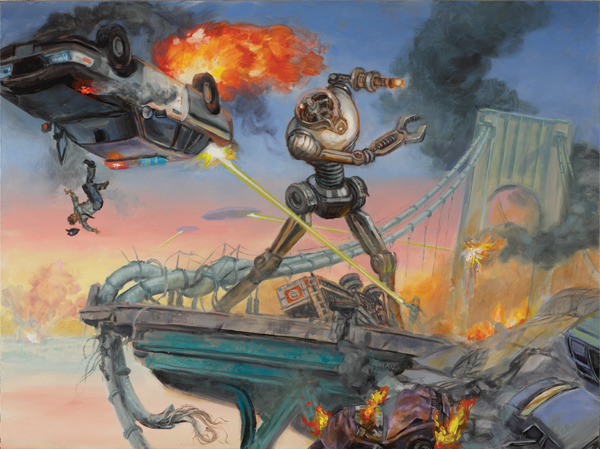
Robot throwing carThanks are due to the brave folks who made it to the saturday games. Always good to hear new viewpoints. Given that almost none of the proper models are available yet I didn’t bother taking pictures. Mind you, the very large Cthulhu standing in for one of the robots was fun. I wonder if there’s room for a new faction…


Posted in Mars Attacks! | 23 Comments

DreadBall Xtreme On Meeples & Miniatures

Episode 121 is all about DBX, apart from a bit at the end on Kickstarters in general. You can find it here.

Posted in DreadBall - The Futuristic Sports Game | 8 Comments

DBX Details: What Do Sponsors Do In Game?

Sponsors organise the games of DreadBall Xtreme, and put together the teams that play in them. But what do they do once the game has started? Well, it’s not all champagne and caviar.

If you read the beta rules you’ll see that Sponsors continue to scheme throughout a game, doing whatever they can to gain an edge, both on the field and in a league. Each Rush you get to pick one dastardly scheme. The options they have are:

  1. Intimidate: gives you an extra Coaching Dice for this Rush (use it or lose it).
  2. Nobble: threatens or blackmails an opposing player in to performing badly in their next Rush. They get -1 to all their tests (except armour).
  3. Bet: puts on a side bet that you will win. If you do then you get more cash at the end.

Each of these is useful in a different circumstance, and different gamers I’ve watched prefer different options.

Bet is only worth doing in a league match. Money doesn’t matter in one-off games and so this is irrelevant. When you are in a league match Bet adds a longer term choice to other options which are both very much immediate game effects.

Nobble is most useful if the other side has a single important player. Perhaps they have the ball at that moment, or look like they might be making a run to strike. Maybe it’s their only remaining Striker or Guard. Whatever the target, this is most obviously useful if the opposing team has a clear choice of player for a task. Mind you, if they have two to pick from then you could use this on one and then Slam the other out of the running.

Gaining an extra Coaching Dice with Intimidate is always useful, and becomes the default for many players as it’s so easy to use. Don’t forget it only lasts for this Rush though!


A Bigger Picture

These options are not only different in detail, but focus on different styles of play. The first boosts your own team, the second hinders your opponent, and the last looks at the bigger picture.


On The Board

The main use of the Sponsor model is to show which of these schemes is in operation at any one time. The hexes in the Subs’ Benches each identify one or other of these choices. When you pick one you place the Sponsor model in the appropriate position. This means that you can tell at a glance what’s going on.


Future Sponsors

These options are the basic ones. One of the things I’d like to do with future Sponsors is to look at these schemes and see what else we can come up with. The three “big picture” categories will remain as I think they’re a good framework, but there’s more than one way of helping your own side or hindering the opponent. These will be listed as Sponsor abilities and are another way to define the unique character and style of the many different Sponsors.

I have a couple of pages in a notebook dedicated to wacky Sponsor ideas, but I’m sure I’ve missed some good ones. What do you think would be fun for them to do?

Posted in DreadBall - The Futuristic Sports Game | 16 Comments

DBX Details: What Are Sponsors Like?

Scientist sml

Sponsors are individuals and no two are exactly alike. However, there are certain common traits which characterise them as a group.

Sponsors are criminals. Because the game is illegal it has been largely taken over by career criminals who use it to make money, alongside all the traditional illegal money-making methods like ruthvin smuggling and organ-legging. The few that start out as something other than career criminals don’t last very long unless they adapt. Don’t let their innocent appearance fool you: that’s just to bamboozle the cops. 

Sponsors have connections. They arrange the Xtreme games and the teams that play in them. They know where the best venues are and how to find the sort of desperate and dubious characters they need as players. Equally importantly, they know what the police are up to, which ones can be bribed, which threatened, and which need bumping off.

Sponsor Vampire_color smlSponsors are rich. They can afford to pay for players to take part in the games, plus organise the venues, security, betting, etc. They can also afford the bribes and assassinations that keep the law off their backs while the game is on. Sponsors are often inordinately fond of money and causing them to lose some is a painful shortcut to a recycling station.

Sponsors are dangerous. Being criminals makes them more than a little paranoid, especially as they are the main targets of the police and DGB investigations. The forces of law and order know that they are the key to the illegal game. If they can be stopped then so can the bulk of the game. This means that they are careful to make themselves difficult to link directly to the major crimes, and that people who have evidence against them disappear.

Posted in DreadBall - The Futuristic Sports Game | 6 Comments

Gaming Days On Hold

Just had an email from Foundry. They are putting the God of Battle days on hold for a bit while they get “proper gaming days” (which sound fun) organised and dovetailed into their convention timetables. So, until further notice there’s no God of Battles on the 1st saturday of each month. At least, not at Foundry.

In addition, when they start again they require all models to be painted.

Posted in God of Battles | 17 Comments