Living FAQ: Lost Patrol

Lost Patrol logo on white bigger

Apparently GW are releasing a new edition of Lost Patrol in 2016. I know no more than you guys about this (presumably) revised version, and though I will be writing a review and some commentary when I get a copy, I will not be compiling a FAQ for it. 

This page deals with all the rules questions that you might have about the first edition of Lost Patrol. Please read the questions and answers below to see if your query has already been answered. If not, feel free to ask in the comments section at the bottom of the page.

If you have any questions on the game rules, or if you see a post on a forum somewhere that does, then please direct them here so that I can deal with them all in a single document. That way questions get answered consistently and everyone gets the benefit 🙂

Lost Patrol FAQ v02

line

To keep things tidy, comments and questions will be deleted from this page once they have been addressed in the FAQ.

Posted in Board Gaming, Lost Patrol | 8 Comments

Blast From The Past

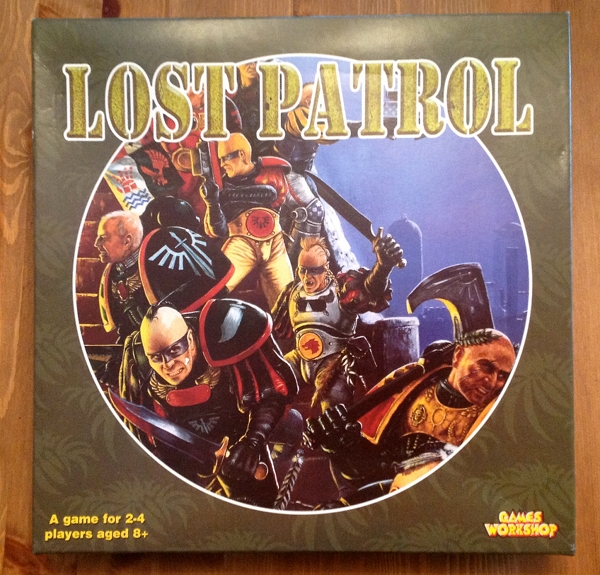
LP box

Played Lost Patrol for the first time in many years and was pleasantly surprised by how well it’s held up. I was, effectively, coming at it almost fresh as I couldn’t remember much about the rules themselves. There was one detail I think it’s worth creating a FAQ for, but other than that (and it was a tactical detail rather than a problem) I thought it was clearly written.

Tinpot and I played twice, swapping sides as intended in the design. Neither of us managed to get off the Death World, but that was always the most likely result. Next time though, next time…

It’s funny coming back to something after so long. I can see a few things I might do differently now, though in the main it’s a game I’m rather proud of. Someone was telling me the other day that I have a signature style to my designs (simple mechanics that hide a great deal of tactical depth and replayability). I think this is a good example of that, even though it’s old.

It’s a shame that it’s out of print, but there’s not a lot I can do about that. Even so, I think I might post up a few articles about it. There are the possibilities if offers for small painting projects, and then there are the expanded rules I have in mind. It’ll amuse me if nothing else 🙂

Posted in Board Gaming | 4 Comments

Review: Fluxx

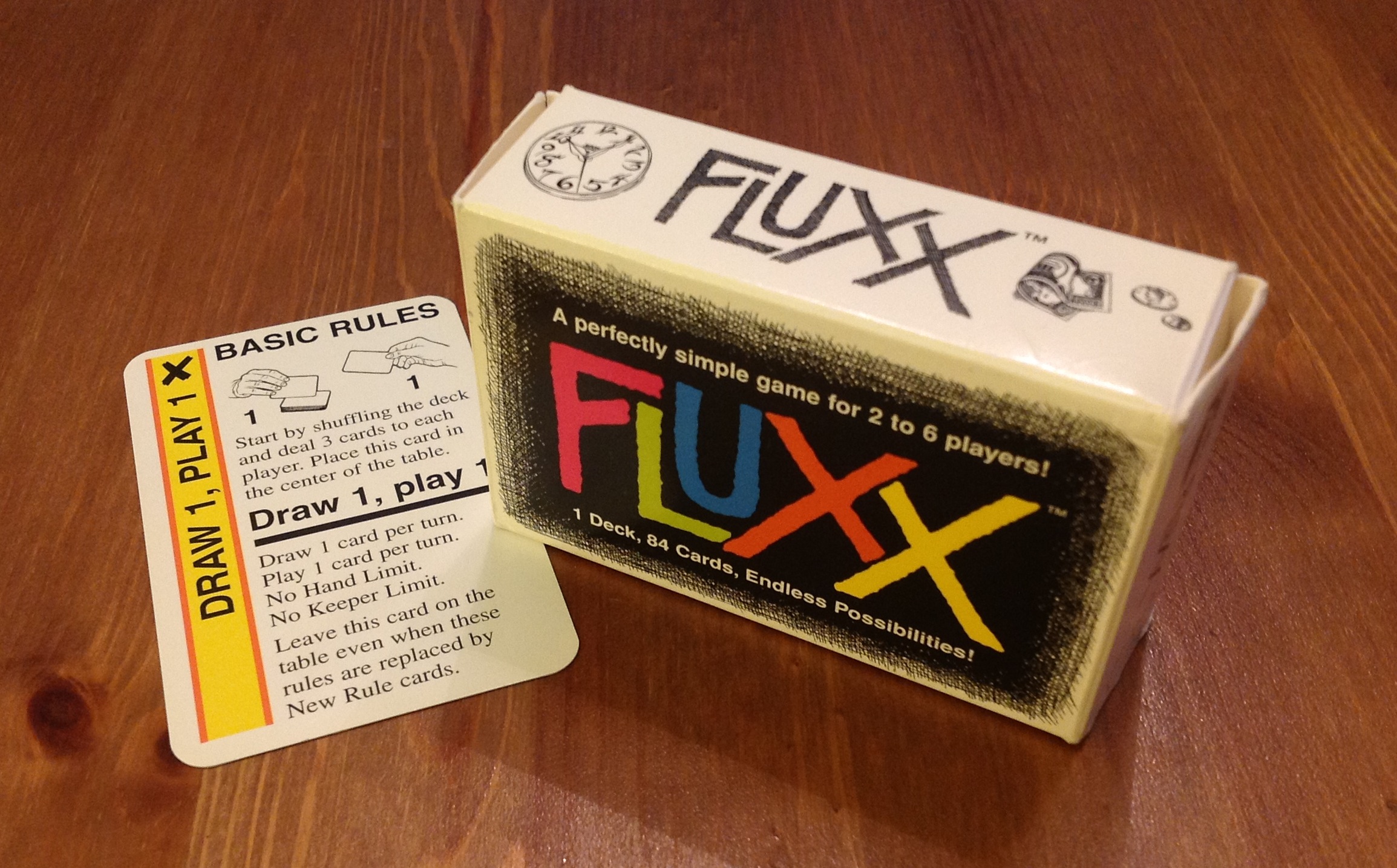
Fluxx boxFluxx is a strange little card game designed by the delightfully named Andrew Looney. No, I’m not joking. The copy I have is a 1998 edition published by Iron Crown and it’s this version I’ll be describing. The current edition is available from Andrew’s own Looney Labs.

The game itself comes as a single 84 card deck. The rules are simplicity itself: draw one card then play one card. Not much of a game you might say. However, some of the cards you play will change the number of cards you draw, may (or must) play, can keep in front of you and, importantly, what the victory conditions are.

Let me explain a little more.

There are four kinds of cards in the deck:

Fluxx rules

Rules: starting rules and new ones. Playing new ones change the rules immediately.

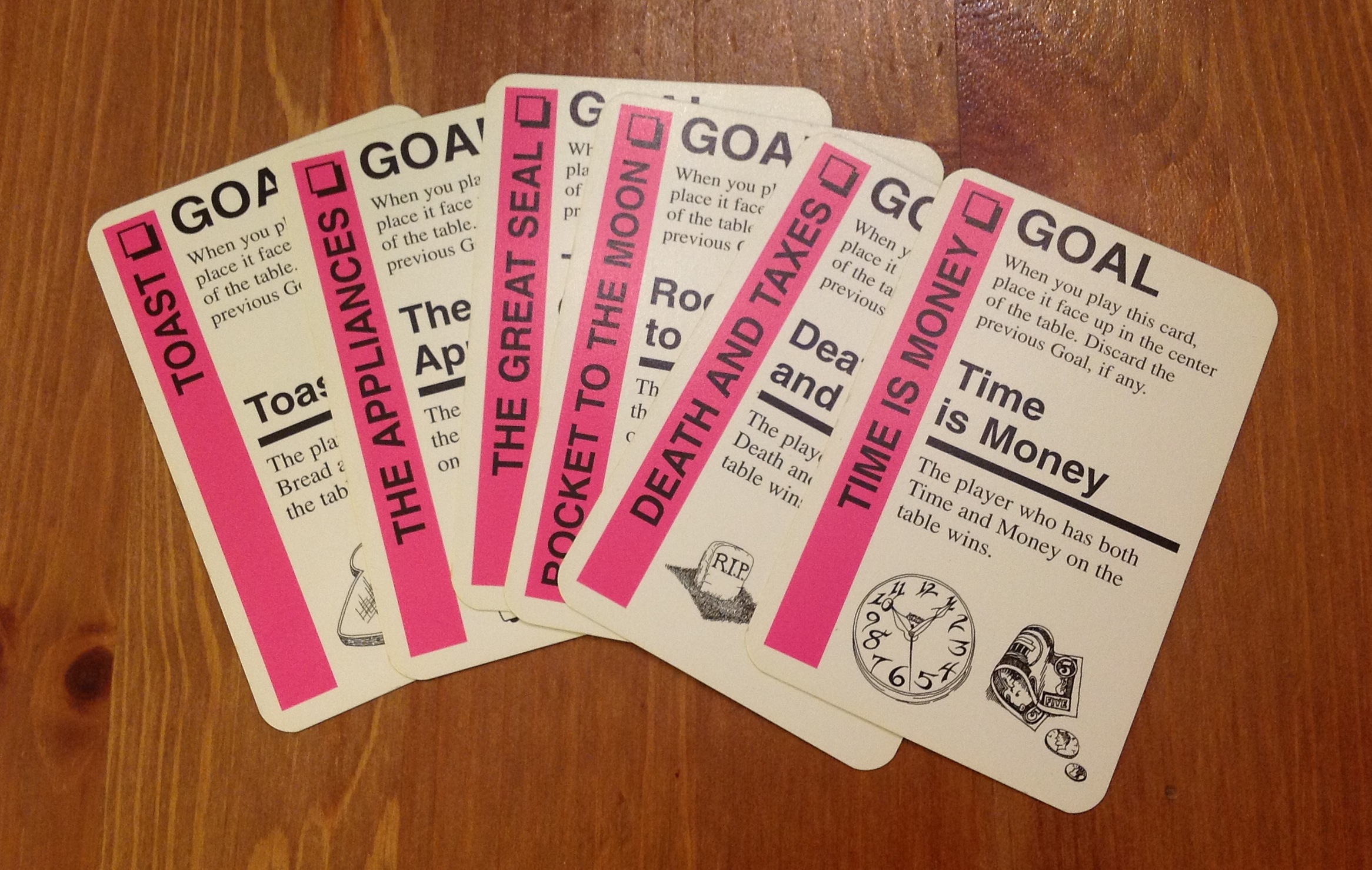
Fluxx goals

Goals: that define what you need to do to win. The last one to be played overwrites the previous one. Only one is in play at a time.

Fluxx actions

Actions: do whatever they say, such as take a card form the discard pile, trash a new rule, etc.

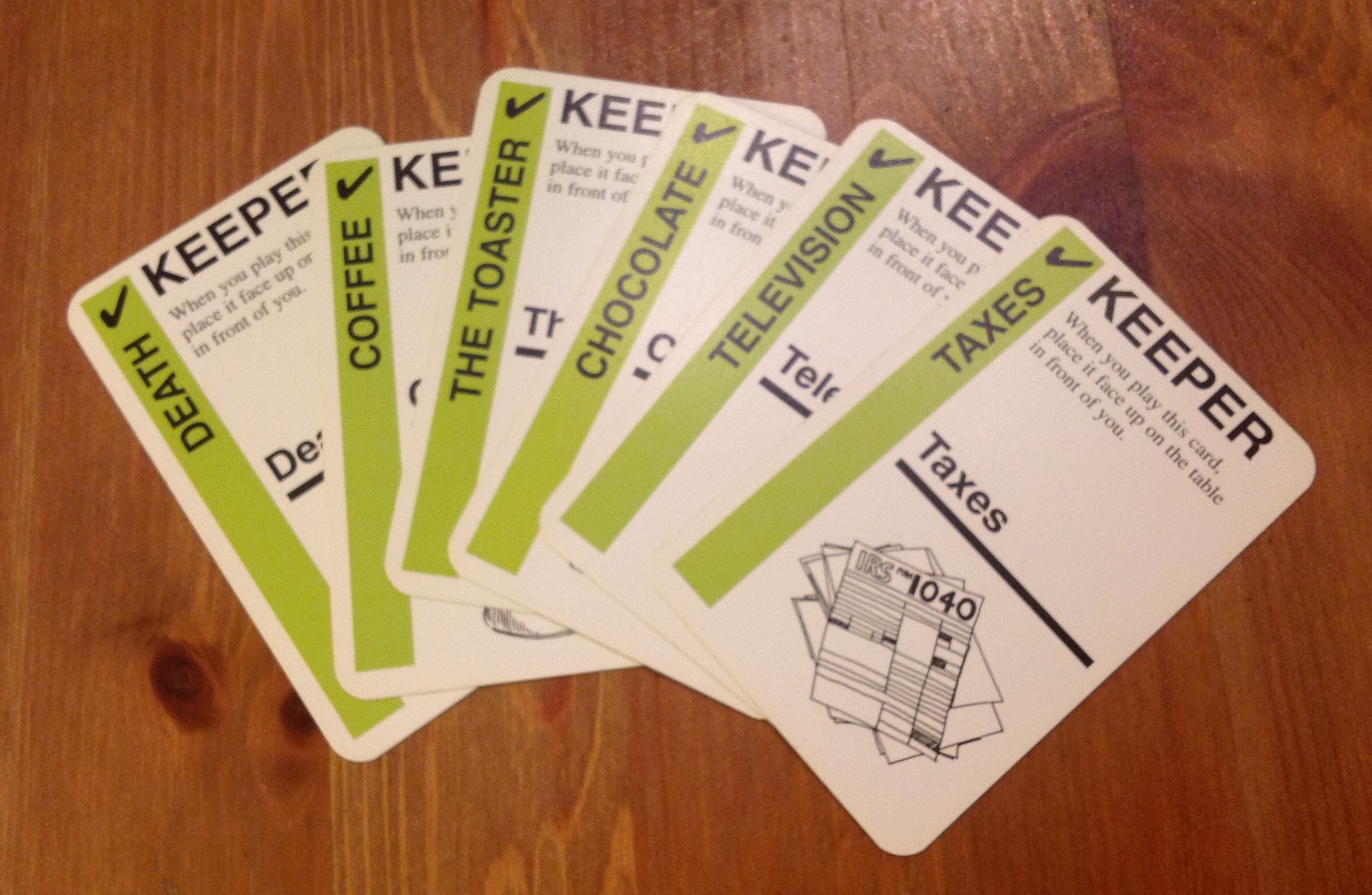
Fluxx keepers

Keepers: are things like chocolate, TV or love. Most of the goals are to do with collecting specified sets of these.


Game Play

You start off with the basic rule cards showing in the centre of the play area. Each player takes turns doing whatever the rules are at that point, say draw one card and play one card. However, many of the cards he plays will change the rules. For example, if he played a draw 2 cards new rule and had only drawn 1 at the start of his turn he would immediately have to draw a second (or he’d be breaking the rules).

As new rules are played they overwrite old ones which are discarded. As new goals are played old ones disappear. You go round the players, doing what the rules say when it comes to your go, until someone wins.

That, in effect, is the whole game. There’s a bit more to it because you have to follow the instructions on action and goal cards, but that’s about it.


Bad Bits

Fluxx is, as the name may suggest, immensely random. Not only is there the randomness of card draws, but the rules change constantly making planning almost impossible. This also means that there is nothing much to do while you wait for your turn as you can’t guess what the rules might be when it comes round again. Happily, the game tends to be short (though this is also very variable).

Winning the game is often more luck than planning, and it is not uncommon for someone to either win because of other player’s actions, or be placed in a position where they can win because of them (rather than something they’ve done themselves).

The game can get itself stuck in backwaters where you have no choice about what you play, or perhaps all you can decide is the order you play things (so what the final rule or goal might be). The game, in effect, plays itself some of the time, which isn’t much fun. I’ve even played games where it won while it was busy playing itself.

A final gripe might be the lack of theme, or at least the mundanity of what theme there is. The only things mentioned are everyday items and concepts and add little to the game. personally I like a stronger theme, but this is a matter of taste and it’s not something that the game is sold on the back of.


Good Bits

The whole idea of a game whose rules change massively as it progresses is an intriguing one. That is fun to watch, and on the occasions when you can manipulate things to your advantage with skill then it can be very rewarding. These occasions are sadly rare.

For all its mutability the game is clear and straightforward to play. As long as the constant change doesn’t throw you, there are few if any rules queries to worry about. In that sense the design is very clean.


Conclusion

For me, Fluxx is more of a curiosity and design exercise than it is a real game. I take it out to play with people who haven’t tried it before as a curio, not as a good game. Having played it, folk seldom ask to play it again over other games of similar complexity and speed.

Having said that, I do play it with everyone I game with as I think that it’s such a fun idea that every gamer should try it at least once. Not only that, but it’s quick to do so and you can use it as a filler to round out a session. If it was a long-winded game it would have gone on Ebay long since.

I expect that I’ve sounded all negative so far, but in reality it is a game that has much to ponder from a designer’s point of view. Fluxx is something that I think any game designer ought to at least have a couple of goes at because it’s such an oddment. In game terms it’s a bit like those buildings with all the plumbing on the outside: it’s workings are all on show. This allows you to examine all manner of assumptions and norms, which it clearly romps all over in its quest for mutability. Personally I always feel like I should be taking more from it in terms of conceptual thinking, and am somehow failing to grasp something fundamental that it’s telling me. Perhaps that’s just me.

So even if it fails as a fun game it succeeds in provoking thought and discussion every time, and that on its own is worth the price for me.


Posted in Board Gaming, Review | 11 Comments

Orc Army Diary – Part 2

I will be going into my army choice in some detail, though that will have to wait until God of Battles is closer to coming out. For now, the broad strokes are that I’ve picked a minimal sized army with none of the frills. This allows me to focus on the core troops needed and get an army sorted and onto the tabletop in the shortest time. Adding fancy bits will be fun later.

Even with the minimum army size there are a number of different approaches you can use to select your force. In this case I’ve concentrated on the real basics: 2 units of orc warriors to thump folk, a couple of units of goblin rabble to back them up and two mobs of goblin pests to stick the opposition with arrows while the rest advance. Six units then: two of orcs and four of goblins. That will give me a solid basis to expand the army later.

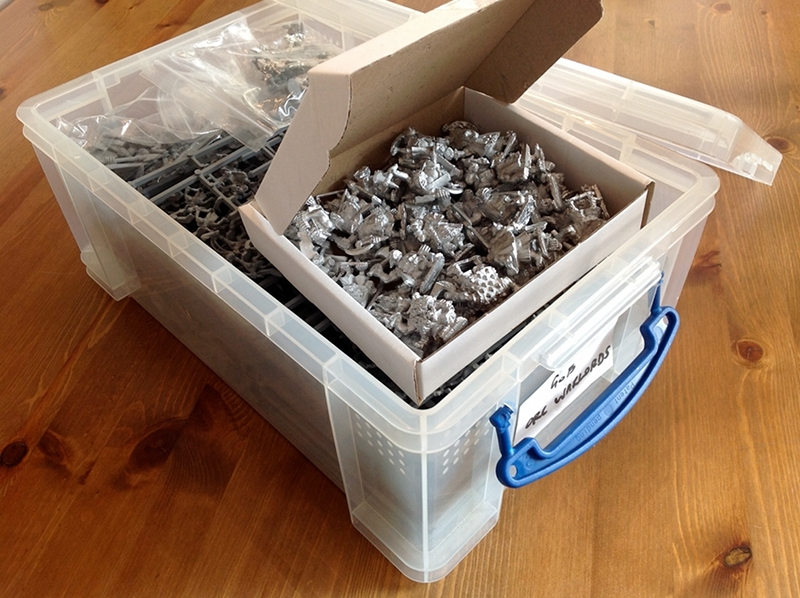
Having decided on this army, I rummaged in the box I’d been collecting models in for just such an occasion. I’m sure that I’m not alone in collecting things for future projects. In this case I already had a box labelled up into which I’d been putting the occasional purchase over the years.

box of orcs

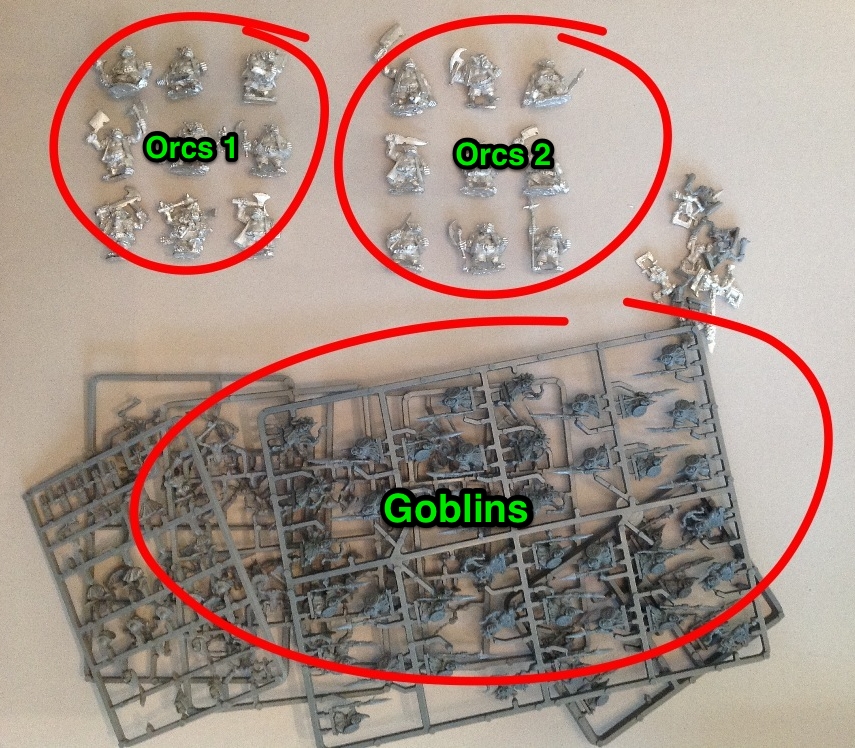
This photo is me laying out some models to check I’ve got the right sorts of numbers and don’t need to rush off and buy any more. I’ve actually got a lot more than this, so there are plenty of options for the Orcs. Looks like I won’t need to do too many conversions to get my desired lack of duplicates. That’ll speed things up nicely.

Orc army figs

The goblins in the photo are mostly GW ones as I’ve mislaid the Mantic ones I had who will be joining them. Can’t trust a goblin to be where he’s supposed to. Typical. Anyway, there are a lot more to add to the mix here, which already includes several generations of GW greenskins of the smaller variety. There are a handful of Foundry gobbos to come as well. However, my main interest here was to check I was on the right track in terms of numbers (which I am), and then I’ll be starting with the orcs. I have rather more chopping about planned for the little greenskins.

Posted in Painting & Modelling | 14 Comments

DreadBall Card Commentary

DB logo

Last update 13th Jan 2013

When I designed DreadBall I included a short card commentary in the rulebook, thinking that I would eventually have to expand on it here. As it stands, very few of the cards seem to have caused difficulty, which is great! However, because I think that it is still a useful resource and worth separating off, I’m collecting any card-related FAQs and discussion here.

CARD PLAY QUESTIONS

The following are dealt with in 3 steps rather than the more common 2. As well as a Question (Q) and an Answer (A) I’ve included a Discussion (D) section  so that I can talk around the topic as needed. This might explain why a rule is as it is, the history of its development or the tactical implications among other things. The intention is to give you a better insight and understanding into the decisions behind the rules as well as the rules themselves.

Q: Can you play a card you just “bought” (with an action) immediately, for instance getting a 3rd action for a player on the very same turn?

A: Yes.

D: Coaches often buy cards towards the end of a Rush, but there is no reason why they have to. Obviously buying a card in the hope of getting a specific action for a player who has already had 2 actions this Rush is a bit of a desperate move, but sometimes that’s what is called for. This is the kind of tactic that experienced players know is available and the lucky ones even make work for them!

Q: If I buy a card and it turns out to be an Event do I have to play it immediately?

A: No.

D: If you buy a card then you can keep it until you want to use it. This applies to all Event cards including The Ball Shatters. This choice of timing is the crucial difference between cards that are bought rather than simply turned to resolve something. Timing your use of the cards can be very powerful, regardless of their type.

Note that when you play an Event card from your hand it may be during either player’s Rush, but it only takes effect after “the current action and all associated dice rolls and card draws have been completed”. This stops you being able to interrupt the middle of a sequence of throw and catch, Slam and fall, etc, which is just as well because interrupting generally makes a huge mess of the rules and leads to a great deal of confusion.

INDIVIDUAL CARD COMMENTARY

THE BALL SHATTERS

Of all the Event cards, this one stands out because of the word Instant on the card. In the early versions of the DreadBall cards, there was more variation in when Events were played, but it became obvious after a while that most of this was simply unnecessary. Little was added to the game, and so I decided to make them all what were originally called “Remains in Play” cards. All, that is, except for The Ball Shatters, which obviously has to be resolved and then discarded. That’s what Instant refers to: the resolution of the card is a single moment in time as opposed to something that lasts as long as it takes to draw another Event card.

For everyone who doesn’t know the history of the card development the word Instant may be a bit confusing, and some folk think that this card must be played immediately. Not at all. It is resolved just the same as any other Event card: when it is turned if it is a random draw or when the owning Coach chooses if it has been bought into a hand.

Apart from its specific effect, the only difference between this Event card and every other one is the length of time it remains in play.


To keep things tidy, comments and questions will be deleted from this page once they have been included in the Commentary.

Posted in DreadBall - The Futuristic Sports Game | 11 Comments

Me Rambling On…

A little while ago I did a rather long and rambly interview for a Spanish podcast. They’re still working on the Spanish dubbing, which was the original purpose. However, I won’t be able to understand that so they’ve also posted the original English version 🙂

It is quite long, and I do wander off their organised series of questions rather a lot (I did warn them), but you might find some interest in it.

No major revealed secrets (that I can remember), but we do discuss:

  • my early gaming
  • how playtesting differs from playing
  • Battle of the Halji
  • Bunnies & Burrows
  • challenges for self publishing
  • Fugitive magazine and early fanzines
  • my time at GW
  • Lost Patrol
  • asymmetry in games
  • simple versus complex and the length of games
  • the rise and effect of Euro games
  • simulation versus game, reality in wargames, theme and mechanics
  • DBA
  • White Dwarf (and “Fat” Dwarf)
  • Dread Fleet
  • freelancing
  • cross-format thievery
  • Dwarf King’s Hold and Pandora
  • the most interesting bit of a design
  • self publishing (again)
  • DreadBall’s early life (as an ice hockey game) and development
  • Ultimate DreadBall
  • Season 2 teams
  • why self publishing?
  • Eternal Battles

Happy listening!

Posted in Random Thoughts | 10 Comments

…and that’s what happens when you get the plague…

I’m feeling a bit better today. At least I’ve managed to make it out of bed and in front of the computer, which is something. Not done that in a while.

Not that I have anything strange or exotic (or interesting) wrong with me, just a particularly nasty bout of whatever is floating about. Back now though.

What passes for normal service round here will be resumed as soon as possible 😉

Posted in Random Thoughts | 7 Comments

Happy New Year!

Here we are again, at the start of a new year. At least, in one calendar we are.

I just thought I’d take a moment to say many thanks to all of you who contribute to the debates on Quirkworthy, and hope you all continue to have fun playing my games and pop by once in a while for a chat. Especially you. You were always my favourite. It’d be awfully dull without you 🙂

2012 was a pretty good year for games work, with DreadBall being the obvious (public) highlight. Still loads more to come on that front. Naturally there’s been considerable work going on behind the scenes on various other projects, not least of which is my own Eternal Battle, which is only one of a number of projects I’ve got going on for my little self publishing experiment. Lots more to come on them too. I’ve also been writing for Ravage and Continue magazines, which is a fun discipline. Nice to be back writing for magazines after all this time. That too looks set to continue.

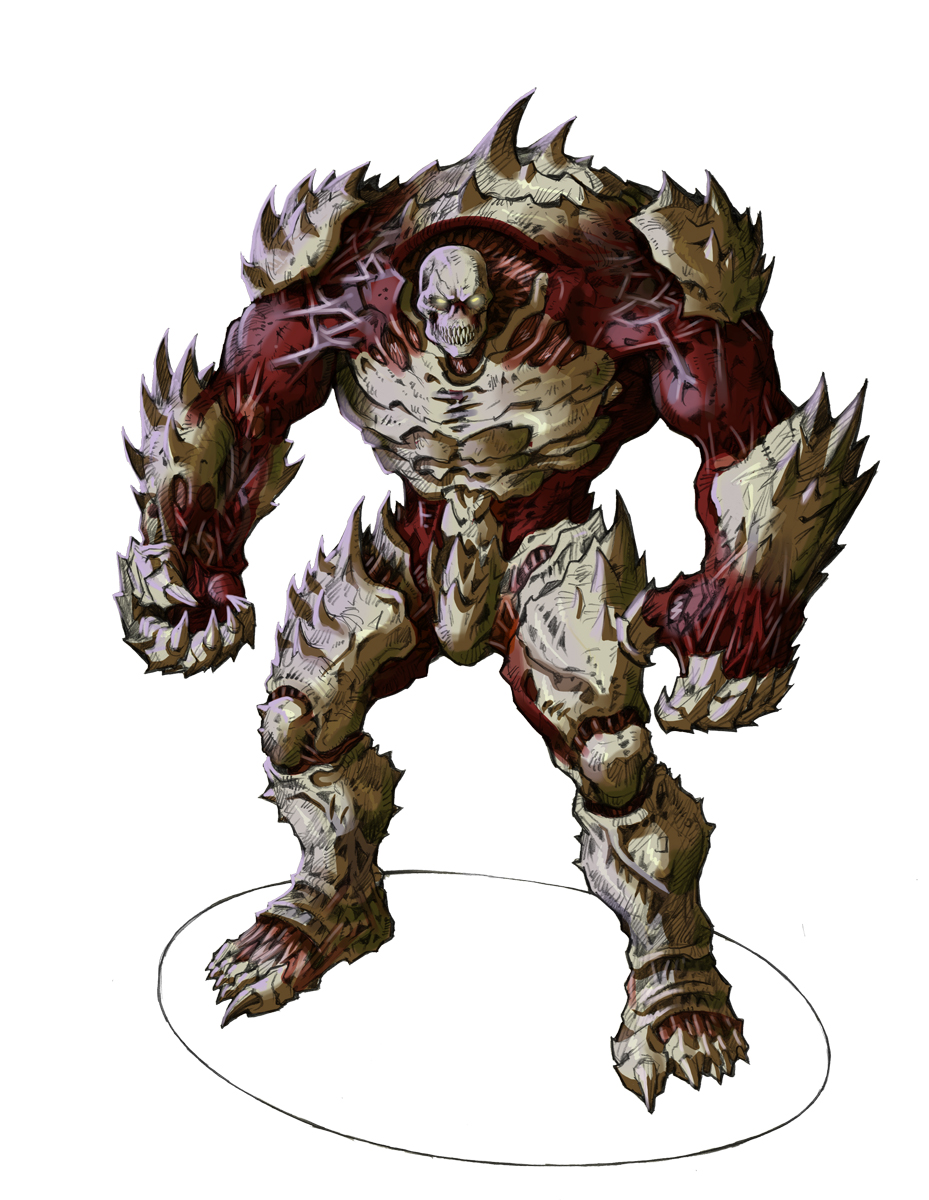
Given the way things work out, I’ve already been working on 2013’s products for a while now. These will include at least Season 2 and Ultimate for DreadBall, plus another very exciting project or possibly three. More on them when I get the green light (or Ronnie blabs). For now, let’s just say that this chap does not belong in DreadBall…

Plague-Lord_color_v1-edit

Grrr.

As to this site, I started reorganising things and got the headers and some of the pages done but most of them aren’t linked back together yet. That’ll get sorted when I work out how to do some of the technical stuff.

The idea of having some specific topics on specific days I rather liked, even if it did get a bit derailed over the hols. Damn that mince-pie guzzling brigand! Anyway, I’m going to get that back in the groove and use it as a focus for posts. That doesn’t mean that they’ll be the only days I post stuff (game design theory articles don’t have a set day, for example), but it does give me a set framework to work around and to schedule things for. Assuming I can remember to put them on the right day. Working on that.

So it’s looking like a busy and exciting year to come with all sorts of gaming goodness on the horizon. I’d best get to it then.

Thanks again for all your kind support and comments.

All the best.

Jake

Posted in Random Thoughts | 13 Comments

I’d Like To Report a Theft

Yes Officer, all my time has been nicked. The last two weeks or so. Oh yes, I know who he was. A big fat guy in red. Laughing to himself all the time and muttering about magic reindeer. Drunk, I think, or on drugs…

Posted in Random Thoughts | 7 Comments

Orc Army Diary – Part 1

Orcs it is then! Just have to decide on which models. Actually, I decided some time ago, but I’ll walk you through the thinking as it may be of interest. At least, I’ll ramble about orcs for a bit 🙂

One of the first armies I had was orcs. At that point I’d collected a miscellany of models for managing combats in D&D, Runequest and the like. There were quite a few of them, but they weren’t a coherent force. Not by some distance. When I started playing Reaper and then 1st edition Warhammer I needed something a bit more organised. Unfortunately, whilst I could find plenty of people who were happy to play the games occasionally, none of them were willing to invest in a whole army. So, undaunted, I collected two: one Dwarfs and the other Orcs.

All but a tiny handful of these models are long since gone and so I am starting with a clean slate. This is probably for the best.

Orcs_-_Two_TowersWhere Do Little Orcs Come From?

Orcs in the modern fantasy sense are based on Tolkien’s interpretation, taking an Anglo-Saxon word meaning “demon” or “ogre” (or probably more accurately, “monster” in a broad and unspecified sense) and giving them a specific and defined form. In effect, this moved orcs from the dark and shadowy corners where they had long lurked, and out into the light where one could see what they looked like. This is essential for making models of them though is at the expense of some of their scariness. It also had the result of having to define something that had previously gained some of its fearful reputation by being unknown. There has been some difference of opinion on exactly what form they should take.

In terms of models, orcs generally fall into two broad camps. The first are what I think of as simply ugly humans. They might have fangs, scars and odd weapons, but essentially they are human in anatomy. More recently, this is the sort of thing you saw in the LOTR films and, therefore, the GW ranges that followed. This is nothing new though.

When I first saw orcs it was this sort of anatomy I was greeted by. These were Grenadier models sculpted by the very talented Tom Meier. Beautifully rendered models, though not really to my taste. I did have loads of Nick Lund’s Chronicle orcs which were not as finely sculpted, but had lots of character (and a vast range to choose from). Still basically ugly humans though.

Many other ranges have followed in this general vein. Whilst they may be stooped and grimacing and dressed in strange armours, they are still just ugly humans.

The second kind of orcs is the less human, more distorted (anatomically) and somewhat comical. This is epitomised by the greenskins of Kev “Goblinmaster” Adams who produced most of the classic range of orcs from Citadel. These vary in anatomy, ranging from frequently hugely overmuscled to occasionally spare and wiry, but almost always with long, gangly arms and huge heads with massive fang-lined jaws. Whether these creatures would work in terms of real world anatomy is somewhat debatable. That never seemed to reduce their popularity though, and they were a staple for Citadel and GW for many years.

Brian Nelson introduced a more carefully considered anatomy and a carefully rendered level of finer detail to the GW orcs a few years after Kev left. This has defined the classic GW orc to this day. However, they still retain the essential features laid down by Kev for GW: long, gangly arms, huge muscles and a massive head with prominent fangs.

Given its market dominance, it is hardly surprising that many smaller companies have produced orcs that are very much in GW’s style. Over the years people have produced some excellent individual pieces and these deserve to leaven the armies of the discerning Warhammer player. Others have cut their own paths with all manner of alternatives on offer. Have a look at this post which lists 41 different ranges of orcs.


Nothing Like Nostalgia

Having started with orcs, and having spent many years at GW playing with Studio orcs armies, I have a great deal of nostalgia for that range. However, it’s also linked very strongly with Warhammer, as it should be. Much as I like various generations of GW orcs I can’t bring myself to collect an army of them for something else.

The ugly human approach has never really appealed to me. The only times I had such an army was when no alternative had been invented. Even then the Chronicle orcs I chose had a tongue in cheek charm that they shared with Kev’s later, classic GW orcs.

albumfoundryorcs96

Which leads me to the Foundry orcs. These were also sculpted by Kev, and so share a style as well as a humour which I find appealing. However, they have no association with Warhammer and are sufficiently different to have a style of their own. They are not po-faced, by any stretch, but even with their obvious humour you’d not want to meet one down a dark alley.

These are the orcs I’m going for. I’ve included a couple of photos of what they can look like en masse. For more nicely painted images take a look here.

Goblins

Pretty much every orc army also includes smaller critters who fight alongside them: goblins. The history of goblin models is very similar to that of the orcs, with Kev and Brian repeating their respective roles for GW.

Kev also made a load of goblin models for Foundry, but although I like a few of them they are not all to my taste. I also have a more disparate notion of the smaller greenskins and so I’m not limiting myself to a single range. Instead I’ll be including models from a variety of manufacturers including GW, Foundry, Mantic and beyond. What I want to see on the battlefield is the same motley band of mis-matched renegades I can see in my imagination. I’m thinking that with a careful selection of models, some judicious conversion and a unifying paint scheme I can meld together the efforts of a variety of sculptors into an intriguing whole. We shall see.

Posted in Painting & Modelling | 26 Comments