Quirkworthy’s Ramblings: It’s All Mine!

This article reprinted by kind permission of Ravage magazine.

Gamers like stuff. Me too, and sometimes I wonder why the draw to the latest shiny thing is so strong. When I say “stuff” I don’t mean the games themselves. Of course you need boards and pieces to play things. What I mean is all the extra gubbins that we gamers accumulate: dice bags, cups and towers; measuring sticks, a myriad types of “special” dice for every occasion, extra counters, 3D tokens, special cases to carry it all in and so on. Some games seem to be sold on the weight of the box rather than the quality of the game and include all manner of unnecessary baggage. More than once I’ve sat round the table with fellow gamers, discussing some pieces or counters that don’t seem to actually have a purpose other than to bulk the game out. It’s odd.

I’m not pointing the finger at anyone here because I’m just the same. I buy special dice for particular armies, look for nice acrylic counters to replace the card ones that come in the box, and wonder whether I have space for a dice tower on my gaming table. It seems to come with the territory.


So?

What I am curious about here is where gaming might be going. If our collective love of extra shiny add-ons to our favourite games is as commonplace as I think it is, then how does that fit with a world which increasingly strives to have digital rulebooks, on-screen games and so on? It seems like a core feature of gamers and gaming is a love for the shiny things that may all differ in detail but which are solid, physical objects. Getting special dice to roll virtually, on-screen just isn’t the same as having them in my hand. Agonising over which coloured sparkly dice are most appropriate for each game or faction, over whether my dice tower needs to be covered in spiral marquetry or whether it can be stuck inside a Cthulhu plushy… these things matter to us gaming geeks. And it seems to be the physical details which matter most. All of these are tactile delights, and ones that go firmly against the grain of the modern world. How can we bring these two themes together?

Now I’m not a Luddite at all. I’ve got my iPad and am happy to upload as many different rulebooks as I can. It makes carrying a wealth of paper reference for a game very much easier, and when the talk around the table drifts into other topics (as it will) I can check other rule sets I might have virtually, or look up things on the internet. All good.


A Way Ahead

I think this is a real opportunity. There have been several waves of digital “invasions” of the board game space in the past, and they have generally been touted as revolutionary (then withered very quickly). This has partly been due to the unwieldy nature of older computers. Now, with the near ubiquity of smart phones and the rising popularity of tablets, a great deal of computing power is easily portable (and is already present round many gaming tables). This gives us two obvious routes into the digital:

1)   internet access.

2)   Apps.

The internet is the land of FAQs and help with confusions. It’s full of folk who’ve come across that problem before and know the answer. It’s great for finding out niggly details about game play and rules queries.

When it comes to supporting traditional games, I think that apps are a poorly developed resource. The question here is the crux of my point: how far can traditionalist-shiny-toy-loving-gamers cope with having their shiny toys replaced by a different (digital) shiny toy. I’ve seen various apps for gaming including ones for rolling dice and a clever one for working out who should get the first turn. And so far, in every case, people have been amused once and then gone back to doing it the old fashioned way.

Progress marches on, and the handheld computing power we have now is only one step in a process that won’t wait for anyone. The resource seems largely untapped by traditional gamers and I’m curious to see what use these can be put to.  Where is the balance point between dice and digital?


By the way…

How much have you adopted digital assistance in your traditional gaming? Has this increased since you started? Where do you expect it to be in another 10 years’ time?

If you could have someone create any gaming app for you that you can imagine, what would it do?

Posted in Ravage | 49 Comments

We Come In Peace

So here I am, hard at work reading the Mars Attacks comic when the thought strikes me: why are they so angry?

Wherever they turn up in fiction* Martians always attack. Why do we never see Mars Learns To Salsa, or Mars Does The Lottery or Mars Goes For A Picnic? I know Mars was the god of war, but don’t they have any hobbies that don’t involve world conquest, medical experimentation or bio-weapons?

As the president said, “Why can’t we all just get along?”


line

* As opposed to real Martians.

Posted in Mars Attacks!, Random Thoughts | 28 Comments

DreadBall, Sucker Punch and Running Interference

This has been on the FAQ to be answered for a while now, and yesterday I took a stab at it. However, the more I ponder it, the more I think that my initial reaction was wrong. I’ll explain why in a minute, but firstly I’d like to wander through some more general points it throws up.

Firstly, as I mentioned yesterday, jumping from one system to another requires a bit of acclimatisation time to get back into the appropriate zone again. I’ve been working on Deadzone a lot lately as well as other projects, and all my recent work on DreadBall has been Season 3 new teams and rules for things like GIANTS and multi-player games. Dealing with intricacies of individual plays requires a different sort of thinking. That’s not an excuse, but it is a partial explanation.

What’s more interesting is the general process of developing a game that continues past its original parameters. DreadBall was initially going to be a single boxed game with 4 teams. As I’ve mentioned before, I find that games have a natural size and so I’d thought about S2 and S3 as possibilities, but only vague ones. Kickstarter rather changed that.

Still, the initial box was the bit that had been played and tested and that was what the extent of what we knew worked smoothly when we started.

When you design something that you think (or know) will extend beyond the initial release, it’s sensible to consider how the core rules can be built upon. Things like special rules are a favourite method of many designers as they allow for characterful rules tweaks to accommodate new playing styles as the game expands without messing with the core mechanics in ways that mean the rest of the game needs rewriting. Their interaction can lead to problems in other places, but in terms of making a game easily expandable they are very helpful indeed. In essence though, whatever mechanical tricks you use, the point is to think about how things would expand and then build that ability in wherever possible.

Of course, the best laid plans are prone to being overtaken by events. As von Clausewitz is often paraphrased: “no plan survives contact with the enemy”, and though it’s harsh to call gamers the enemy when they’re not across the table from you, the general sentiment still applies. However much you plan, it’s likely that as future expansions roll out there will eventually be some unforeseen interactions where either rock meets hard place or everything is foggy.

In the first instance, where two rules directly contradict one another, you simply have to decide one way or the other. There’s no way round that. If two rules both make a unit go first, then clearly something has to give. If an armour always protects, then what if it is struck by a weapon that always penetrates. Both can no longer be true. So, in this sort of situation you have to pick a side of the fence. Hopefully you pick the side that will solve similar issues in future cases too.

When rules are simply unclear and offer no guidelines, then you have to make up new directions to help the player, and these situations are usually trickier to untangle. Typically there are arguments for a number of different interpretations, many of which have merits, but all of which cannot be true. Most designers have a sort of internal set of rules for themselves by which they resolve these problems. Personally I tend to favour the minimalist approach: which version requires least change/addition? Of course, that is too simplistic a formula to work on its own every time, and in reality you have to also balance how you think this will impact future planned additions and changes. Knowing where you’re going is very helpful, and new facets of a game can be used to help old problems. Sometimes this is planned, as with the additional Jack rules in Season 2 of DreadBall, other times it denotes a change in direction or an adaption to the way the game has evolved.

So what of this particular question? Slamming, Running Interference and all that?

Well, after re-reading the rules a few times, I think my initial response was wrong. Whilst the rule is about the initial position of the Slamming player, it is also about the side of the target he hits. What the rule actually means is does the Slamming player move from being in front of the target to being behind. If we take this as the rule then the answer is what I initially said: no, it’s not a foul if the target is the one causing you to hit them in the back. However, this is not what the rule says.

Let’s imaging that a player declares a Slam action while in the front arc of a target. The target then declares RI and turns around at the last moment. As the rules currently stand, the Slamming player started in the target’s front and is now hitting him from behind, hence it would be a foul. Taken at face value I think this is pretty clear.

So I’m left with a choice here. On the one hand, we have what the rules actually say at present which is that the action would be a foul. On the other we have what was originally intended by the rule (and which I think is clear as long as you don’t allow RI) which would suggest the angle of attack is not the Slamming player’s fault and so it isn’t a foul at all.

Where then is the balance? Is it worth changing the existing rule to accommodate what I had in mind when I first wrote it, or does the intention need to change slightly to suit the way the game could be played? On balance I can’t see that the benefit for changing the rule is worth it. Allowing cunning Jacks to make it look like they’re being fouled seems to be entirely in character both for that player role and the game in general. It’s the kind of thing that a DreadBall crowd would love and which would probably make the game highlights on the tri-vid later. As is often the case, I go back to thinking about what it would really be like, and this makes most sense to me.

So yes, use the rules exactly as they stand: if the Slamming player starts in the front of the target and makes a Slam from the rear then it’s a foul. The rule doesn’t ask how either he or his target got there.

This has the benefit of requiring no rules changes and also being quite characterful for both the player role and the game. It’s also a tiny help to Jacks and a slight curtailing of Guards, which isn’t a bad thing either. A win all round 🙂

Posted in DreadBall - The Futuristic Sports Game, Game Design Theory | 10 Comments

Questions and Answers

Poor old Lines. He is ever so keen and has been asking his DB questions for a while. All answered now on the FAQ. However, it does bring up a worthwhile point about how long it takes me to answer all your comments.

Firstly, let me assure you that I do read everything. My trouble comes when I need to find the time to reply to them all properly. If I’ve not been working on a game for a couple of months then I’m very likely to be less than 100% certain on the answer, and I’d rather be right than wrong. This means that I often need to spend quite a while checking references before I can write the few lines of reply. Remember that I don’t just know the final printed version of the rules as you do, but every iteration that preceded them. I’ve also generally done the same with one, two or more games since, and so things can easily get muddled.

Also remember that this site is done for my amusement in my spare time rather than as part of my job. Certainly, if it was part of my job then I’d need paying for the many hours it takes up. As it stands, I am reorganising my time to hopefully allow me to catch up with the backlog of comments (for which I apologise) and then stay on top of things. At least, that’s the plan. We’ll have to see how that pans out.

So what am I’m saying here?

I suppose I’m asking for you to keep posting your comments and joining in the discussions. I will get back to you as fast as I can. I fully intend to carry on posting new stuff (every day if possible) and trying to keep up with all the interesting debates that do continue in some of the older threads. Those discussions are what makes this entertaining for me too 🙂

So stay tuned. It’s only going to get better!


Posted in DreadBall - The Futuristic Sports Game, Random Thoughts | 9 Comments

Big, Bigger, Biggest?

I’ve been showing off a few of the new Mantic DreadBall and Deadzone figures, but even the biggest of them isn’t that large.

I’ve been writing an article about scale in figures and thought it might be my turn to ask you a question. So today, instead of just admiring the shiny toys, I’d like you to help me out.

What’s the biggest scale you’ve ever gamed in?

I’m not thinking about a single giant in a game of Warhammer or anything like that. What I’m referring to is the scale for normal humans. Was it…

  • 1/48th?
  • 40mm?
  • 54mm?
  • Bigger?

Please let me know in the comments below.

Posted in Random Thoughts | 50 Comments

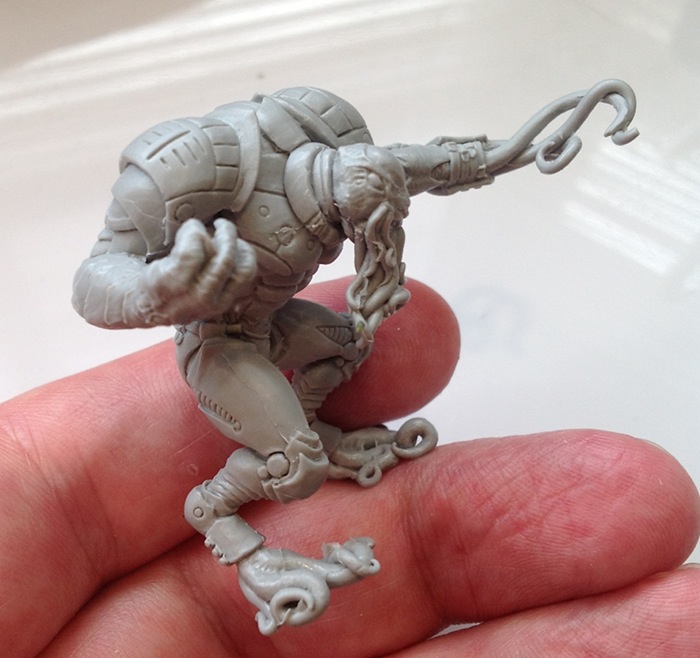
DreadBall Tentacle Time

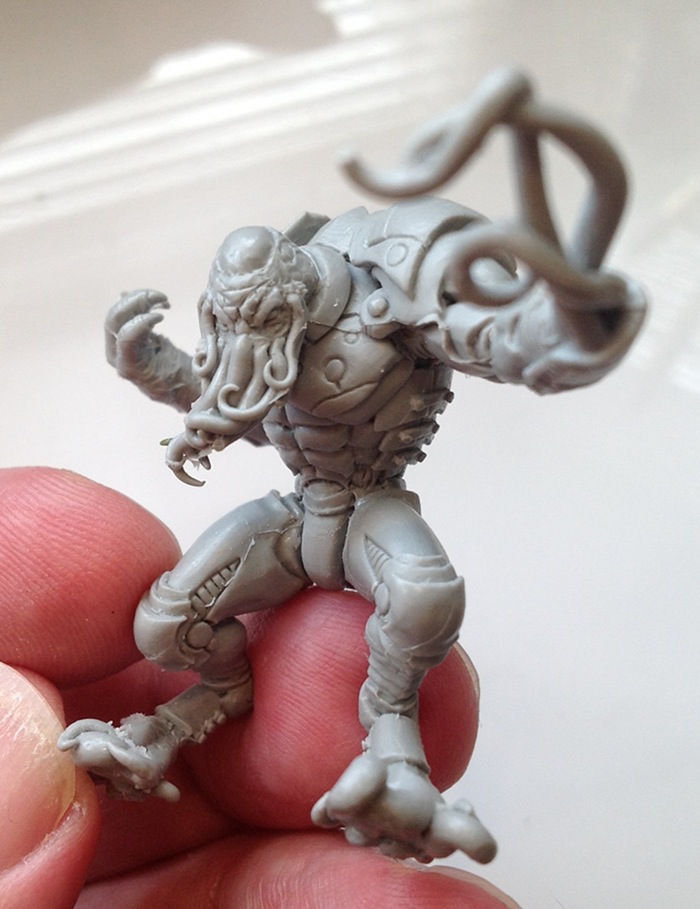
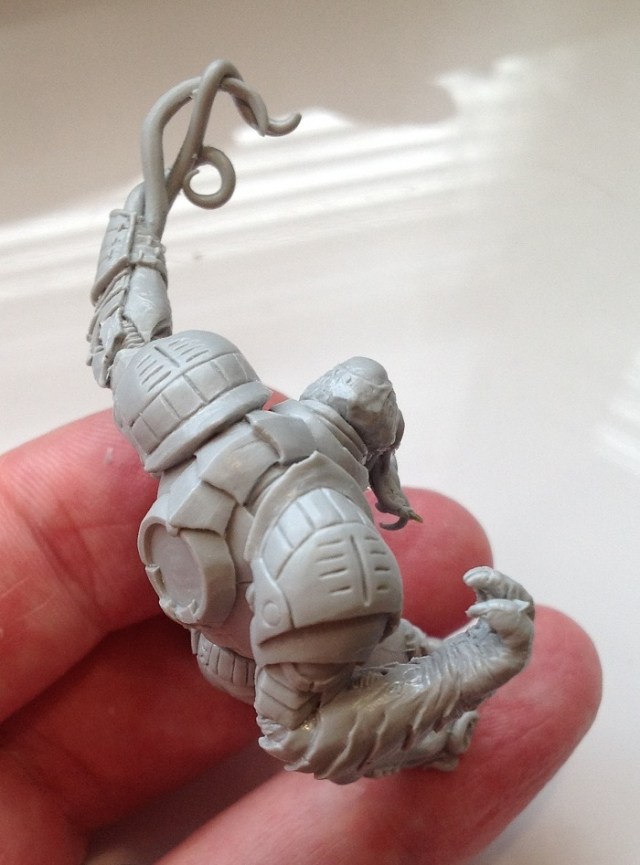
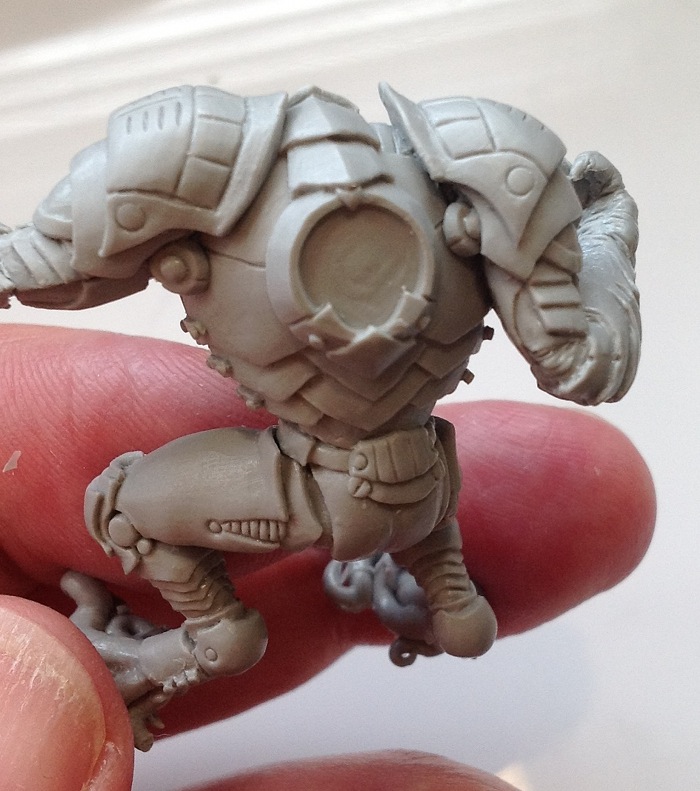
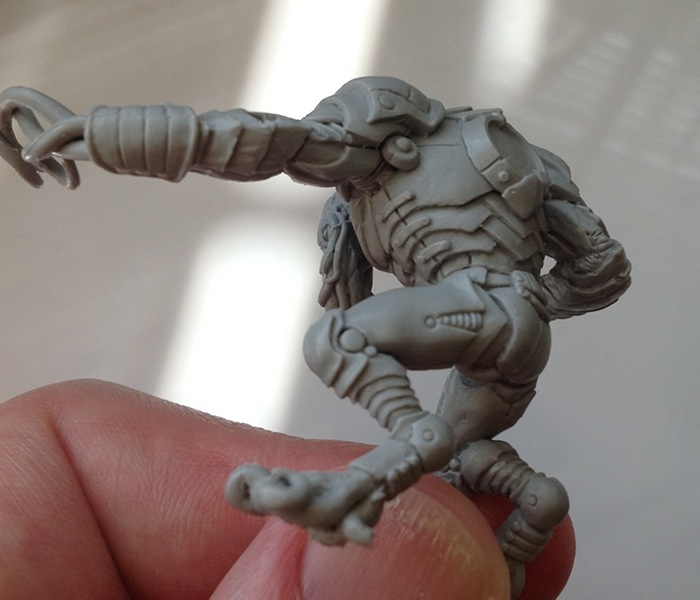
As we all know, you can’t have too many tentacles.

This is another of the pre-production models I’ve ended up with, and he’s a striking fellow indeed.

This early test shot does need a bit of a clean up, but I’m sure you can see past all that. As with all these pictures, they’re larger than the model itself who stands about 44mm to the top of his right shoulder pad (which is higher than his head).

Enjoy 🙂

tentacle front

tentacle face


tentacle top

tentacle back


tentacle low

tentacle right

Posted in DreadBall - The Futuristic Sports Game | 11 Comments

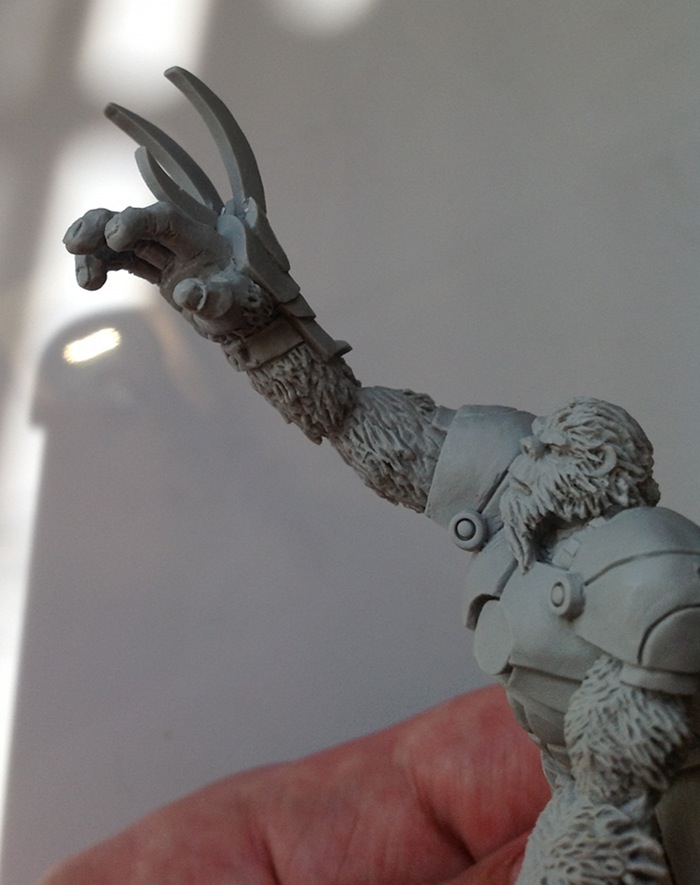
DreadBall Monkey Business!

Moving swiftly on from aliens with odd limbs we come to the big furry guy. He stands on two feet and a fist and is 49mm or so to the top of his head. As with the others, this is a pre-production version of the model.

To the photos!

Ape front


Ape reach

Ape left

Ape back

Ape right

An imposing chap (or should that be chimp?).

Posted in DreadBall - The Futuristic Sports Game | 11 Comments

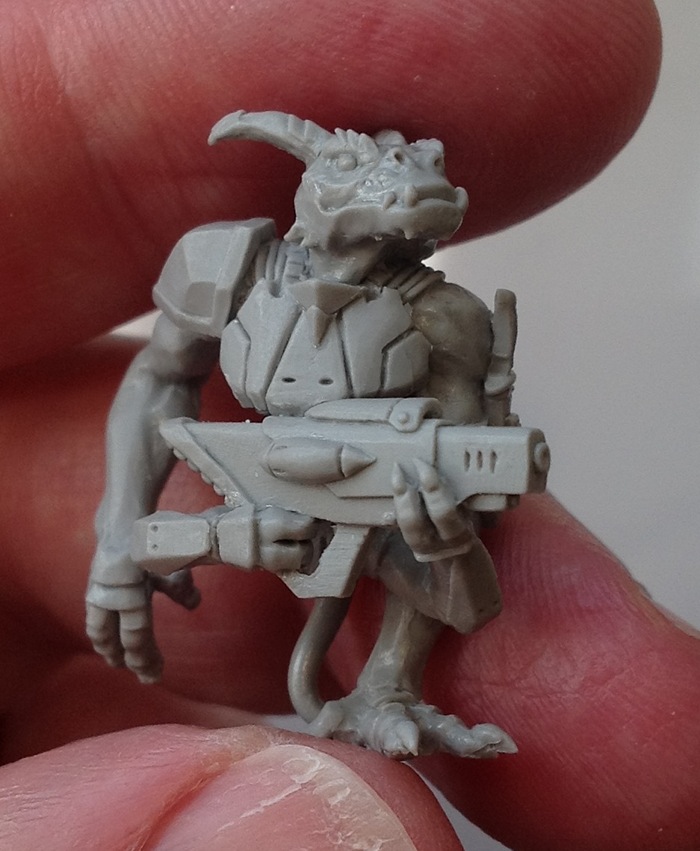
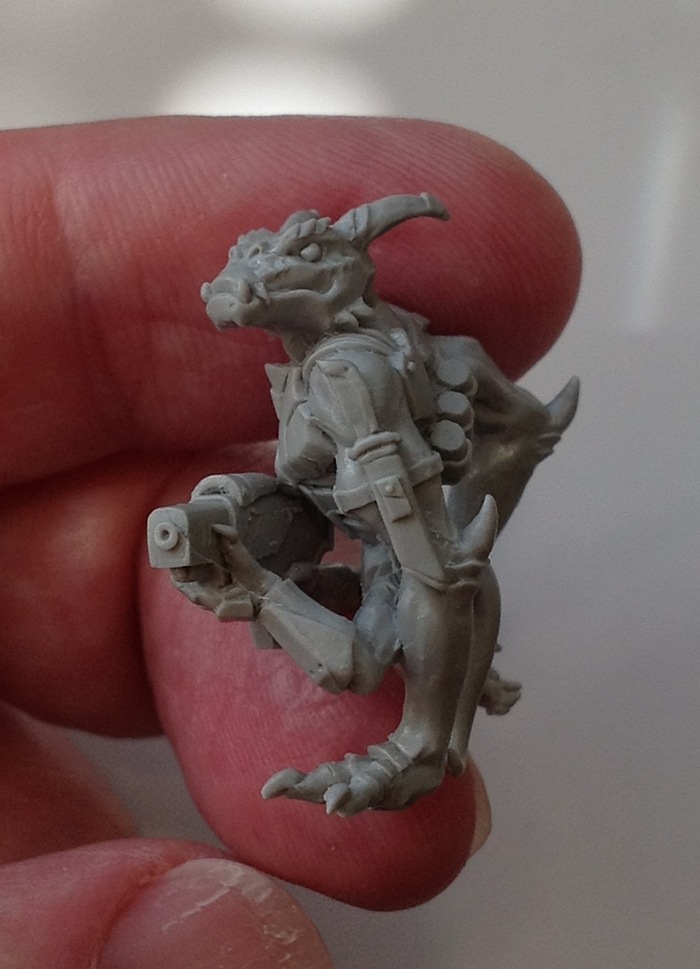
Deadzone Sorak Close Ups

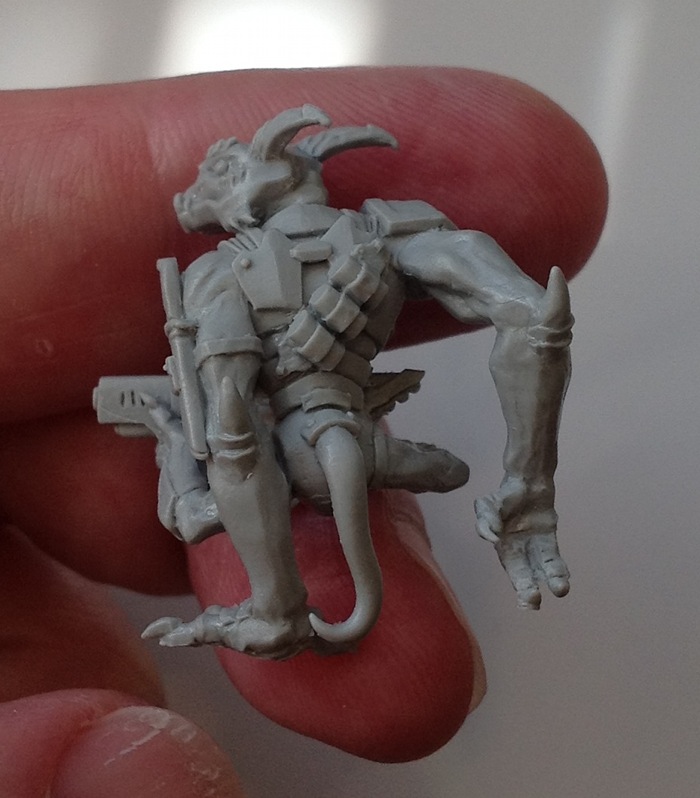
Another one of the teases the other day was a Sorak. These are another of the fun aliens that make up the Rebel faction and can best be described as foot soldiers.

Sorry.

Anyway, like the Orc Commander, you may not have seen this lovely little model from more than one angle, so here he is. Note that this is a pre-production resin and is shown at lots larger than real size (which is 29mm to the top of his head) without having been cleaned up first. You should ignore any blemishes as any mould lines on the final version will be in a different place anyway as the production models use a completely different mould and process.

And in case you are confused: yes he is walking on his hands and holding the rifle in his feet. Because he can.

Feet front

Feet left

Feet back


Feet top


This is another model I’m very pleased with. Originally the concept came up for DreradBall though he hasn’t yet made it into that game. Nice to see him making an appearance here.

The tricky part now is deciding what colour he should be.


Posted in Deadzone | 25 Comments

Did They Deserve To Die?

Today I’ve been murdering a lot of darlings, or at least I think I have. What’s perhaps more interesting than the details is a question I posed myself after a bit of pondering:

How can you tell the difference between murdering a darling and editing out anything else? Do darlings squeal more?

Posted in Game Design Theory | 9 Comments

Deadzone Marauder Orx Commander

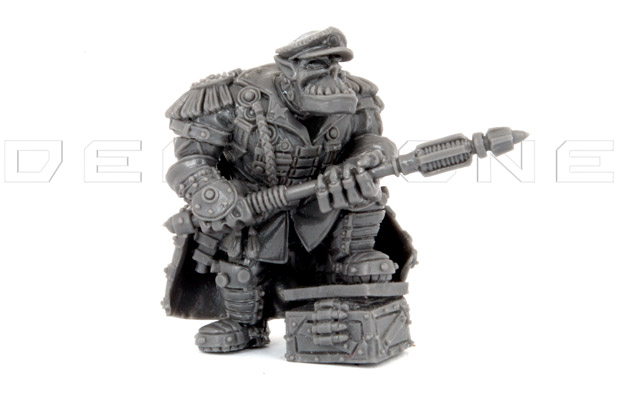
One of the models I showed a little of yesterday was the Orx Commander, or at least the first one – I’m sure we’ll do more.

You’ve seen this picture on the Kickstarter and the mantic blog.

Orx Commander

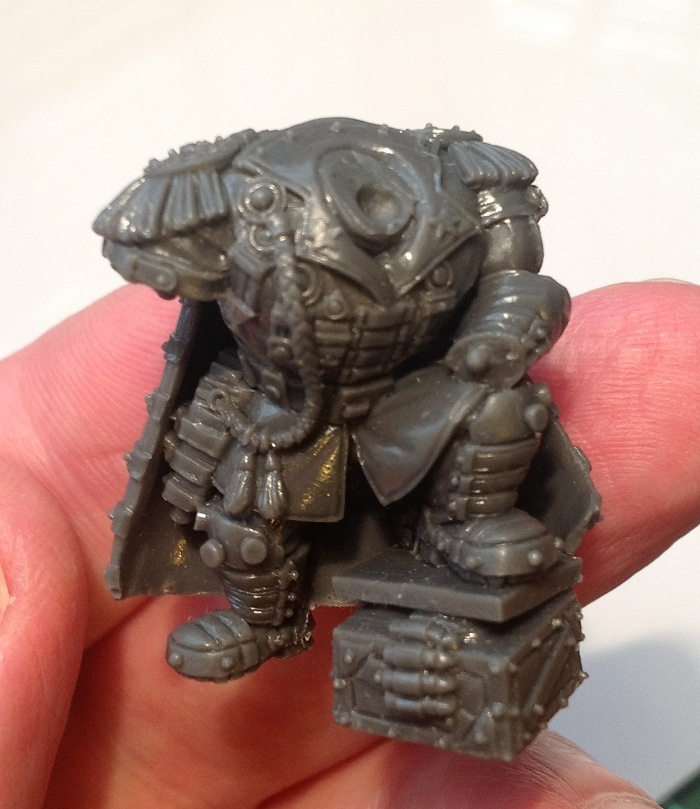
So you know what he looks like assembled and you can see the arms and head fairly clearly in the pic above. The following are a load of close ups of the body without the arms in the way. The pictures can speak for themselves.

OC sideOC front 2OC backOC topPersonally I really like him. Lots of detail to make him stand out from the troopers with his epaulets and tassels to denote his standing.

His pose is a nice change from the frothing loony combat monster Orx of which we have seen many versions. Plenty of time to revisit that meme in an exo-suit later 🙂

Posted in Deadzone | 8 Comments