Kickstarter Cogitations 4

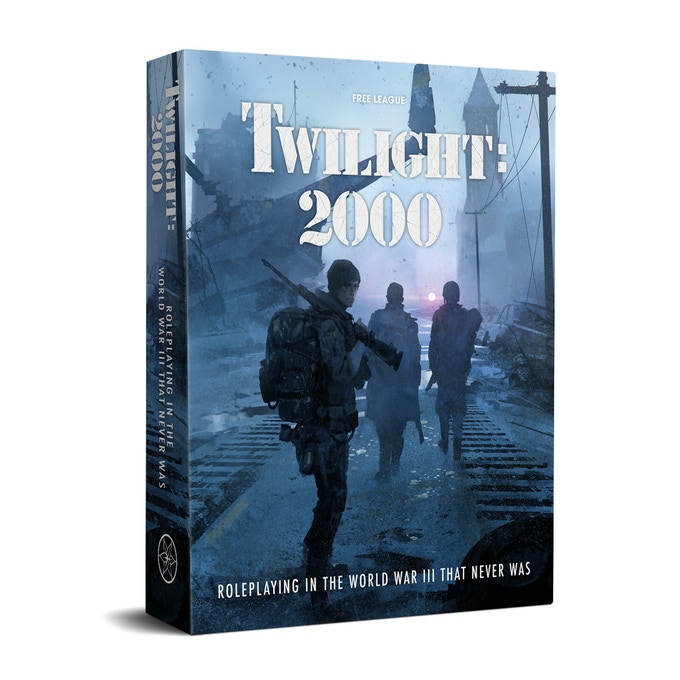
This week, I want to talk about just one game: Twilight: 2000.

Twilight 2000 boxed set

Normally I don’t talk about RPGs much as I haven’t played in years. I still read them though, and back in the day I used to play and run a lot, and write about them occasionally too. Post-apocalyptic games were one of the genres I enjoyed, and I played all sorts; from the silliness of Gamma World or Paranoia, through Morrow Project to Aftermath, and, of course, Twilight 2000. That was back in the day when the year 2000 was the bright future rather than the vaguely remembered past. Dear me, I’m old.

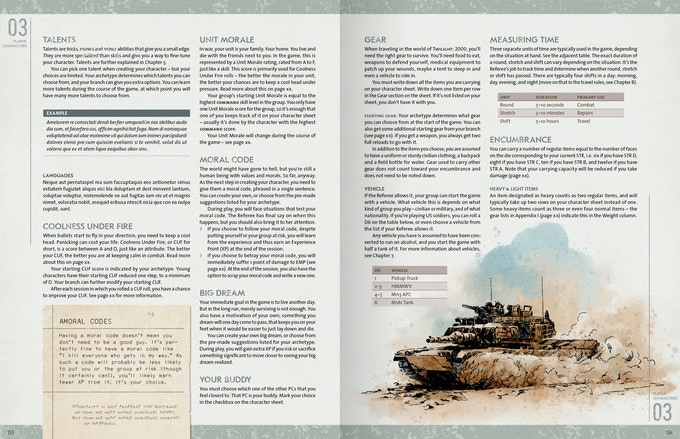
What’s interesting is that while the rest have largely blurred together as various shades of normal people in exceptional circumstances, the Twilight 2000 games always stood out as something a bit different. In this, everyone was a trained soldier. Sure, you might be an engineer or a pilot, but you were still combat trained and familiar with the basics. And you had guns. Lots of guns.

Fifty cal.jpg

And tanks.

Tanks

Lookit! Tank!

Anyway, I hadn’t paid much mind to the game since the 80s, so it was a pleasant surprise to see it on Kickstarter. What’s especially interesting is watching my own reaction, because I’m thinking “Oooo, I could play that. That would be fun…” Then some rationality kicks in and I think “Nah, never going to happen. Where would I get the groups together, and… oh. Solo rules. Now that is interesting.”

So, on the one hand I am confronted with the power of nostalgia. It’s a great seller, and we’ve seen quite a few reprints of classics on Kickstarter in the last couple of years, and many of them have done very well. What’s even more impressive is when people can capture some of that nostalgia without being a straight reprint of an ancient relic. That’s really clever. And hard. I’ve tried.

On the other hand, is the idea of solo RPGs. For me, that doesn’t entirely make sense as I was always more about the playing-the-role bit and less about the game. It just seems a bit weird doing that on your own. But if I think about it more as a game than roleplaying, then it’s a really enticing idea; being able to fight once more in the intriguing setting of the WWIII that never was.

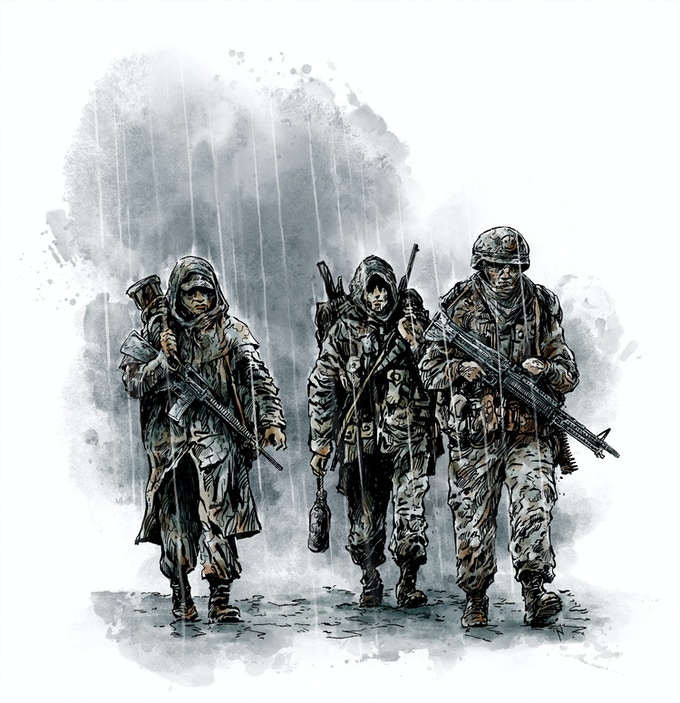
Will I back it? Who knows? I’ll certainly take a closer look at the rules and see what they offer about how the solo game might work. I may get a pdf for reading anyway, just to remember the good old days, when nukes rained on Europe and we all had to walk back to France from Poland. In the rain…

Rainy walk.jpg

Before I go it would be remiss of me not to mention my Game Design Mastery Patreon. If you’re interested in reading in-depth articles on all aspects of game design, why not come along and join us? So far there’s about 20,000 words of in-depth advice in the GDM library, with more added every month. Each article is on a topic chosen by patrons, and if you can’t wait for the next one then you can always ask in the private Discord server. Certified troll-free!

Posted in Kickstarter | Tagged | 3 Comments

Kickstarter Cogitations 3

People use the word unique way too often in marketing blurb. It’s not a complicated word to understand, but it’s often used incorrectly. This makes the people using it look sloppy and careless.

If you’re writing advertising blurb and you’re tempted to use the word, think carefully about whether it’s accurate or not. Unique is a big claim, and very often it makes you look like either a liar, or someone who doesn’t know the market. Neither is good. It’s a fair rule of thumb that whenever you make that claim, someone in the audience will be happy to point out your error, and where that rule has been used a dozen times before. In reality, little is genuinely new in game design, and that’s absolutely fine. A game doesn’t need to include a unique new rule to be brilliant.

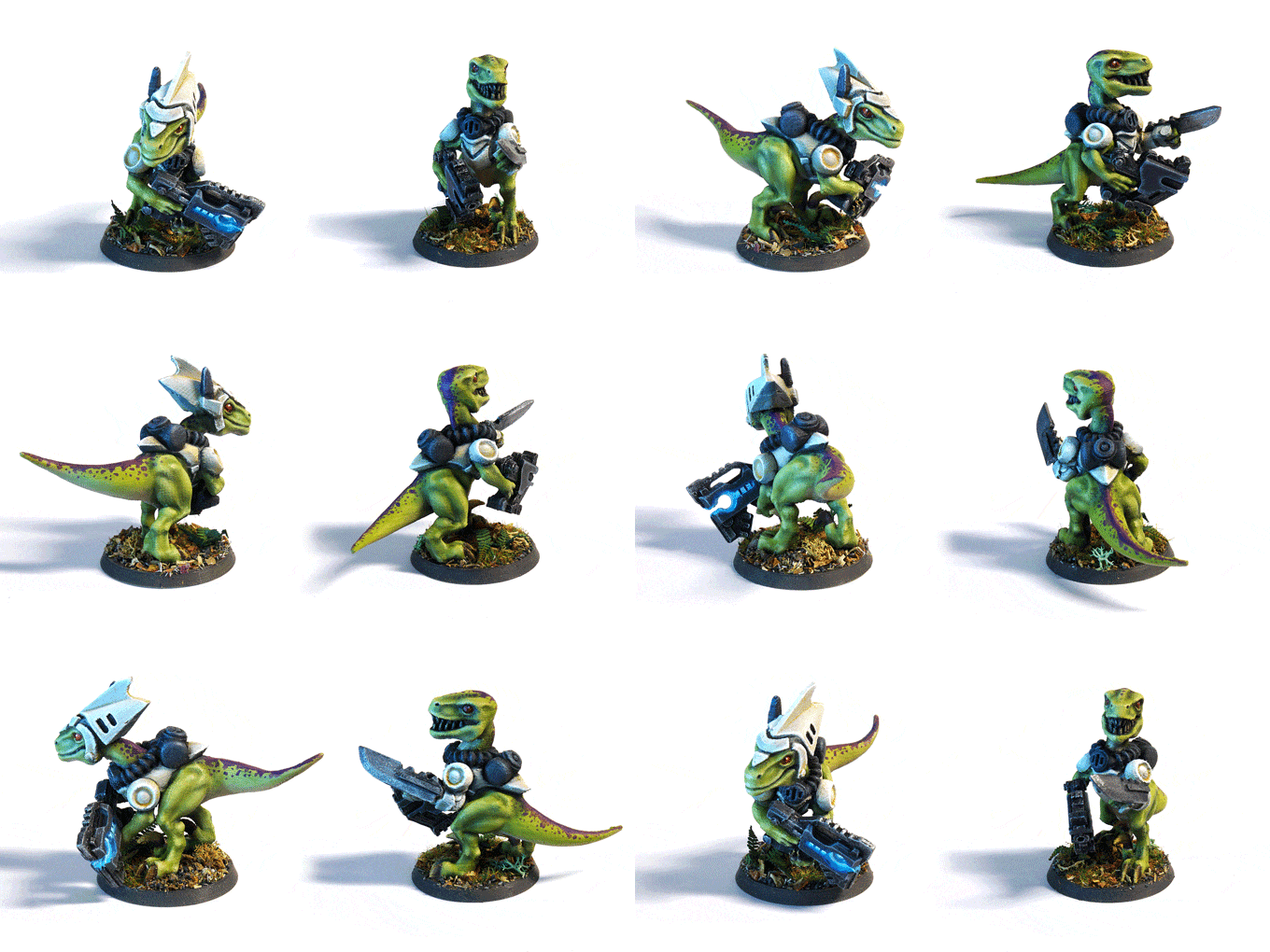
Raygun Raptors

When people abuse innocent words we send in the heavily-armed rotating dinosaurs. 

Of course, I’m talking about this because I’ve been reading Kickstarter campaigns again, and it’s cropped up several times. In no case was it true.

Also, while I’m on my soap box, unique is not a word you can qualify. You can’t be a bit unique, or very unique, or most unique, or more unique than them. In fact, you can’t be anything unique. You’re unique or you’re not. Exactly like its very specific meaning, it stands alone.

Rant aside, I was going to say that I hadn’t been especially inspired by Kickstarter this week. However, when I come to write this, it turns out that I’ve actually got quite a few interesting campaigns worth mentioning today.

One recurring theme is STL files for printing 3D miniatures and scenery. There seems to be an especially plentiful crop of these campaigns at the moment, and if you have a 3D printer you are spoilt for choice. I don’t, but I still like to explore them because I’ve always been a fan of miniatures. Raygun Raptors struck me as a particularly slick and well-presented example of the type, if you’re after an example.


I’m Currently Backing…

As I write this, I’m backing the Spirits of the Forest: Moonlight expansion. In the end it was the fact that the wooden version was KS only which made me back it, despite the fact that with tax and shipping it will be very overpriced. I already have the wooden version of the core game, so if I want this expansion then I’m not left with a lot of helpful choices. It feels a bit forced, but I could always say no.

Moonlight

That finishes in a couple of hours, so I’ll be back to backing zero campaigns again. Strange for me.


Also of Interest

There are a lot of intriguing campaigns on at the moment.

When I read through the KS campaigns, I watch the main video, then a how to play or review video, and quickly read the page. Unless it’s standing out at that point, I discount it. It had its chance to impress and it failed.

Of the remainder, I keep them on an open tab to look at more closely over lunch breaks and whatnot. This is where most of the following are currently sitting, so I’ve not been through them all in detail yet. Still…

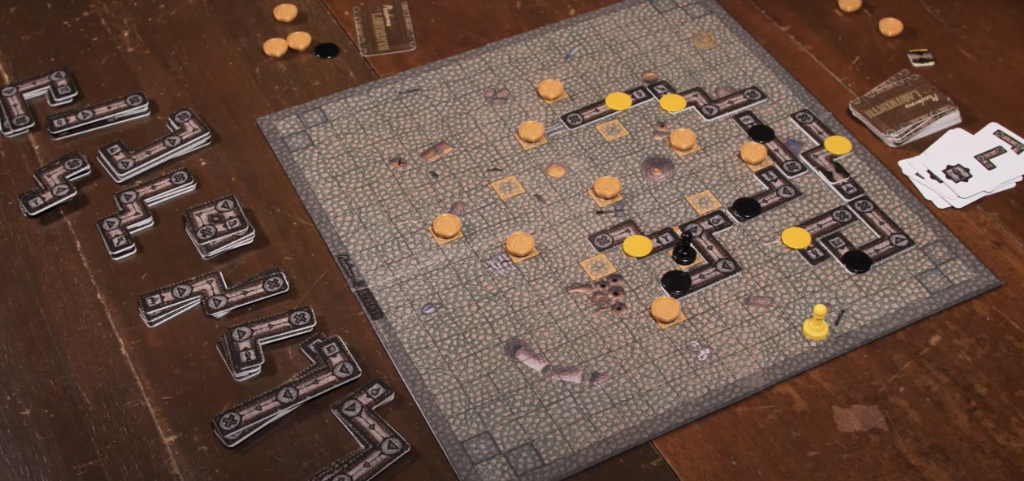
Looters of the Labyrinth

Looting that Labyrinth.


The first one reminds me of Ricochet Robots, which I’m very fond of. This new one is called Looters of the Labyrinth. What I like here is the clean and simple design. It’s pared back to the bones of the idea, and that’s just what it needs. No unnecessary frills. There’s a month left to go on this, though it’s unlikely he’ll fund. Shame. Let’s hope he comes back for a second try.

tacticum

Another simple abstract that caught my eye was TACTICUM. As with Looters of the Labyrinth, I can’t see me getting it on the table, so I’m not backing it. However, I am fond of clean and elegantly presented abstracts, and these both tick that box. I almost backed them anyway. TACTICUM does an especially nice job of being small and physically contained without sacrificing what it needs to be in terms of game design. Unlike Looters, it’s funded too. Congratulations to them!

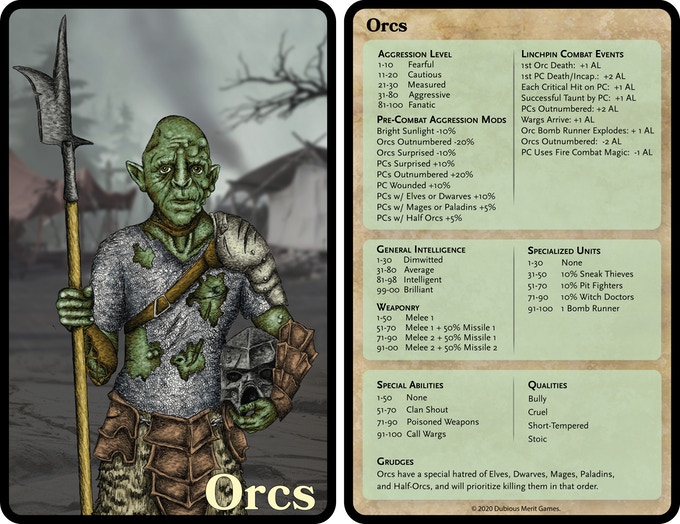
The minds of monsters look a lot like D100 tables

Finally, there are a couple of very different campaigns I’d like to mention in the RPG neck of the woods. One is the straightforwardly-named These Monsters Have Minds Of Their Own. This is an AI system for taking a bit of the load from the GM by automating some of the monsters’ responses. It’s a neat idea, and one that I’ve done versions of myself, which is partly why I’m interested. I have a professional curiosity to see how they’ve tackled design problems I’m familiar with.  It’s the sort of thing I might buy to read, and never expect to use in anger.

Wanderhome

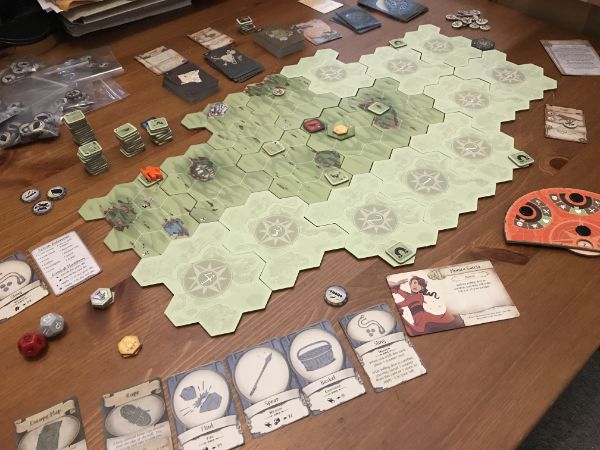
Calm and pastoral art from Wanderhome.

The second RPG campaign I’m still looking at is the very successful and somewhat eclectic Wanderhome. There’s a bunch of sample files to download and read through, which is a sensible approach for something nonstandard. Always fun to see someone exploring variants and pushing envelopes, so I look forward to reading these. Again, it’s unlikely to be something I play myself, but it could well be something I back to read.

And that’s all the Kickstarter thoughts I’ve got for you this week. I’m off back to finish the corrections on my latest article for the Game Design Mastery Patreon. If you fancy reading an in-depth discussion on Narrative vs Balance-focussed Game Design or one of the other topics I’ve already covered, then why not pop on over and sign up?

Posted in Kickstarter | Tagged | 10 Comments

Kickstarter Cogitations 2

Starting my thoughts on Kickstarter today with an idea that’s related to one of my old jobs: Editor. Years of being professionally picky makes me very aware of typos in anything I read, and whilst I’m sure I spot stuff most people neither notice nor care about, properly written rules are part of getting the best out of your project.

When you’re writing promotional copy for adverts or your Kickstarter campaign, it’s usually done quickly and so is even harder than usual to be 100% perfect. Those pesky typos will sneak in. Having said that, there are some areas of a Kickstarter page that need checking a bit more carefully than others. This example is from a how to play video – one area on a KS page you can guarantee a lot of traffic.
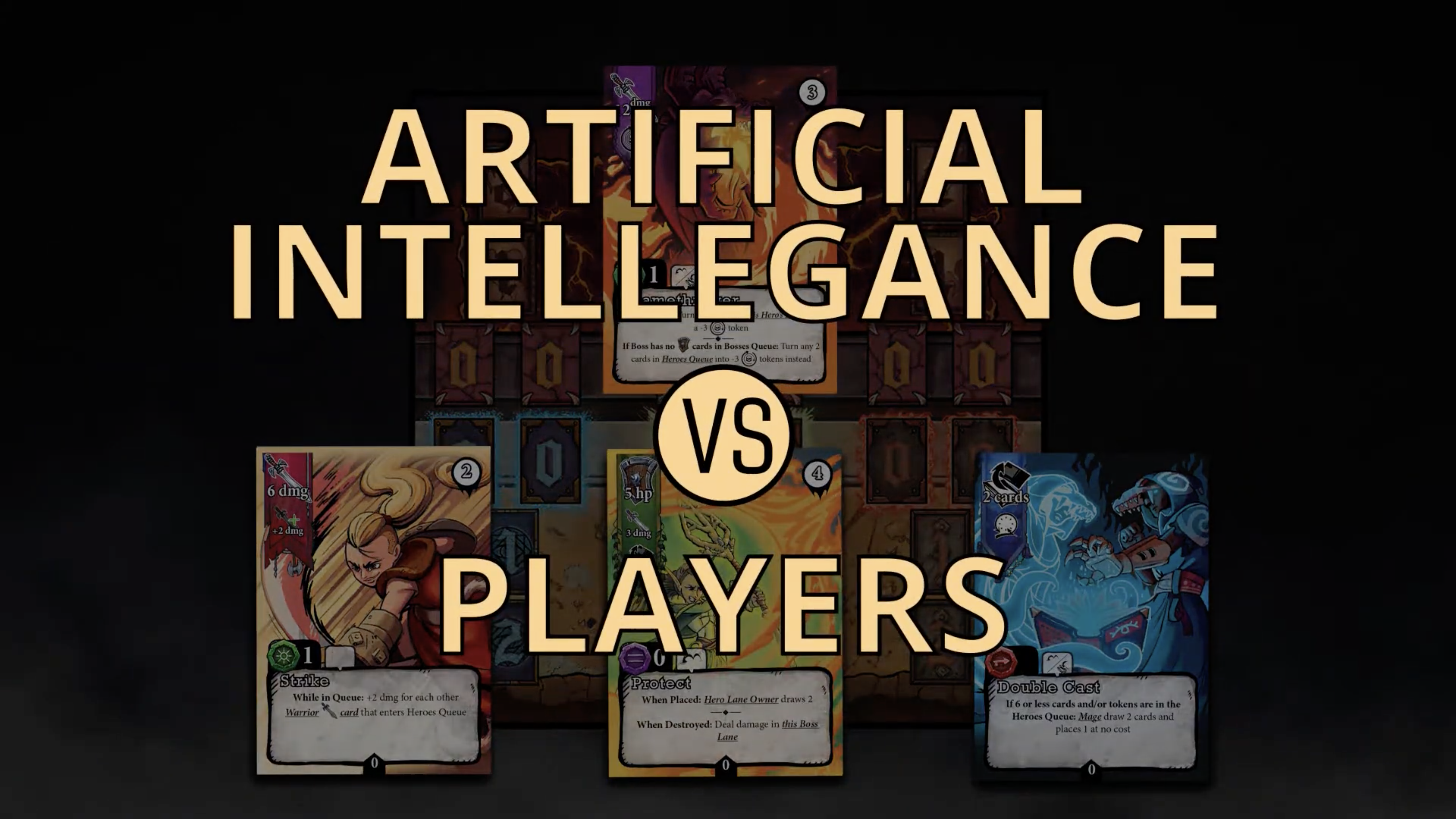
Intellegance

The moral of the story is simple: always use a spell checker. Also, remember that a lot of spell checkers ignore ALL CAPS words. Another good reason to be sparing with that ugly and unhelpful format. And, let’s not forget the humble proofreaders and editors. Spell checkers only look for some errors, and grammar editors are good, but not yet great. Skilled humans trump them all.

Other than that aside, things are relatively quiet on Kickstarter at the moment. 10% or so fewer campaigns than average; no vast campaigns. There are a lot of the smaller dice and RPG expansions which have limited appeal for me as a backer. As a lone creator myself though, it’s nice to see individuals and smaller teams using the space to get to an audience. It’s a tricky business, and Kickstarter has provided a far easier way for people to dip their toes in the water than ever used to be the case. Best of luck to them all.


Friends in the Right Places

Currently most popular game on Kickstarter, and second highest funded (it’ll be the top in a couple of days) is Escape the Night. This is an excellent illustration of how a creator can bring a non-KS audience with them and convert it into cash. Here, the prodigious Mr Graceffa has leveraged a large YouTube audience and readership of his books into a successful KS campaign despite no previous campaigns* and having backed zero other people. Received KS advice is to always back a few campaigns to make sure it at least appears that you’re part of the community. Clearly that’s not a major drawback if you can import your audience.

As a clear demonstration of this, look at the number of new backers for Escape the Night:
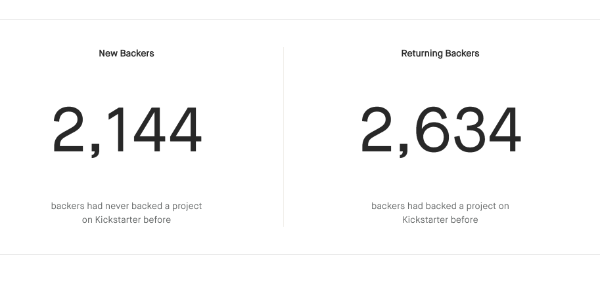
Escape the Night backers

On most campaigns new backers make up a single digit percentage. For example, this is CMON’s Ankh.
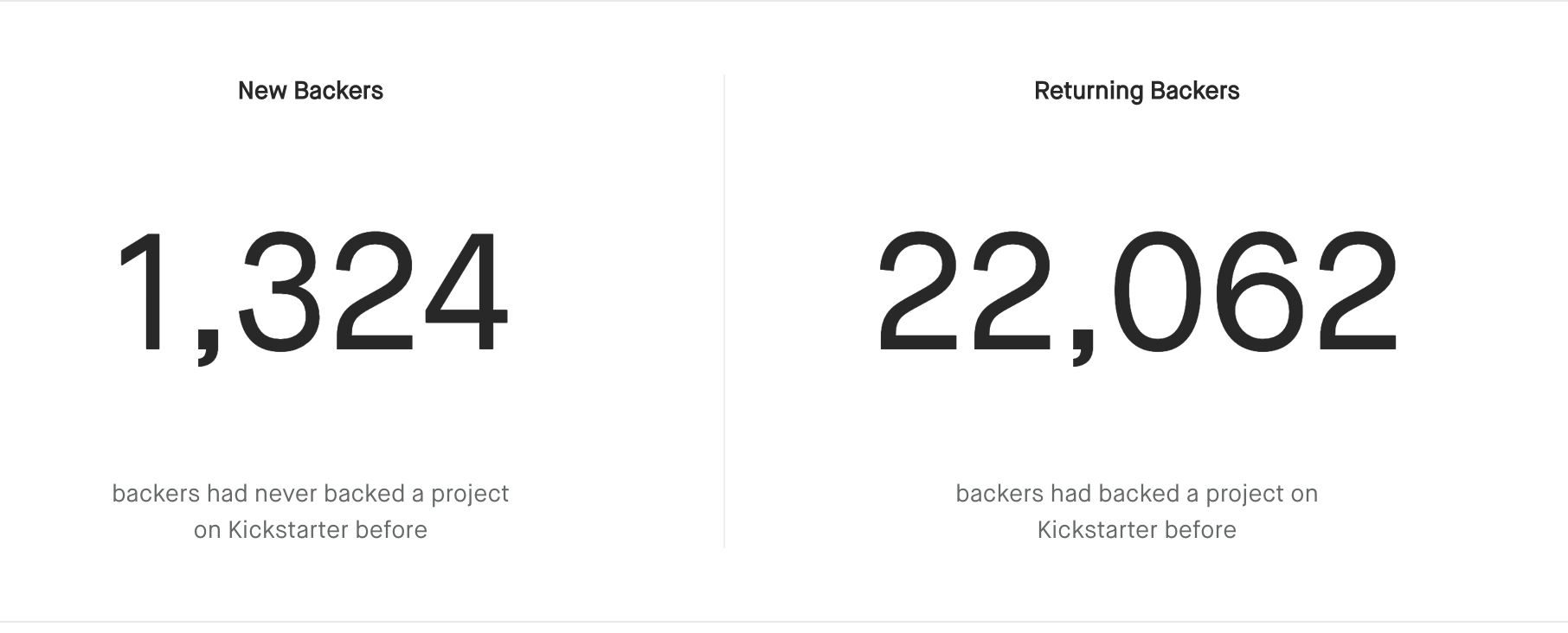
Ankh backers

The difference between a game that exists essentially within the KS bubble and one that can bring in lots of backers from the outside is striking. It’s also sobering when you consider how few of the outside audience makes it to being backers. Escape the Night is a programme on YouTube Premium with several seasons under its belt. Presumably that has quite a few fans. Mr Graceffa has 2.7m followers on YouTube, and his books are on the bestseller lists, and that’s not all he does (busy chap). He clearly has an audience. When you think of it like that, bringing in just over 2k backers from outside KS isn’t so impressive after all.

Just something to ponder if you’re thinking of running a KS yourself.


I’m Currently Backing…

I went for the Moonlight expansion I talked aboutlast week, as expected. That’s all at present. I am, as usual, considering some others.

The first one is the Petrichor expansion. Cows. I backed the original KS campaign, so I already have most of this. The new clouds are interesting, though I’m not tempted at that price.

A rather different project is the second edition of In Magnificent Style. I’m still not back to playing games with other humans, so solo is something I’m thinking about a lot, both in what does hit the table and what I’m designing. I wasn’t aware of this particular game before and even if I don’t back it, I’m happy that the campaign brought it to my attention so I can add it to my wish list.
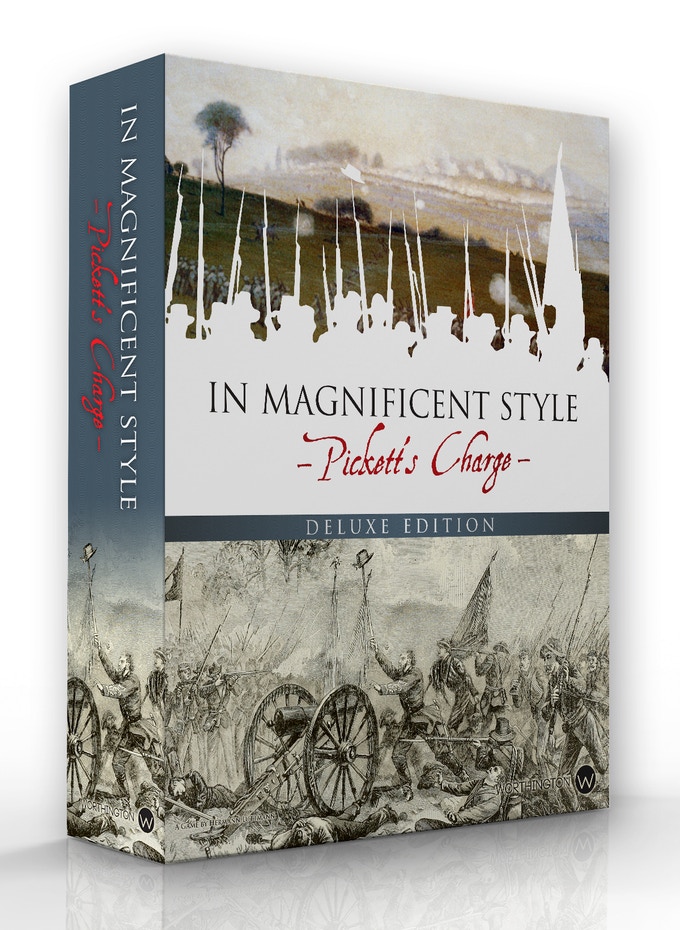
In Magnificent Style 2e

I’ve been on a journey with it though. At first glance, I thought that a game about Pickett’s charge looked a bit limited. After all, it’s about one tiny piece of a single huge battle in a war that lasted years. Would it have any replay value? My initial thought was that I was very unlikely to back, but the more I looked at it, watched reviews, and saw how it actually played, the more I could see myself enjoying it (and playing it more than once). It has some clever core mechanics and looks quite exciting. It’s got a fair amount of random in, which fits the context well. All told, it’s a clever piece of design on an unpromising topic. However, I can’t say that I’m a fan of their new board. They’ve made it bigger and added all the reference sheets onto it. That’s not a bad idea in principle, but my eyesight is not good, and I just can’t read the small writing from any distance. I often have this problem with cards on the table as well. Having the reference on separate sheets (as was the case with the first edition), actually helps here as I can hold it as close as I like – not something I can do with a board. But then they’ve also updated some of the rules, and those sound like real improvements. So, pros and cons. Do I hunt down a first edition, back this second and print my own QR sheets, or give it a miss? I’ve got just over a week to decide if I want to jump on the KS.


The Turd in the Swimming Pool

Despite my interest in both of these campaigns, there is the problem of Brexit. One of the fallouts of that poltroonery is to increase the cost of many KS campaigns to UK backers. Until the end of the year we still benefit from companies that offer EU friendly shipping, having our VAT paid for by the fulfilment company. That’s great. However, virtually nothing physical that I back now will be delivered before then, so I need to check. EU friendly (probably) means nothing to UK backers after December, and VAT is 20% on pledge cost + shipping cost, and on top of that they’ll charge you another £8 (last I looked) for the privilege of collecting it. All of this can easily double, and in one case tripled the nominal pledge cost of a game on KS. Of course, this is not a new thing, but it’s gone from a few campaigns to nearly all of them. This additional cost has encouraged me to wait for the retail versions of several games recently, and I’m not going to be the only backer who does so. That doesn’t help creators of physical products to hit funding, and it may mean that some of those games don’t ever happen. It’s not the fault of the creator or the backer, but it is a problem. I suspect that this, and the ever-rising shipping costs, are major factors in the steady rise of digital product campaigns for STLs and PDFs.


Also of Interest

Finally, despite the shrill claims of marketing departments, most weeks don’t see technical innovations or genuinely new mechanics. This week has.
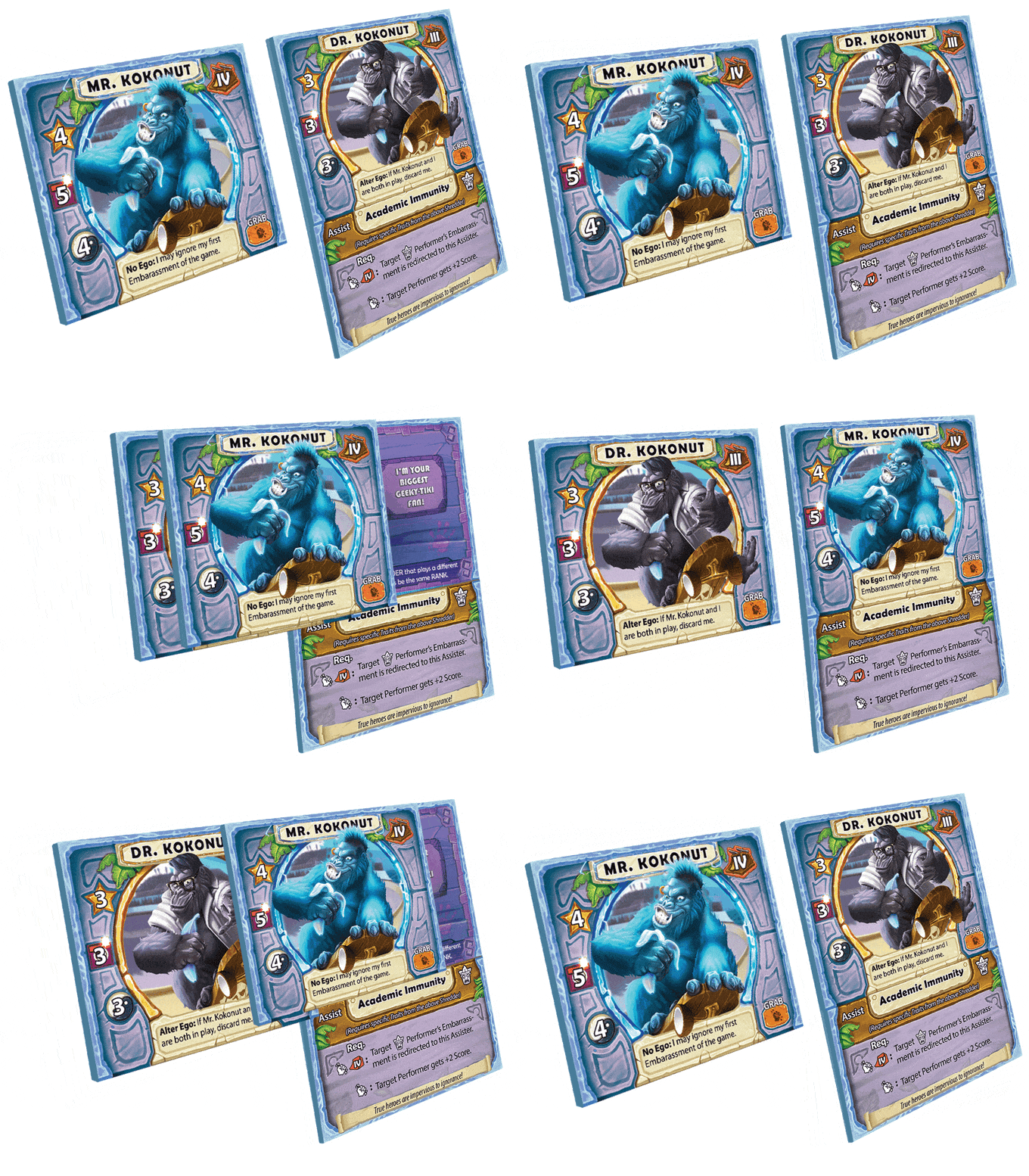
Swapping cards

The campaign in question is the otherwise unremarkable and weirdly-themed Shaka Shredders. The innovation in question is two-part magnetic cards that can be reorganised before and during play. Fancy cards or no, the game does nothing for me, and judging by the response I am not alone. However, swappable magnetic cards sounds like a fun trick I could do some interesting designs with, and it feels like there is a gem waiting to be uncovered here, lurking somewhere in the concept. Worth pondering. Obviously, this isn’t going to fund, but I very much hope the idea survives.

Of course, I could have told him this before he’d gone live if he’d joined me on my Game Design Mastery Patreon. And he’s not the only one. You should come along too. Let me help you to make your game the best it can be.

line

*Actually, he has run at least one earlier campaign. It’s strange that he appears to have two creator profiles, with one campaign on each. Not the normal approach at all. Perhaps the new one was set up by one of his staff.

Posted in Kickstarter | Tagged | Leave a comment

Kickstarter Cogitations

There’s always something interesting going on in Kickstarter. Sometimes it’s a new trend, other times it’s a specific campaign, and there are always fun new games to look at. It’s a revolving shop window of shiny toys.

As my job and my passion is games, I look at the Kickstarter tabletop section most days. My aim is to at least skim every campaign that goes up, regardless of whether I think I might want the product or not. After all, you never know where a clever new twist on an old rule will turn up, or who will find a neat new way to engage with the audience. Learning can sneak up on you from anywhere.

All of this means that I have lots of ruminations about gaming on Kickstarter and being as how I’m hiding away in a bunker at the moment, I thought that I’d share some of this online. In-depth analysis and advice is what I do for the clients I consult with, but I thought it might be fun to discuss some of the more prominent trends and notable campaigns with you guys too. So, in no special order, here’s some of my current thinking on where tabletop games are on Kickstarter. Feel free to tell me how wrong I am in the comments below.


Numbers

Having taken a hit in raw numbers of campaigns when covid-19 arrived, shed some staff from the losses, regained the campaign numbers briefly, announced that revenue was actually up, they’re now down in campaign numbers again. It’s been a bit of a rollercoaster.

Presumably the decreased numbers and increased revenue are both effects from lockdowns, with people spending time at home, away from their work and teams. Can’t coordinate launches as easily, but there’s no trouble clicking to pledge.

None of this seems to really pose any major threat to the platform; it’s just something to keep a weather eye on. It does strongly suggest that launching during the pandemic is not something to worry about from the POV of potential support. And, as a corollary, if you had a campaign that underperformed recently, you need to seek the scapegoat elsewhere. The pandemic is not an excuse for a lack of campaign performance.


Product Types

Kickstarter’s tabletop games section was originally dominated by board games. There was always a sprinkling of other things, but their numbers were small. This is neither bad nor good, it’s just what it was. Now it’s changed.

The trend is for increasing numbers of non-boardgames in the tabletop games section, mostly RPG supplements and lately STL files for 3D printing. The latter is part of the rapid march of this technology and has been fascinating to watch develop from nothing only a few years ago. Nowadays 3D printing is central to the workflow of many miniature companies, and this is only going to grow. Mind you, that’s a big topic for another day.

Screenshot 2020-07-23 at 09.43.24

As I write this an STL campaign is the most popular campaign in the category.

There are also occasional amusements like Cthulhu bottle openers. Not sure how that belongs in the tabletop games category, but that’s where it is. I’m not saying we should rush out and report it; the campaign’s not doing any harm in the category and you can see how its potential audience will have some crossover. What I’m wondering aloud is really whether there’s much function to categories when they’re being ignored. Again, this is really a bigger discussion about finding information in the internet age.

This trend of changing focus for the category does make me wonder whether it would be a good idea for KS to split tabletop games into subcategories. After all, we already have a separate category for card games, and we have more RPG campaigns than that.

I’m somewhat torn between thinking that the cross-pollination between games all being in the same place is better (arguing to roll card games back into the mix) and splitting them up making it easier for backers to find what they want and not miss a potential gem in the wall of irrelevancies. What do you think? Would it be easier or harder to find what you want if, say, RPG and STL campaigns were in their own categories?


I’m Currently Backing…

Nothing.

That’s weird as I’m usually backing something. However, all the tasty morsels I’ve been supporting of late have finished and there’s nothing I’ve jumped on yet. I’m still considering a couple though:

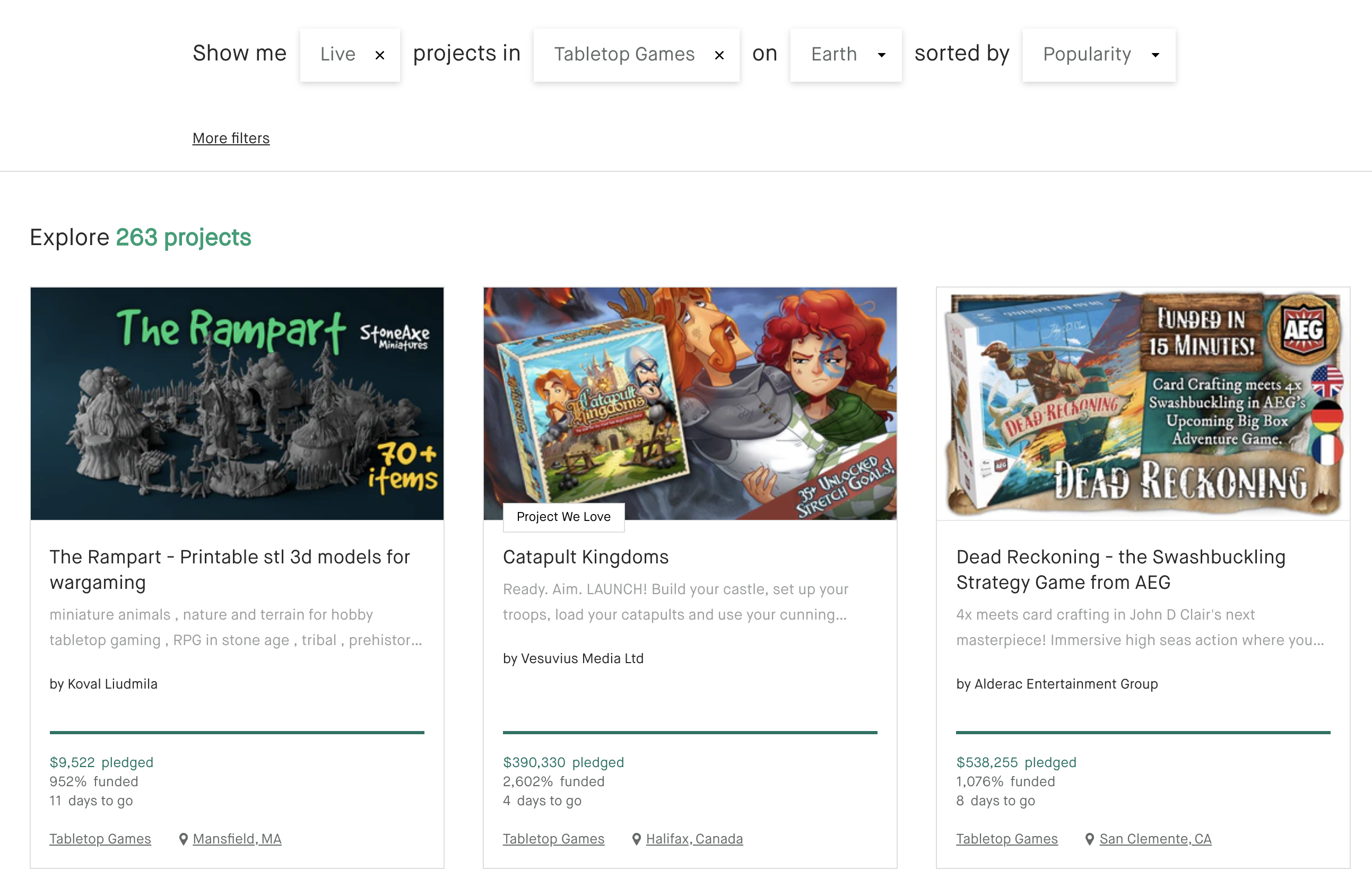
Dead Reckoning

Yo ho ho and all that jazz.

Dead Reckoning. There’s lots to like here, with clever use of overlaid clear cards and an unusual combat mechanic (this latter feature is likely to be a bit of a love it or hate it thing). Clear cards have been used for a while now, though never by many people, and they offer some fun options for the designer. If you’re interested in game design, then it’s definitely worth watching the videos to see what Mr Clair has done. In the end, I’m leaning towards not getting it though. It’s mainly a balance of the cost compared with what it adds to my collection. While this is an intriguing-looking game and I’m sure it plays fine, I’m not convinced that it scratches an itch that none of my other games don’t already. I’d happily play it, but I probably don’t need my own copy.

Moonlight

The other one I’ve been contemplating is the Moonlight expansion for the very pretty Spirits of the Forest. It’s an attractive and simple game I bought from their previous Kickstarter because I could play it with non-gamers like my mum. That’s not happening at the moment, but I’ll probably back this expansion because I’ll hopefully be back to socialising with other humans by the time it arrives.


Also of Interest

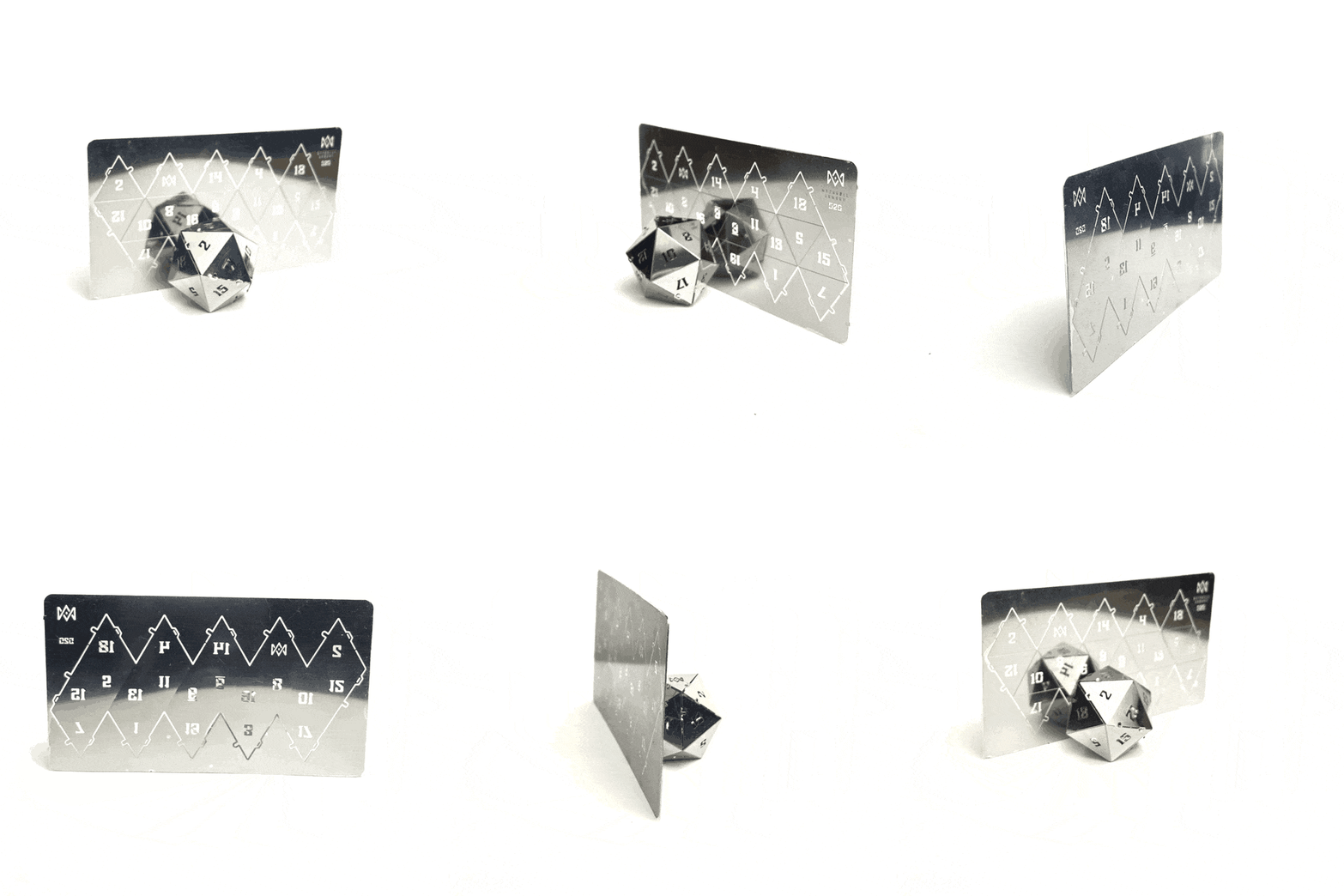
One last campaign to mention this week: a foldable D20. (kickstarter.com/projects/mythroll/mythroll-armorys-foldable-metal-d20-for-rpg-tabletop-gaming):

Foldable dice

The sheet fits in your wallet and folds into this dice. Neat 🙂

Not sure whether it was foldable flat again so you could stick it back in your wallet after you’d played. That would make it more useful. Still, the idea of an emergent game of D&D just breaking out like a flash mob tickled my funny bone.

Enough of me rambling. Have you noticed anything cutting edge and cool on Kickstarter lately? Are you backing anything special?

Finally, if you’re interested in discussing games at length, or are working on a design of your own and have some questions, why not join us on Patreon at Game Design Mastery?

Posted in Kickstarter | Tagged , , | 6 Comments

Patreon’s Progress

GDM server iconI just posted another article to my Game Design Mastery Patreon, and I thought that I’d talk about a few lessons from the first however long it’s been. 6 weeks? Something like that.

Overall it’s been great, though it’s not gone entirely as planned. Mostly what I mean is just that it’s taken a lot longer to get going than I’d hoped. The vast majority of this is down to stuff outside the Game Design Mastery project, so my slowness on Patreon is, in some ways, collateral damage from that. However, some of the pace is intrinsic.

It would have been easier if I’d waited till everything was in place to start, with all the initial articles written and so on. That would have been easier, though I don’t think it would have been as useful for the patrons, which is why I didn’t do it. To start with, I’m very happy with my last-minute idea to get the patrons to choose the topics for the GDM articles. That meant I needed to start and find out who the patrons were and what they wanted before I wrote things. However, it also meant that the articles I did write were the ones they voted for, so presumably they’re more useful to more people – and that’s the whole point.

The other GDM thing that’s slowed me down is the length of the articles. That’s entirely self-inflicted. I was originally thinking of them as the sort of thing I’ve written on here, but a little longer. In fact, they’re turning out a great deal longer. I’ve finished two so far: the first on adapting multi-player co-op games to solo play was 3,000 words. The second, on structure and uses of playtesting, was just shy of 5,700 words. I’m working on the third and fourth now, and they’re not small either. This all comes from my approach. Basically, I’m trying to channel 30 years’ worth of experience into my answer to each question, because that’s how I think of the topics the patrons choose. They’re a question about something: “what do you know about…? Do you have any tips or tricks for…? Is there anything I should know to avoid when…? So I’m trying to cover as much as I can each time. In addition, I’ve not got a specific number of magazine or book pages to fill, so I can write as long as I’ve got something to say. This means that each article is as long as it needs to be, and I’ve no idea what that will be when I start. I’m sure I could have thought of a way to make this easier, but then they wouldn’t have been as good and I’d have felt like I was short-changing folk. In other words, the extra effort is entirely selfish.

I also delayed myself by trying to get them laid out nicely using software I wasn’t familiar with. That’s just me biting off more than I could chew and it wasted a bunch of time. My bad. For the moment I’ve uploaded them as Word pdfs, just to get the content up. That’s 90% of the value. The rest is mostly just prettiness. I’ll revisit that at some stage, once all the content is up and being added to as promised.

Finally, I had this idea that I could do a weekly snapshot of behind the scenes design and development. Turns out that’s way harder than I thought. I suppose the primary issue is that thinking and computer work aren’t very photogenic, and that’s the bulk of what I do. More time spent in prep would have uncovered this. Still, I’m not feeling too bad about this as it’s forcing me to be creative, and I’ve made some progress. Expect to see more of that aspect soon…

Overall, I’m very thankful to my select band of loyal patrons. I think of these brave souls as my elite recon team, volunteering for a secret mission from which they may never return, and in the event helping to scout out the dangerous wilds of Patreon. They’ve been invaluable. We’ve had some great chats on the Discord channel, and I look forward to many more. Hopefully we’ll also get some more volunteers to join their ranks.

Overall, it’s been a bit of a choppy start in places, but we’re still here, still making progress, and we seem to be out of the worst of it now. Once this initial tranche of articles is done it will be much easier to keep up with the regular monthly addition I’d planned, plus the odd bonus one. All told, the good ship GDM Patreon is looking at a bright horizon now, and clearer sailing ahead.

If you fancy joining our merry band, just click the link or read the article to see what’s it’s all about. We’re waiting to welcome you on board!

Posted in GDM Patreon | Tagged , , , , | 6 Comments

Lots of Games for Cheap

One of the heartening things that this year’s many and varied calamities has brought up has been a series of generous offers from creators in a wide variety of media. The latest one I’ve stumbled across is gaming related, which is why I mention it here.

Over on itch.io, they’re offering over 740 projects for a minimum donation of $5. As this is provided by a total of over 500 different indie creators, there should be something to suit most tastes somewhere in the mix.

Note that itch.io is a funny place, full of weird and wonderful creations by a myriad of talented indie creators. It began with digital projects, and that’s still what the bulk of them are. However, increasingly you also see tabletop RPG and the occasional tabletop game. There are a dozen or more of these in this bundle.

I’ve not got anything on itch.io myself (yet), so I’ve no personal investment. This post is really just a public service announcement. Thought that I should just put this out there. After all, it’s always better to find out before the timer runs down.

And yes, there is a timer. About 7 days and 17 hours let on this generous offer as I type.

Just click the banner to see what I’m on about:

itchio offer banner


Posted in Random Thoughts | 4 Comments

How is Gaming Weathering the Storm?

When I worked for Games Workshop, the bosses used to say that the toy and game industry was especially robust when it came to surviving recessions; last in, first out. So what about pandemics?

With most bricks and mortar game stores only now reopening after weeks of closure, and even online stores having issues with absent staff, needing to reorganise for safe working, and supply chain hold ups, it’s not been easy.

Many publishers are suffering from a wholesale cancellation of conventions. The sales they would make are often critical to the cashflows of smaller companies. This loss of face time with their audience has also meant a lack of exposure for many new titles, and the consequent loss of sales even online. After all, people can’t buy what they don’t know about. Expanding your marketing spend elsewhere is fine in principle, but is much less of a known benefit, and that’s assuming you have the cash to do so.

Happily, so far I’ve heard of many troubles, plenty of job losses, much tightening of belts, but few closures within the industry. Most companies have adapted rather than simply choosing to bunker up, and they’ve used their ingenuity to work round the problem. We’re seeing online versions of official conventions as well as many impromptu gatherings. Gamers are finding ways to game even if they cannot meet their usual groups in person. And that’s a very good thing both for the sanity of the individual gamers, and the publishers who need folk to have a reason to buy the new shiny.

Then there’s Kickstarter.

Before the pandemic, their tabletop games section usually had about 310 projects running at any one time. This number is slightly seasonal, and wanders about a bit natively, but 310 is a good rule of thumb. As the pandemic hit, and uncertainty among creators rose, so the number of new projects dropped precipitously. Within a couple of weeks it had dropped by a third (the lowest I saw it was 203). Kickstarter reported a similar % drop in revenue.

As Kickstarter apparently had little or no cash reserves to fall back on, they were forced to let about 40% of their staff go. That was pretty grim, and happened very quickly. Luckily, having just unionised, the staff got what look on paper to be reasonable deals (considering the circumstances), and I suspect that many of them will be hired back when the good times come again.

They are coming back, right?

Probably.

Since that low of 203, the numbers have steadily picked up, and last week they briefly topped 300 again. It’s not back to where it was, but I’d say it’s running about 90%, which ain’t bad, and is within the noise of the normal variability. Of course, we know that it’s not normal, but on pure numbers it’s not alarming in the way it was.

Of course, we aren’t out of the woods yet. Not by some distance.

According to the medical professionals, we are almost certain to have a second wave of this virus. We know what’s coming, and we know what to do, but like the first time, politicians are unlikely to actually do that, and many more people will die.

It also means that any nascent recovery in any sector is likely to get punched in the face.

So, what to do?

Well, if you’re a gamer, it all depends on your financial security. Over 40 million Americans have been made unemployed as a direct result of the pandemic. There are similar problems in other countries. If this is you, then buying new games is the least of your worries. You’ll want to play what you can from what you already have (or try some of the many excellent free PnP offerings online). Play is good for your emotional wellbeing, and I’ve been unemployed enough times to know that you’ll want the boost.

If you’re in a stable job and are weathering the storm fine, then there’s nothing to stop you carrying on as before. Certainly, your FLGS and the smaller publishers could definitely do with your support. I say smaller companies as I’m assuming that the biggies have deeper pockets and can survive better anyway. But all of them are likely to be hurting.

If you’re a publisher, and were thinking of using the traditional route to market to sell in bricks and mortar stores, maybe hold that thought for a while. It’s going to be months before distribution and sales are back to normal. You’ll have to spend way more time in communication with your usual channels to find out what the reality is on the ground. Maybe you can make it work. However, it’s likely to be an even steeper uphill climb than usual. Maybe you need to push online more.

If you’re a creator looking to run a Kickstarter, then my advice is to do so now. Don’t wait. Logic suggests that we are getting a second wave of this soon, and there are bound to be more disruptions. Maybe another lockdown, definitely more people sick, more people isolating, more people unemployed. Also, more people in real need of some joy, and that’s what games bring, right? So, we keep on keeping on.

However, it’s worth noting that during this virus, during this lockdown, right in the middle of this sudden loss of trade, Kickstarter also saw its biggest ever campaign. Mythic Games ran their most successful campaign too. Several other companies ran campaigns that raised over a million dollars. Clearly, there is still an audience out there.

So again, my advice to you is move now if you can. If you don’t want to go live during the uncertainties of a second wave, then it’s now, or next year.

And Kickstarter itself? It seems pretty robust. They were caught with no cash reserves, which was careless of them. Maybe they’ll learn. Even so, they reacted quickly and grasped the nettle rather than pretending they’d be OK without a rapid response. I think that shows solid leadership and a robust company. The next wave is likely to have less effect on the numbers as people have seen it before. Less fear of the unknown.

All of which means that it’s been a grim time, but us humans are resilient. Gamers want to game, and a mere pandemic won’t stop that. It has changed our landscape, and maybe it’s taken away some of our cash. What it hasn’t done is dim our desire to do what we do. And gaming is part of that.

It may be bad now.

No matter.

This too shall pass.

Posted in Kickstarter | Tagged , | 5 Comments

It’s Alive!

Turns out all I needed was a dark castle, lots of lightning, and a crowd of peasants with pitchforks and fiery brands. Just apply the electrodes, and Voila! It’s alive! By which I mean, the Game Design Mastery Patreon is up and running. Huzzah!

GDM Patreon

I’d always planned to go live in the late evening to avoid double-charging people. In the end it crept just over midnight as I ran into a load of Discord stuff I didn’t understand. I’d not used it before and whilst it’s pretty simple when you’ve unravelled it, there are loads of things to set behind the scenes and their explanation of terms is abysmal. They clearly missed the first lesson of 101 How To Explain Stuff: always define your terms before you start. Not just true in rulebooks.

Anyway.

In the end I think it’s all linked up as it should be, which is cool. There’s a few more bits and bobs to explore on the back end as there are quite a lot of options in Patreon for linking other software. Other than that, there’s content to write! Always more of that.

If you’re interested in the idea of the Game Design Mastery project, I wrote a longer explanation of what it entails here, or you can pop straight over to the Patreon. I think it came out looking quite attractive in the end.

Posted in Game Design Mastery | Tagged , | 2 Comments

Game Design Mastery

Every art contains a related craft.

Music is underpinned by an understanding of notation and structure as well as traditions, styles, and the ability to make the noises you desire come out of the instrument you choose.

Cooking is more than throwing random ingredients in a pan. Done well, it rests on an understanding of interrelations of flavour and texture, the chemical changes brought on by heat and cold, the interplay of differing ingredients, the signatures of regional flavours, changes in seasonality, and an encyclopaedic knowledge of root vegetables.

Visual arts of any sort, whether they be painting or film making, are all founded on an understanding of light and form, of composition and negative space, of hue and value, as well as the ability to make the mark you want with the tool you choose.

And so it is that there is a craft to learn for Game Design too.


Master and Apprentice

Forget talent. Everyone starts with a lack of skill, and by dint of effort, attains some. More effort is always helpful, but this is not the smart way to learn. Merely bulling your way through is the long way round. A smarter way is by targeted and focussed learning.

When you study any art, what you are really studying is the craft that relates to it. This is absolutely necessary. The craft is what you learn.

Whether it is possible to teach someone how to be a Master, or whether this is in some way innate, is open to debate. It is, however, entirely possible to teach someone the only measurable prerequisite for being a Master: mastery of the craft.


Attaining Mastery vs Being a Master

Not all those who achieve mastery of a craft become a Master of their Art. However, every Master of an Art has also achieved mastery of their craft.

If you want to join the ranks of the Masters, then attaining mastery of your craft is the only sensible place to start.

Regardless of what your art made be, you need to practice the elements of your craft and polish your understanding until it is automatic and instinctual. As long as you want to stay at that level, you will need to continue that practice, because craft skills are perishable.

There are many ways to learn your chosen craft, and mastery of it will not look identical to each practitioner. Mastery does not mean that you know every possible permutation – there is always more to learn. However, there is a key distinction:

The novice needs to focus on the craft to achieve the effect they seek. Their effort is in bending their tools to their purpose as much as the purpose itself.

The Master understands the craft to the point that they no longer need to think about it. They intuit answers to puzzles, and they see each challenge as resolvable, generally in myriad ways. They are, therefore, able to rise above the struggles of how can I do this, and instead devote their time to the why and the what. What is worth doing? Why would I choose to do this rather than that?

The few people who are considered Masters of an Art have invariably mastered their craft. However, not all who perfect their craft can be called Masters. That extra step is far more elusive and not susceptible to a simple A, B, C approach. Based on researching the lives of acknowledged Masters in other arts, my belief is that it is dedication to a specific field, and the continuation of study that leads to true Mastery. That is a distant goal for most of us, though the journey itself can be very rewarding. There is much to learn for a practitioner of any level.


The Game Design Mastery Project (GDM)

This project aims to help game designers of all experience levels get the most out of their craft, and, with diligence and practice, to master it. It includes a series of books, a Patreon page, and my consulting work.

My hope is that GDM will enable me to help a lot more people than I can with just the consultancy work I do at the moment. I’m also looking forward to being able to focus more time on listening to what people need to know, and where they struggle. I’ve been doing this for a long time, and some stuff is second nature to me that is opaque to the novice. It’s not always easy to tell what that might be, and I’m sure I can be more effective by hearing what you have to say. Mentoring people is often illuminating for me as well, and seeing the light bulb come on makes me smile every time.

So what about each of these three elements within GDM?


Consultancy

To take the least widely interesting first, it is possible that the books and Patreon will kill my consultancy work. We’ll have to see. However, if there are people who still want one-on-one attention, I’ll make time to do some between the books and Patreon. I’ll set up a new contact page for that in due course. This site is overdue it’s reworking…


Game Design Mastery books

These are the heart of the project in many ways. Research shows that people learn better in small, focussed lessons, so rather than one monstrous volume hundreds of pages long, I’m producing a series of much smaller books, each of which will tackle a single piece of the puzzle. They will be inexpensive, and pocket sized for convenience (if you get the print version). The aim is to publish one a month. The books are split into two main threads: Theory & Practice, and Nuts & Bolts.

The Theory & Practice books cover the why and the conceptual end of the process. Nuts & Bolts is a series that looks at individual mechanics and dismantles them so you can understand where they come from and how they can best be used.

All of the books include background on the topic and discussion, as well as practical advice on how to apply the volume’s topic to your work. As humans generally retain learning more by doing than reading alone, each volume will also include at least 2 practical challenges for you to try your hand at.

The model for this is more the 1-Minute Manager series, if you know them, than a multi-part magazine. You do not have to collect them all; they aren’t numbered. Instead, you should just pick the ones that suit your style of work and interests. Each stands alone.


Patreon

For those who are not familiar with Patreon, it is a site where people who want to support creative individuals can sign up to pledge a certain amount of money each month to do so. In return, they get some rewards.

It’s a very flexible system that aims to replace the single rich patron that renaissance Masters like Leonardo or Michaelangelo had, with a larger number of normal folk each donating smaller amounts. It’s analogous to the difference between venture capitalists and crowd funding.

The aim of Patreon is to provide partial or complete funding to enable creative folk to write, play music, paint, sing, or whatever they do instead of panic about paying the bills every month. It is a way to enrich the world with beauty in all its forms. Yes, even that one you can’t stand.

Each creator chooses one or more levels at which a “patron” can offer support, and defines what the cost and rewards for each will be. These levels are called tiers. I’m starting with 3.

In essence, the cost of each tier reflects how much of my time I think it will take for me to deal with its rewards each month. Each tier includes everything in all tiers below.


Tier 1: Curious about Game Design (£2)

Firstly, you have my sincere thanks for your support. It looks trite on paper, but it’s heartfelt. Without you guys, the GDM project doesn’t work. The books may spread the project’s tentacles wide, but patrons are the project’s heart.

This tier also gains you access to a library of GDM articles. I’ve put a couple in to start with. A new one will be added each month. On top of this baseline, another article will be added each time we hit a new milestone (when the total number of patrons goes up another 25).

In addition, there is a Patron-only Discord.

Oh, and a short, weekly, informal, behind the scenes video to see what’s on my desk and what I’m up to. This is somewhat scary.


Tier 2: Intrigued by Game Design (£5)

On top of the Tier 1 rewards, you get another 3 things:

A second Discord channel so you can talk about…

WIP versions of the background and discussion sections of the next volume in the GDM book series. This may be one iteration of each volume; it may be more. How many depends on what works when it goes live and we start to kick them about. Either way, you get to read the rough cut before anyone else, and have input into what works, what’s missing, and what could be clearer. I look forward to the conversation.

Patrons at this tier also get to nominate topics for the monthly articles and vote on which they would like me to do. I’m happy to write on anything about GDM, so let’s make it whatever is most useful to you. I’m intrigued to see what you’ll come up with.


Tier 3: Absorbed by Game Design (£12)

Patrons at this level have one more Discord server to discuss the final piece of the puzzle:

WIP versions of the challenges from the next volume of the GDM book series. Every volume will have at least 2. This, more than any other element of GDM, is here to make you think. On the face of it, some of these challenges look pretty easy, but this is deceptive, and all reward a deeper pondering. They are puzzles that you can return to time and again, and which can be answered in a number of ways. They are more like zen koans than crossword puzzles because they do not have a single answer. Only by not trying can you be wrong.


Exciting Times

For me, GDM is a really exciting project. As those who have met me in person will attest, I love nothing more than discussing games, and I’m very hopeful that you and I will be able to build a group of like-minded individuals around the GDM concept. And yes, you’re a vital part of this. Me talking to myself just won’t be the same.

So here’s my expectation and hope: GDM will take time to build, it will be a lot of hard work, and it will be an absolute pleasure to be part of.

It starts tomorrow.

Posted in Game Design Mastery | Tagged , | 10 Comments

A Two-Pronged Assault

Given the number of changes that outside influences have forced on everyone’s plans over the last 6 months, I have tried to come up with a new plan that will, hopefully, be more robust. While there are still many outside events and actors who could change things, these modifications should be more akin to dinosaurs evolving gradually than a dirty great rock falling out of the sky and killing them all one sunny Friday afternoon.

At the highest level, I’ve split my work into two main areas. There are a few odds and ends, admin, and whatnot which sit outside, but the bulk of my work now belongs to one or other of these two blocks:

  • Game Design Mastery.
  • My own IPs.


Game Design Mastery

This project aims to help game designers of all experience levels get the most out of their craft, and, with diligence and practice, to master it. It includes a series of books, the Patreon I mentioned, and a continuation of my consulting work.

Note that “mastery” does not mean that you will be a master, nor that I am one. I consider gaining a mastery of the art of game design to be a prerequisite for being considered a master, but not a guarantee. But that’s a whole other article.

I’ll be posting a more detailed exploration of this project and what to expect this Sunday.


My Own Intellectual Properties (IPs)

I’ve worked on many fictional worlds for other companies over the years. These are ones that I’ve been working on for myself, without the need to satisfy clients or management; in fact, without the need to seek approval outside my own head. I could argue that this makes them better, but all it really does is makes them more personal. Now that may mean that I’m more invested and so produce my best work, but you’ll have to decide for yourself.

There are several of these, and all are intentionally without a deadline. The foundations of a new fictional world are worth taking time over as getting them wrong can cause all manner of troubles down the line. Getting them right and making them solid will reward you later. So that’s what I’m doing. I’ve already written some short stories and games, and made some sketches, but nothing I’m going to share till its ready.

I mention these here not to tease you for an imminent release. That’s not where they’re at in my head. I just wanted to let you know that interesting stuff is going on outside the scope of the Game Design Mastery work, and that it will turn up in due course. When it’s ready.


Other Stuff

I’ve also been experimenting with planning more downtime into my schedule. I’m used to working 7 days a week, so taking days off is weird. I tried doing nothing at all and just flumping about wasting the day on YouTube videos and suchlike, and all I felt was guilty for wasting a day. It wasn’t relaxing at all. So, I’m being constructive in other ways, including learning how to use some new software, which is a lot of fun.

One last thought is about this blog. In the light of this latest revision of what’s possible, it’s going to have a slight change of direction. For the time being, I’ll not try to define it. Seems best to focus on the other things that are quite constrained and leave the blog to be what fits between those spaces. That would make it more a mixed bag of whatever happened to be on my mind or desk at the time. In a way, this is more like what I think FaceBook is intended to be, but in a longer form as you know me – I like to write. That, plus I really do not get on with FB.

So, lots of stuff happening.

See you on Sunday for more on the Game Design Mastery project

Posted in Random Thoughts | 2 Comments