The Plastic Soldier Company

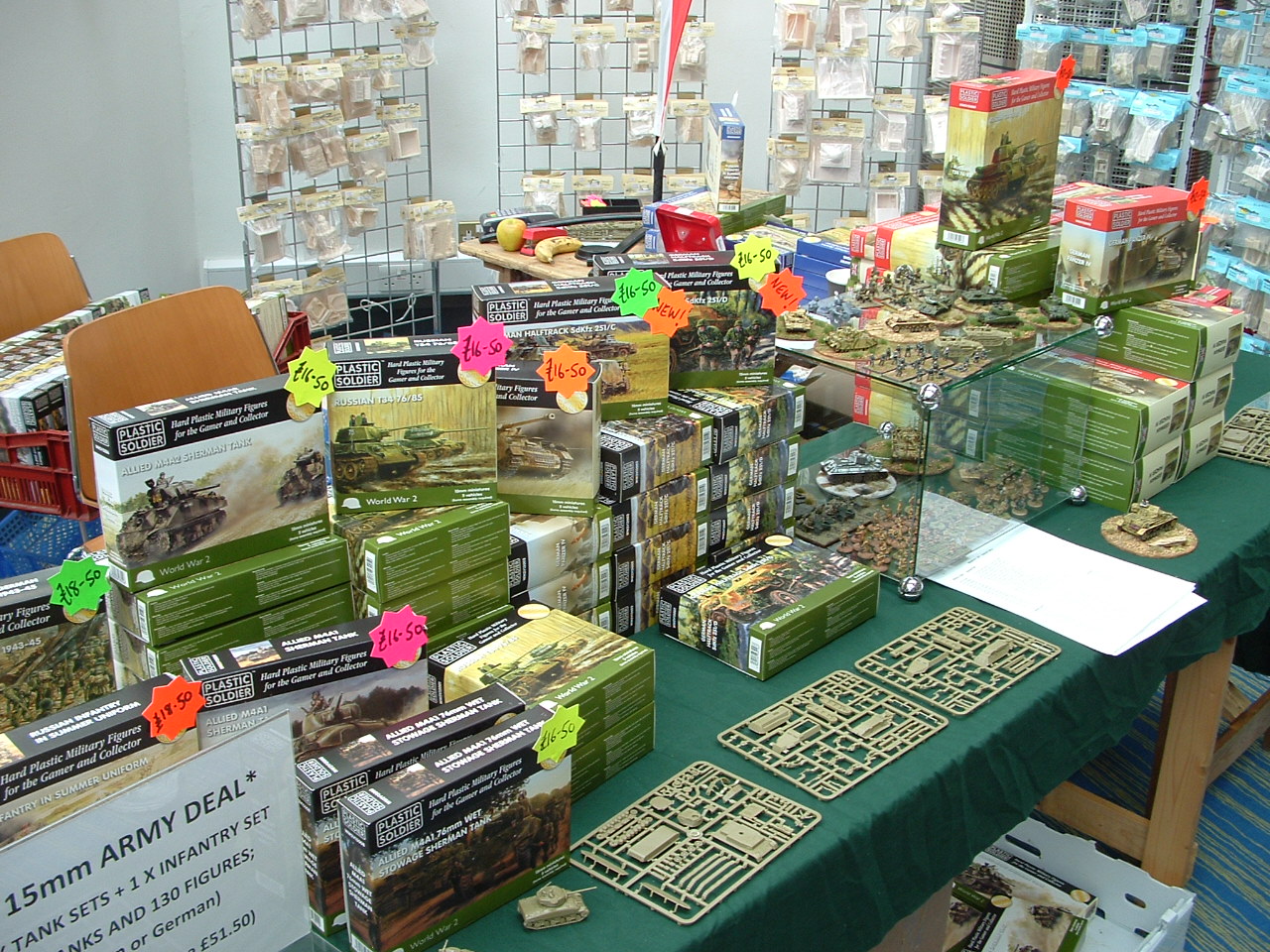
I was rummaging through my photos from Derby and realised that I had a couple of rather nice shots I hadn’t shared yet. They’re the Plastic Soldier Company stand, showing some of their rapidly growing range of 15mm and 1/72nd and 28mm models. The reason this is at all relevant is that I’ve got a pile of their models to review, and I’ll be doing that over the next week or so. This is a sort of introduction, in case you’re not familiar with their range.

They are producing new kits at a prodigious rate, and seem to have a great nack for getting everything you need on a single sprue, balancing the detail of the kit with the practicality of a wargaming model. I’ve been really impressed with what I’ve seen so far, and without wanting to jump the gun on any later comments, I think they look to be coming out on top for 15mm models, certianly. And they’re cheaper than the competition too, which is never a bad thing.

Some German infantry here. I particularly like the medic.

And a mixed bag of armour. I’ve left these images pretty big so you can see the detail. You can see their latest models (the unpainted 251s) at the front.


Posted in WWII | 12 Comments

Review: Epic Tau Recon Pack

While I was getting the Tau Skyrays I thought I’d pick up some of the Tau light recon vehicles too as they look really cool. Unlike the Skyrays, each vehicle comes as a single piece, which is a pretty good piece of casting.

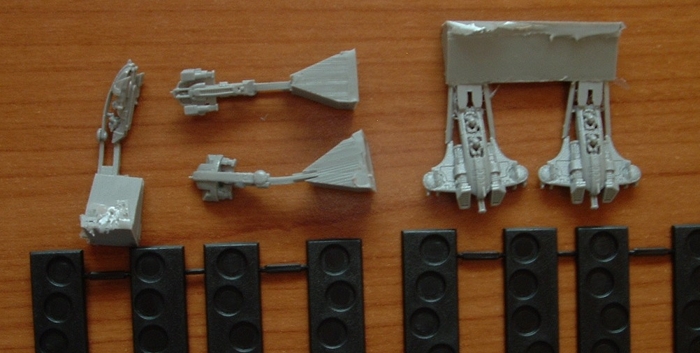
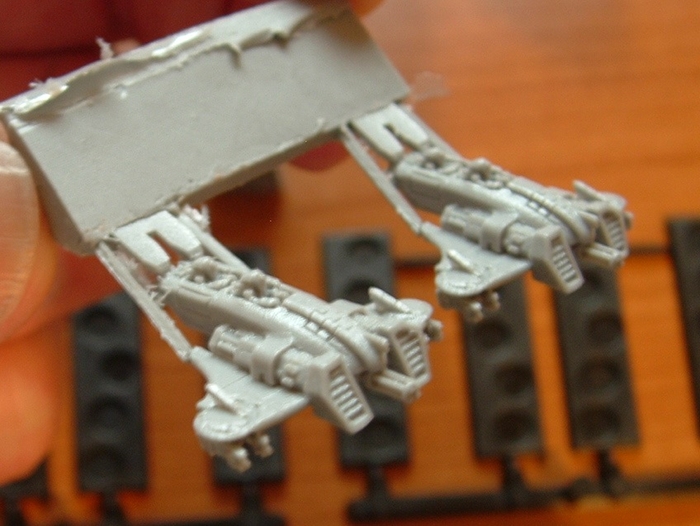
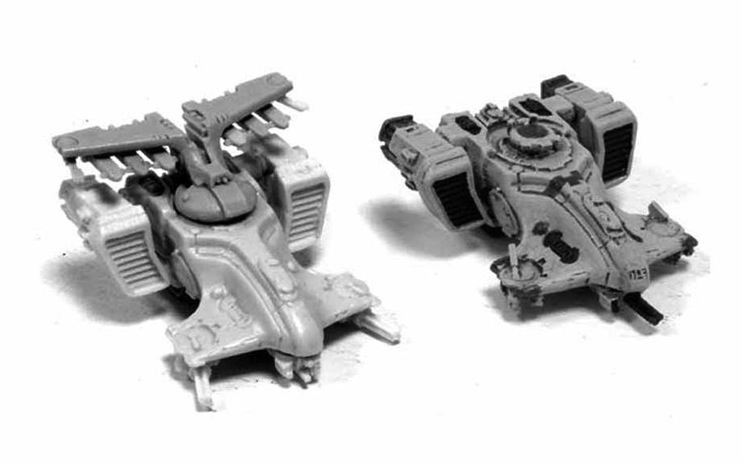
As you can see, you also get a couple of sprues of the current Epic bases, and a set of chunky casting blocks to remove. Casting, while I’m on it, is again very nicely done with minimal flash lines and other gubbins to be removed (once the casting blocks are taken off). I’ve balanced the Tetras different ways up so you can see some of the detail. What’s particularly nice is that you can see through the Tetra from the side, as in the picture at the top.

It’s a really fine piece of casting, and a great thing to do. It’s just the sort of thing that companies often compromise on and fill in to make the casting easier, and I’m very happy they haven’t taken that route here as it helps to emphasize the delicacy of this light craft.

One of the things I like about the Tau is the clean lines of their vehicle designs, and this has been captured perfectly in these tiny models.

These sleek little craft are only about 18mm long.

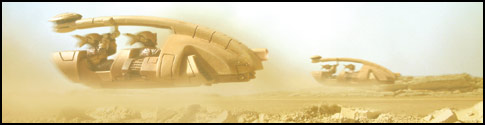
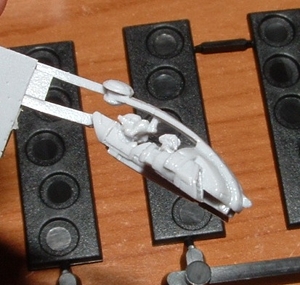
The Piranha is the bigger brother of the Tetra, and again the casting captures the lines very well. The exposed crew are visible in both vehicles as you can hopefully see here.

About the only thing that’s wrong with these is that I don’t think they match the unit sizes for Epic, so I may end up with odds and ends of models. Still, that’s hardly a big issue.

Overall I think these are great models. I just wish Forge World still made the rest of the Tau army.

Posted in Review | Leave a comment

Review: Epic Tau Skyray – First Look

One of the armies I always wanted to do, but never got round to, was the Tau. I made a start at one stage, assembling Fire Warriors with their zillion tiny pieces. Anyway, to cut a long story short I gave up on 40K as a game and so I never got them finished.

Epic, on the other hand, is a game I do enjoy, and recently a friend of mine started muttering about playing that again. Second edition, to be exact. We had a game and it brought back all the memories of how much fun it had been and what a good game it was. So, while I’ll probably be using Imperial forces to start with (as I still have lots), I thought it might be an opportunity to collect the Tau army I never had. Forge World had made a whole army…

Then I discovered that FW had stopped making them. Bother. Well Ebay seemed the obvious alternative, but the prices these go for is a bit silly. Scratch that too.

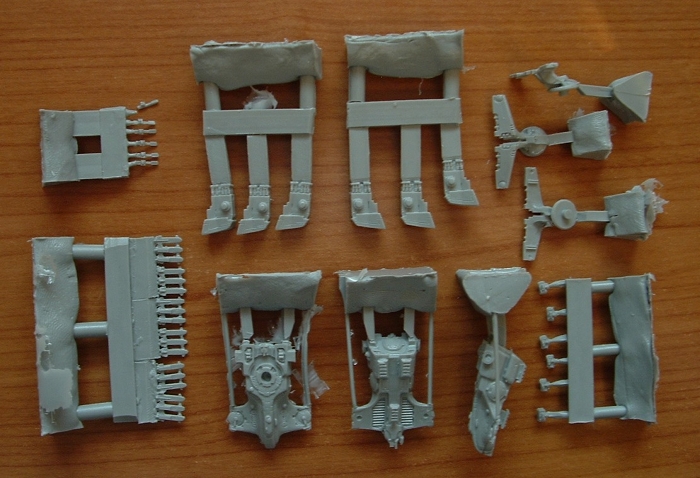
I went back to Forge World and had another look. Not quite all of the models had been discontinued: they still make the few bits you can use in their Aeronautica game. Thinking about it I realised that actually you didn’t really need that many different basic vehicle chassis, so I got a pack of Skyrays to see whether I could use them as the basis for the rest. Perhaps I could convert these into Hammerheads and Devilfish. Here’s what you get in a bag of Skyrays: lots of tiny bits on big casting blocks.

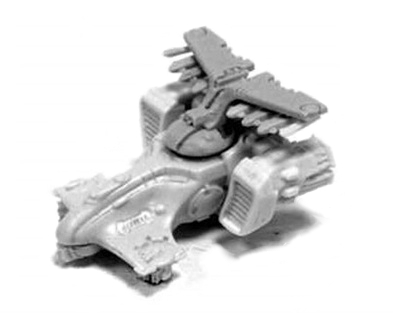
I’ve set these up so you can see the main bits from several angles. The photo below shows the model assembled in the official shot from FW. In a bag you get all the bits you need for 3 Skyrays, and if you want to convert them to Devilfish you’ll have various spares to decorate weapon platforms or terrain features. Of course, you’ll want some Skyrays anyway.

If you know your Tau vehicles, you can see that it shouldn’t be too hard to make a Devilfish (it just needs a different hatch). A Hammerhead will be more effort as it needs a completely different turret, but even that doesn’t look impossible.

The models themselves are very nicely done, with lots of panel detail and so on – definitely a better idea to be converting one of these than trying to make one yourself from scratch. The various guns, missiles and so on are separate pieces, which ensures that the detail is present and not reduced to blobs by compromising the casting. Hats off to the designers and to the overlords at FW for allowing them to be picky like this. It all makes for a much nicer end product.

The models are cast in a hard resin with minor mould lines on a few parts and some flash. Nothing that would cause problems and actually rather less than on many metal and plastic models. Of course, you also have to remove the casting blocks. There are also zero bubbles that I can see, which is excellent. Finecast take note.

The photo below is another from the FW site, and conveniently shows a Skyray and Devilfish side by side. The only differences are the weapon fits under the front three mounting points/drones and the turret/hatch. As I said, this doesn’t look too hard. Fiddly, yes, but not technically difficult.

Posted in Review | 27 Comments

Review: The Wooden World

The Wooden World by N A M Rodger is a book on the subject of the British navy of the 18th century, specifically during the Seven Years War. To be honest, it is not a subject I would have normally raced to acquire more knowledge on, but it was given as a gift, so I read it. It’s actually very, very good.

This is the era of the sailing ship and the press gang, of pirates and privateers, and sets the scene for the naval battles of the American and Napoleonic Wars. What Mr Rodger has done is trawl through many old official records to produce the basis of his account, supporting the hard evidence from musters, ship’s logs and admiralty papers with letters and other more personal documents. It makes for surprisingly lively reading, and what’s nice is that he can back up his assertions with facts. He explains concepts like mutiny and discipline in particularly clever ways, pointing out that the words meant different things in the 18th century, and understanding that navy in the light of our 21st century language and customs doesn’t work. He then gives you the necessary mental filters to make more sense out of it.

He doesn’t deal with ship handling (other than in passing), so you won’t be able to sail a ship from this, but you should come away with a good idea of the skills that are required to command one.

I felt I was left with a real understanding of the strange and somewhat alien world the seamen and officers of the navy lived in, and how the various peculiarities of it actually make sense within their own context. It’s a strange world, and an intriguing one.

He also deals with explanations for things like why the navy used press gangs and how they really worked, and why British ships won many more than their share of duels when all the ships’ “stats” would suggest they should lose.

All this is great for gamers. If you are at all interested in understanding the fighting navies of this era then this book has an abundance of intriguing discussion points and things to consider. In terms of gaming it offers a neat breakdown of what was important and what was not, which could easily be translated into rules for the tabletop or board. Having read this, I then went and watched Master & Commander again, and even though it is Hollywood, I found it even more entertaining when I had a better understanding of the life they were portraying.

If you like naval warfare, are thinking of gaming in this period or just want to understand how people lived in this turbulent age, then it’s well worth a read.


Posted in Review | 2 Comments

It’s Quiet, Too Quiet…

Well you may be forgiven for thinking that I’d fallen asleep at the wheel there, but I’m still here. Been very busy working on some projects that I sadly can’t tell you about yet, other than to say that it’s looking like quite a few things (at least 4) I’ve designed will come out next year. That, in itself, is pretty exciting (for me, at least), but there’s more.

I can tell you that DKH3 is coming along nicely and that future plans for the series are looking good too. This is far from the end for the naughty folk rampaging through the Dwarfs’ ancestral home.

I’m looking at the possibilities for support and expansions for Tribes of Legend so that things are in place when the slow boat from China finally arrives.

I can also tell you that the fantasy tabletop game I’ve done is currently slated for the first half of next year. So that’s cool too.

Finally, there are some really oddball possibilities currently kicking about that step outside the normal run of Fantasy/SF backgrounds as we know them. It’s quite exciting to be working on something nice and original 🙂

On top of this work stuff I’m wondering whether it’s worth putting up some of the early stages of a campaign environment I was working on to play Stargrunt II in.

But that’s all next year. In the more immediate future I’ve got a load of first look/open box type reviews to put up, with more in-depth ones to follow, plus the first of what will probably be several book reviews. I’ve decided that it’s worthwhile including a few books among the reviews in order to illustrate their possibilities as sources for game and scenario ideas as well as the more obvious painting, modelling and suchlike volumes. They are, in many ways, as much a gaming resource as the terrain.


Posted in Random Thoughts | 8 Comments

Avert Your Gaze

No, the title doesn’t refer to the Medusa, but I am talking about the forthcoming Tribes of Legend from Foundry.

Apparently Foundry has been trying to upload some pictures of the pages so you can all have a look inside, and several of them have been rejected by the Guardians of Morality at Amazon for having boobs showing. We are talking here about models of harpies and Amazons here (ironically), not hardcore pornography, but it’s a funny old world.

As a comparison, I tried putting “porn” into Amazon’s search engine to see what would happen, and you get far more explicit images from their web site than a bunch of toy soldiers, I can tell you. All very strange.

Anyway, just to let you know that you may have to get permission from a responsible adult to be allowed to gaze upon the naughty bits of the Amazon and harpy models (and some of the goddesses too, I suspect, like the floozie shown here). Oh, and in other news, the models themselves may be coming out sooner than I’d thought too 🙂

Posted in Tribes of Legend | 6 Comments

Dwarf King’s Hold 3 – Points System

One of the reasons I’ve been thinking about points systems of late is that I’m including one in the next addition to the Dwarf King’s Hold series of games. This third set (cunningly codenamed DKH3) is in development at the moment, and is due out early next year. Unlike the first two sets, this is not a standalone game, but builds on the earlier releases of Dead Rising and Green Menace. One of the core features will be more troop types for each of the existing 4 races, together with a mechanism for building your own choice of force for each scenario instead of just using the ones given (ie, a points system). You’ll also be able to play any of the existing scenarios with any of the 4 races, in any combination. At least, I think you will. There are a few wrinkles left to iron out, but that’s the idea. This will mean that you’ll be able to get loads more game play out of each of the existing scenarios as they can present very different challenges when you change both sides.

If you’ve read my comments on the future of DKH you’ll know that I was wanting to fit in some new races. Unfortunately that isn’t going to be possible. I’ve already bumped the rulebook up by more than 50% in size and it’s still creaking a bit at the seams. There’s just too much stuff I want to include. The Abyssal Dwarfs and the rest of the extra races will have to wait for another day.

However, the good news is that DKH3 will include about 20 new types of model to play, a points system to design your own forces, rules for 3 and 4 player games, rules for putting any army into any existing scenario, some completely new scenarios, new tiles, models and so on. Overall my idea is not to make it a different game, but to take what’s already there and give you the opportunity to explore it further.

Posted in Dwarf King's Hold | 25 Comments

Design Theory: An Alternative To Points

As with my previous article on points systems, I’m talking here about the mechanisms used to produce balanced and “fair” tabletop miniature games. Those used in board games are slightly different.

The more I thought about possible alternatives, the more obvious it became that logically there were none. If you stick with the parameters I defined in the first article and ignore the storytelling and narrative approach (for now), then you must use some variant of a points mechanism.

If you want the sides to be equal, fair or balanced (pick your dubious and debatable term) then you need some form of measuring stick to quantify the varying abilities of the myriad troop types available. Regardless of whether you define them as individual models or units, and whether or not you accurately account for the synergies and multiples I spoke of in part 1, you still have to allocate each feature a value, ie you have to use a points system.

Most often, a game will use this in its “raw” state. Model/unit A costs 5 points, model/unit B costs 10 points, etc. Both sides agree on a total for the game and choose models for their army until they meet it. This supposedly makes things “fair”. This system is familiar to most gamers.

You can try to hide this approach by sticking another mechanism on top. A few options were mentioned in the comments for the previous article. For example, you could have a system of card draws. Each side has a deck and a scenario calls for a certain number of cards for each side. You may be allowed to swap or refuse a number of cards. However, despite the fact that each card may be different and drawn at random, what you have changed here is not the points system that must underlie the things that are on the cards, but the means you use to choose an army. Varying army selection is another (related) topic and doesn’t change the fact that if you want to have games that are at all balanced the items on each card must (at least roughly) equate in game value. In other words, they must be based on a points system, however rough.

I once devised a hugely baroque and involved flowchart for army selection in a fantasy game about mercenary armies, but despite the fact that it looked very different on the surface, and felt different in use, it was still based on points underneath. This was just changing the army selection rules.

My thinking here is that we cannot escape the logic that in order to balance something we must quantify it, and quantifying it means a points system. It doesn’t matter what you measure things in, it’s all logically identical. This, in turn, suggests two further thoughts:

1) as they are inevitable let’s do them properly. “If a job’s worth doing, it’s worth doing well”. Trite, perhaps, but I do believe it. The first article covers a number of common failings.

2) even though the core concept remains the same, it can be dressed in a variety of interesting fashions to engage the gamer in different ways. The points system is only part of the army selection mechanics, and other parts can be varied to advantage. Perhaps that’s the subject for another post.

Of course, all of this is only relevant if you feel that gamers should be playing balanced and fair games. It is by far the most familiar format these days, and I still use it because of this familiarity. However, perhaps my favourite variation of presentation for points systems borrows heavily from a more freeform approach: bidding.

In this system, you have a conventional points system and army lists. These should be balanced and calculated accurately as normal. When it comes to playing a game, the players agree on a scenario to play from the selection offered, and this defines what they were bidding for. Let’s imagine the scenario is Rourke’s Drift in 1879, where thousands of Zulus besieged a tiny force of British redcoats. For the purposes of bidding, one side is fixed. Let’s say the Zulus get 3000 points of warriors. Both players then secretly bid to play the other side. What they are bidding is the minimum number of points they think they could win with. They player who bids lowest gets to play that side using however many he has bid. His opponent gets to prove him wrong.

The nice bit about the bidding system is that it reduces the importance of the points system and allows the players to define what is fair for them (thus accounting for their varying skills, etc, which they know, but which the designer cannot hope to factor in). It’s also a fun way of setting up a game and introduces an entertaining extra element of bidding, bluff and bragging rights.

As you can probably tell, my personal preference is for the more storytelling and narrative approach, and we’ll come to that next.

Posted in Game Design Theory | 41 Comments

Design Theory: Why Points Systems Will Always Be Broken

There he goes again with the contentious statements. Well, not so much, as you’ll see. Here I am talking about design theory, and that differs a little from practice.

The points systems I’m talking about here are those used in tabletop miniature games to choose the armies/gangs/warbands and so on you fight with. Their intent is to produce a “fair” and even game between supposedly equal forces, and in this aim they are invariably doomed to failure, for reasons I will explain. However, despite this, they are still the best tool we currently have for picking reasonably even forces from variable lists. What is important is not that they will fail to be perfect, but that we know that they will do so and do not expect them to always be right.

So why do I say they will fail? The easiest way to explain is to go through the process of producing a points system.

Let’s say you’ve come up with a new tabletop game for fighting fantasy battles. There are many different types of warrior in your game, from lowly goblins to mighty dragons, and everything in-between. You could play narrative and scenario driven games in a rather 1970s sort of vibe, with no worry about the sides being balanced or fair. Putting to one side the debate on the relative merits of different gaming styles for the moment, let’s assume you take the more currently fashionable approach of aiming at a tournament style “balanced” game. Unless we think of something better, this means coming up with a points system.

In a points based system, each type of model or unit in the game is given a cost, and the armies are chosen to an agreed total. If the points are worked out right then everyone assumes that this makes the game fair. The cost of a unit is generally based entirely on its “stat line”: the list of game values it uses to move, fight, cast spells and so on during the game. These values are put into a “points calculator” which gives varying weight to each stat and comes up with an overall value. It’s always possible to do this bit wrong, and there are many debates online about individual units that are seen as being too good or bad for their points cost. Let’s assume this bit is done as well as it can be. There are still problems.

The reason why points systems will never be truly balanced is because this is where they stop. In reality there are a number of other factors that can have a great impact on the value of a unit in a game, and these are seldom, if ever, included in the unit’s points cost. I will give you a few examples.

1) Multiples. Points systems measure a given unit as if it is on its own. Often, points systems measure a single model, and the value of a unit is a simple multiple of the number of figures that comprise it. A more reliable approach is to devise a cost for the unit as a whole, regardless of its constituent parts. If it fights as a whole, then it should be costed as one. A unit of 20 models is unlikely to have exactly the same game value as 2 units of 10 each, even when the individual models are identical.

In addition, the third (fourth, etc) unit of a given troop type is often worth less than the first in terms of adding additional skill or options to an army as a whole. For example, if I add a unit of fast flying scouts then I can zip about the battlefield with them and grab objectives, attack vulnerable units, etc. If I have none of these, then adding one makes a big difference to my tactical options. If I already have 2 then I am starting to run out of places to use them all simultaneously (and so the third is worth less).

Sometimes the third of a given unit type is worth more. For example, if you have a very powerful shooting unit then it is good to have one. However, if your whole army is composed of them then they may be so powerful that they reach the point where they can destroy the enemy at will before they can test their vulnerabilities.

2) Synergy. Certain combinations of troops are more powerful than others. For example, powerful shooting units are generally weak in melee. If they are protected by another unit then that weakness can be ignored, and the discount they were given when their points were calculated is now unwarranted.

In many games a combined arms approach is more potent than a monoculture. Having cavalry for the flanks, artillery and archers to shoot the enemy as they approach and melee troops to fight them when they arrive will generally work better than having only one of these. In other games a monoculture may be more potent. Neither concept is included in the points system.

3) Opposing Forces. There are some armies that have an easier time dealing with certain enemies than others. Some match ups naturally favour one side. Points systems generally ignore the values of an army as a whole, focussing instead on individual units and assuming that the whole is always exactly equal to the sum of these parts. It seldom is.

Of course, one can argue that some or all of these factors are actually to do with player skill rather than points systems. Is it not down to the player to pick and choose the army he will take to confront a particular foe, and to tailor his forces accordingly? Possibly. However, that would be the case whether the points system accounted for it or not. If the points system should not include this then I think it is fair to ask why have a points system at all? Why not just say to players that they should pick a given number of units, whatever they are, and allow them to decide what is good and what is lacklustre? Presumably we have points systems to level this playing field, and if we do then we cannot logically abandon it half way through and say it should be player skill that decides just because it gets fiddly to actually work it out.

Many of the shortcomings mentioned above are to do with points systems focussing on the value of a single unit rather than an army (assuming that the army = the sum of the units). Theoretically one could attempt to calculate the modifiers to this value for multiples, synergies and opponents and factor them all in. This would be a vast amount of work, though it could be done. I doubt, however, that it is worth the time.

In reality, the above failings in the system do not majorly impact on the bulk of games played. If a designer discovers a problem that he feels worth addressing, then he will tend to cover these factors by fudging the costs for individual units, abandoning the mathematical system that is typically used to start with. This is a very slippery slope, and leads to compound errors as the game system expands and develops.

Some of the factors involved in a game are not costable because they are related to the terrain on an individual model battlefield, and a designer can never know that in advance (assuming traditionally modelled terrain). For example, let’s imagine we have two units that have been assessed as being of equal value by our points calculator. One unit is a shooting units that is deadly at range, but rubbish up close. The other unit is devastating in melee, but has no ranged attack. If we place our two units on a flat and featureless tabletop a single move apart and give the first turn to the melee unit, then the shooting unit will probably be slaughtered in the fight before they can loose off an effective shot. Obviously the exact game rules will modify this, but that is the normal overall effect. In this situation, the shooting unit is clearly not really worth as many points as the melee one. On the other hand, if we place an impassable river between the two units then it is the shooting unit that has the advantage and is worth more. This is a detail example, but the same principle can be applied to whole battlefields. Terrain placement has an impact on the relative value of units (as does going first or second in most games) and so logically should also impact points values. It never does, and it is hard to see how it could.  

 So what am I saying here?

Points systems are inherently flawed. However, if we are wanting to play a reasonably balanced game then, flawed or not, they are the best mechanical system we currently have and do a fair job, most of the time. What is important is to remember that they do not account for everything and that the more seriously you take the requirement for balance, the poorer job they do.

On a personal note, I still use points systems in my game designs. My calculators are absolute and I never fudge values. If I feel a result is wrong then I assume that I need to change the calculator to include some other factor I have missed (and revalue other troops accordingly). Fudges breed inaccuracy, and are best avoided. I have been able to mitigate some of the above issues, but they are all still present. However, as my current designs challenge a number of accepted norms I felt it was important to leave a few touchstones for folk to feel comfortable with. Points values are one of those.

Until someone comes up with a better alternative we are stuck with points systems. What I’m going to talk about tomorrow is a slightly different approach.

Posted in Game Design Theory | 62 Comments

Amazons on Amazon

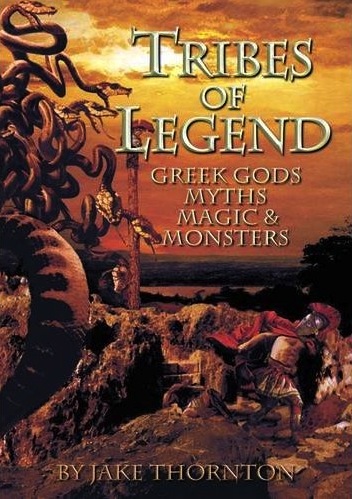
One thing I’ve mentioned a few times, is how long it can take between me finishing a project and it seeing the light of day. So, it’s good to be able to finally talk a little about Tribes of Legend, which has just been put up for pre-order on Amazon.

ToL is a collection of 3 different games together with painting guides, scenery building, and all the extra gaming goodness you might expect. The setting is the world of the Ancient Greeks, but as they viewed it rather than as you will see in academic texts. This means that armies include drunken centaurs and lithe Amazons as well as the bronze-clad warriors of the city states.

Of the three games, one is a mass battle game, one a skirmish between groups of a few warriors, and the last is a solo game in the ethos of the old Fighting Fantasy game books (though it is entirely different rules).

Foundry have done a complete new range of models to go with this, and one of the reasons this has taken a while is that it is illustrated with nicely-painted examples of the range throughout. This means that it’s a very pretty book, helped along by rather splendid art alike you see on the cover.

The release date is still a bit up in the air (I’m told that Amazon made up the one online). This is because it is on the slow boat from China (literally) as I type. Once it’s arrived and cleared customs then they’ll decide. Soon though.

Posted in Uncategorized | 33 Comments