
 This review is split into two parts for a couple of reasons. The first is that it will not be short, and the second is that it seems at present to be a different game depending on your style or level of play.
This first part is about how the game works for casual players who get together with a mate and play with whatever they’ve got. They play for fun and next time they meet they’ll probably use the same or very similar army because that’s what they have. The second part builds on this foundation and is a more in-depth look at specific details that affect more serious players who pore over army lists in detail and will tweak their armies to maximise their effectiveness. This includes tournament players, but is not restricted to them. For example, this is how I generally play.
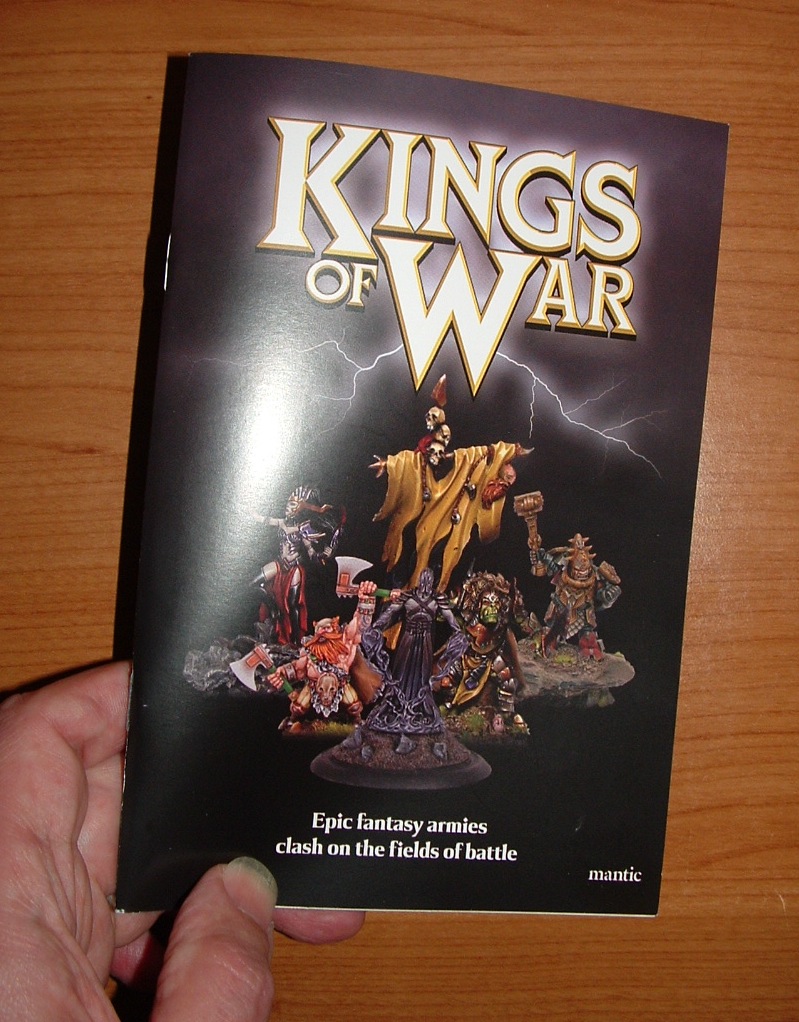 The copy I have was given to me by Mantic. It will soon be available for free as a B&W pdf from their website as well as to buy if you fancy a copy in glorious colour.
It’s also perhaps worth me saying that I actually asked Ronnie if I could write the tabletop fantasy game for him, only to be told that Alessio was already writing this. Dwarf King’s Hold came out of that process, and the game I had in mind for Mantic was taken up by someone else and will be out next year. As I have mentioned elsewhere, nothing I design gets wasted. It’s all in a notebook somewhere and its time will come. As both Alessio and I were both writing the games at the same time, unbeknownst to each other, I personally find it intriguing to see which rule conundrums and choices we tackled the same way and where we parted course. I really look forward to reading someone’s comparison review when they’re both available. But back to Kings of War…
The Ethos
Kings of War is an unusual game in that it is not released in a finished form, but as a work in progress that has a predefined timeline. You are very much encouraged to play and comment, and your feedback will be listened to and incorporated where appropriate. You have a real opportunity to take part in the game’s development, which is cool. It is a 3-year plan, but why take my word for it. Here’s Ronnie to tell you all about it:
As this is a review of the 2nd edition I understand that the rules are not yet completely locked down or finished. However, even taking that into account, you need to be able to play something with them and they have had a year to mature already. So, with that at the back of our minds, how do the rules work?
The Rules
I won’t go through all the rules in detail as you can download a set for yourselves (I’ll link this to the 2010 edition for the moment, and try and remember to change it when the new one comes out in a fortnight). Let’s look at the basics though.
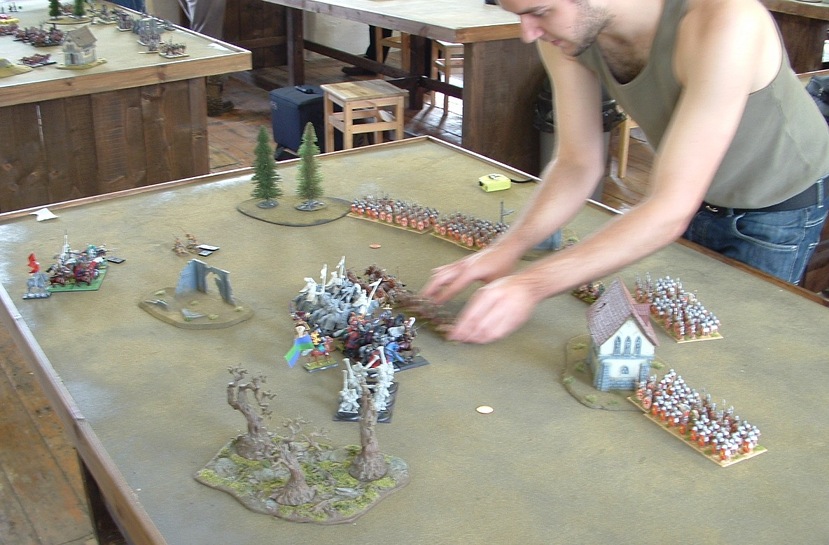
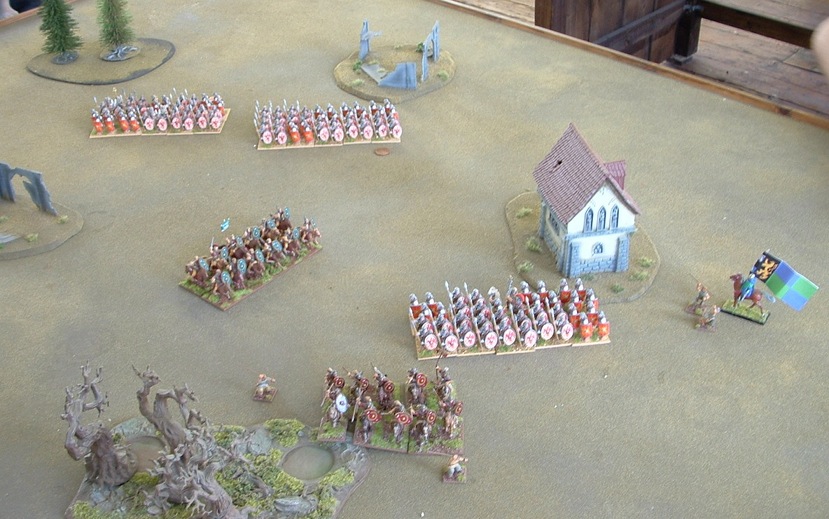
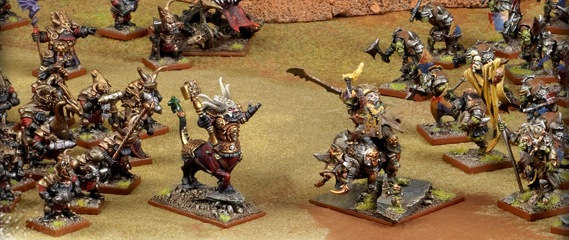 Kings of War is a tabletop fantasy battle game. This means that each player fields a force comprising units of infantry, cavalry and characters from a variety of possible races: Elf, Dwarf, Human, Twilight Kin (Dark Elf), Abyssal Dwarf (sort of Chaos Dwarf), Orcs, Goblins and Undead. In KOW a unit does not take casualties: it is either all present on the table or it is removed completely. It will, however, take damage which will need to be represented with tokens of some sort. This retention of whole units reminds me of the DBA family of games, and allows you to model the whole unit on a single giant base should you choose to.
The game is played in turns with a player moving, shooting and fighting with all of his army in his turn. The player turns are entirely separate and I wasn’t the only one who kept reaching for dice when my opponent attacked (so I could roll my saves – many years of conditioning by Warhammer). In KOW the attacker rolls everything. Alessio has said that this is to avoid unscrupulous players wasting time in tournaments where they could deliberately drag their feet when it came to rolling stuff. It does mitigate that particular flavour of naughtiness, though I don’t believe for a second that it will stop cheats cheating. They’ll just move their nasty behaviour elsewhere.
A player turn has three steps: movement, shooting, melee.
Movement rules are pretty straightforward. You can move double, move single and turn or turn in place. Whether you move or not also impacts on shooting effectiveness. This is all pretty standard stuff and is clean and simple, though the fact that distances are sometimes measured from the nearest bit of the unit and sometimes from the champion of a unit could trip up the unwary. Terrain is the familiar half move for difficult, etc.
One particularly important rules here is that you may pre-measure. I’ll deal more with this in the second part, but for now be aware that you cannot, for example, have a failed charge as you can in Warhammer, or declare a shot that cannot reach. You can always check in advance.
Once you’ve moved all the units you want to then it’s time to shoot. Magic in Kings of War is perfunctory and pretty characterless. All magicians share the same spells (with the exception of Undead who get an extra one): Zap and Heal. No prizes for guessing what they do. Each is simply a case of rolling a given number of dice, and each one that is 4+ either causes or heals a point of damage. These two “spells” count as missile attacks, and so you can only use one a turn. Normal shooting has a couple of potential modifiers that you can easily memorise. Otherwise shooting is merely a case of rolling the number of dice your stat line tells you and trying to get the number given or better. For example, an Elf Bowmen regiment has 10 dice and needs 4+ to hit. Very easy. If you hit a unit then you roll a dice per hit to see if you damage them. If you damage a target then you roll a Nerve test for them to see how happy they are. I’ll cover this last bit in a moment.
After shooting, any of your units that has moved into contact gets to fight. Again, this is simply a case of rolling the number of dice you have on your stat line against the value listed. A lone Dwarf Warsmith would roll 2 dice, needing 4+ to hit. A horde of 20 human knights would roll 32 dice, needing 3+. Any dice that hit are rolled again to see if you can best the defence of the target, just as with shooting. After fighting you will roll a Nerve test for each unit you have damaged.
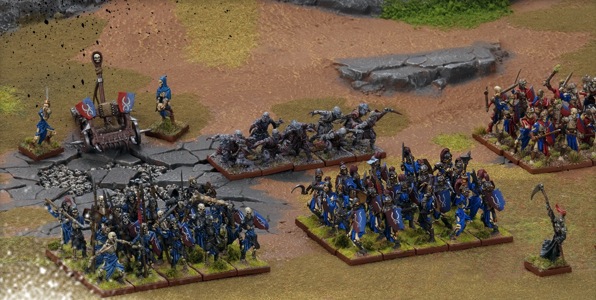 Nerve tests have been streamlined since 1st edition. Now they are listed as two numbers on the stat line. When you damage a unit you roll 2D6 and add the amount of cumulative damage on the unit. If you equal or beat the higher value then the unit routs and is removed from play. If you equal or beat the lower value then it wavers for a turn (unless it’s Undead), basically standing about doing very little except waiting to get hit again. Someone else will have to come and save it.
On top of this you have a handful of special rules that tweak the core rules to do the sorts of things you might expect. Really hitty units get to add to the rolls to damage things they hit, nippy units get extra movement, stuff with wings can Fly, and so on.
One word of caution about those of you that are driven by background colour rather than game play: there isn’t any. Well, that’s not strictly true, but it is limited to the odd sentence here and there rather than pages of colour text that you’ll see in Warmachine, Warhammer, etc. I think that’s slated to come in with the 3rd edition (though the Mantic website and Journal already has additional background text so you can get a sense of what’s on the way).
 On the Table
The first time I played Kings of War I was not at all taken by the complete lack of interaction in the player turns. I am still not a big fan of this feature, though the game plays so fast that it is less of an issue than I had expected.
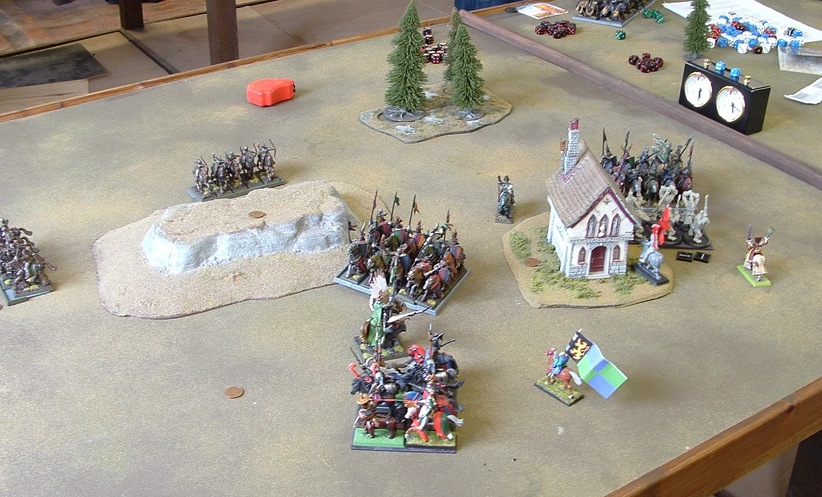
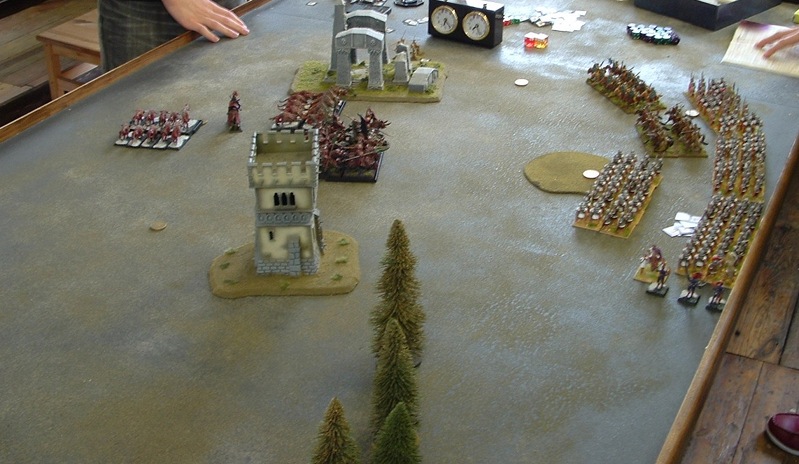
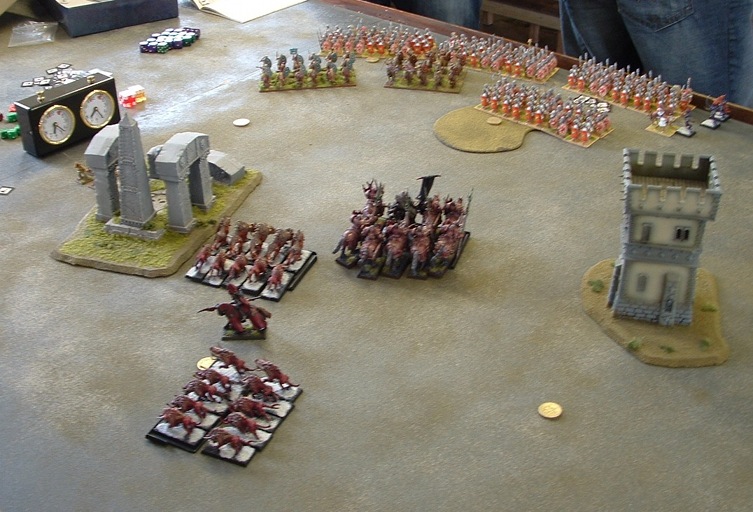
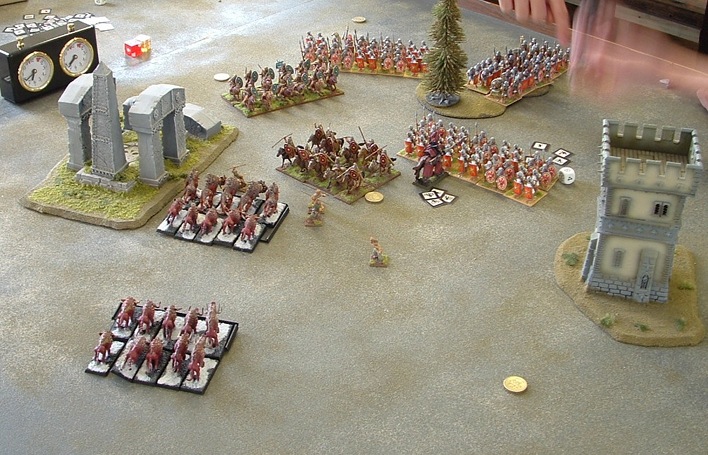
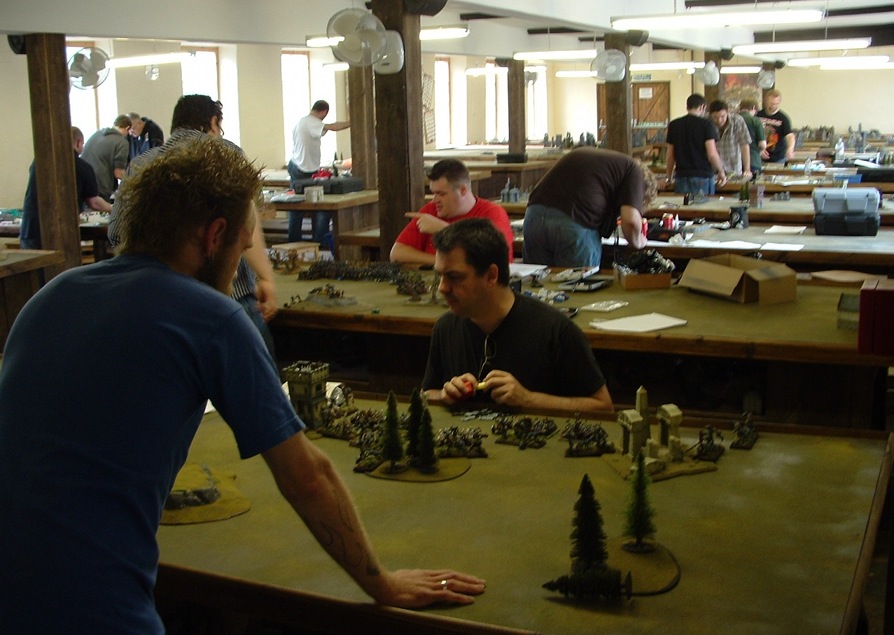
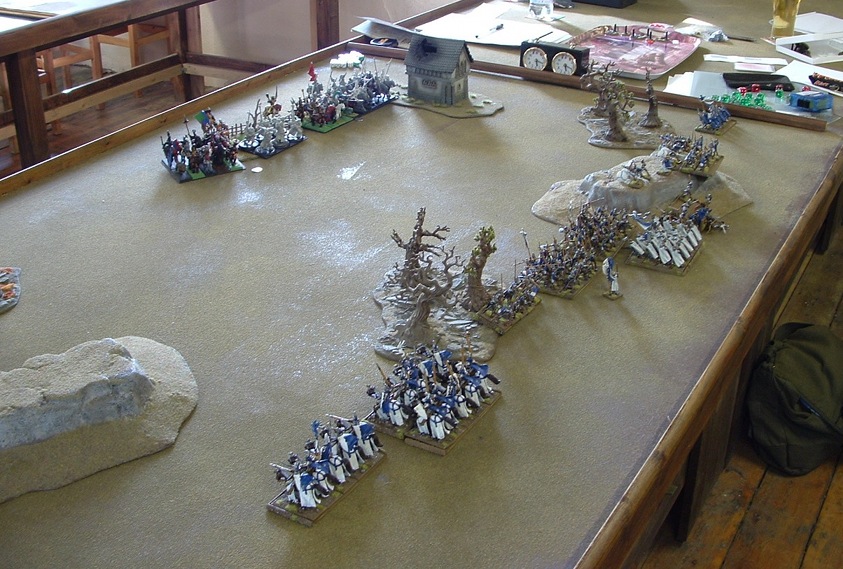
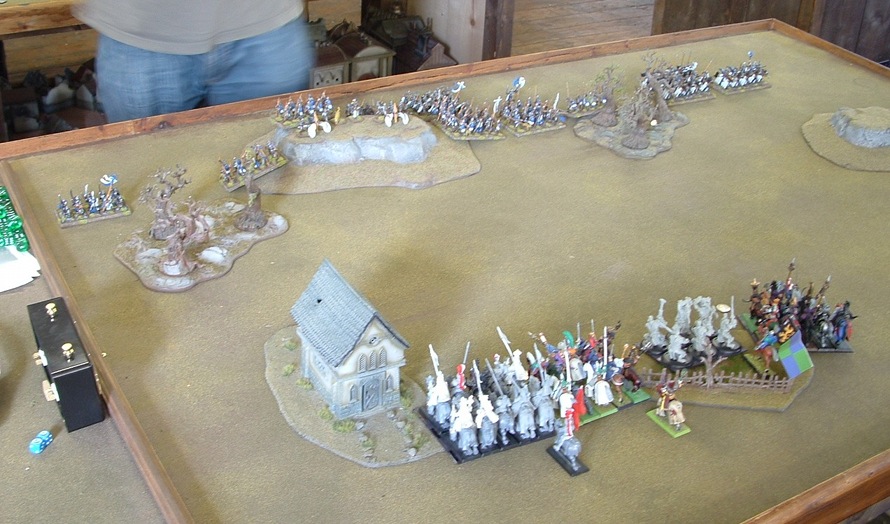
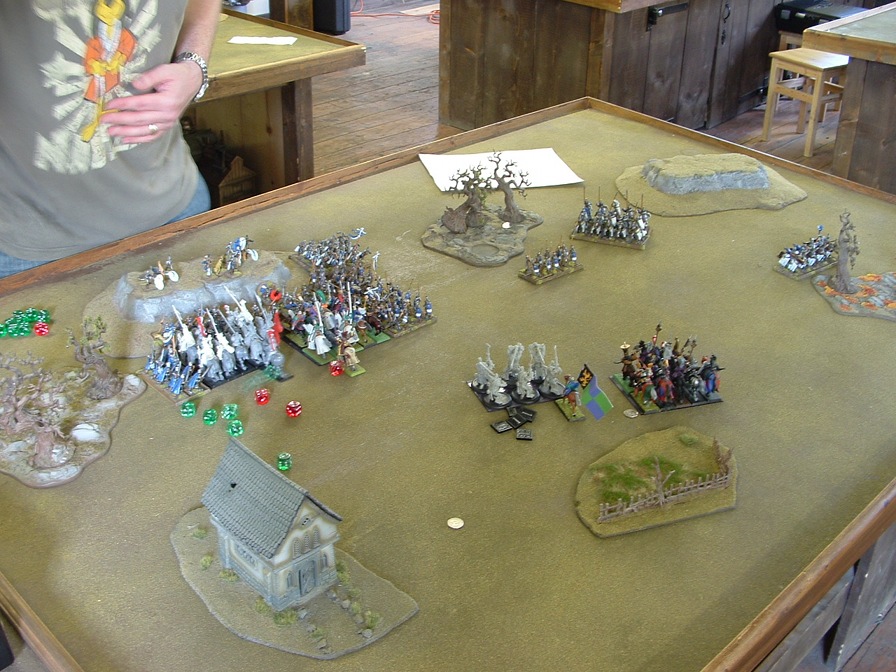
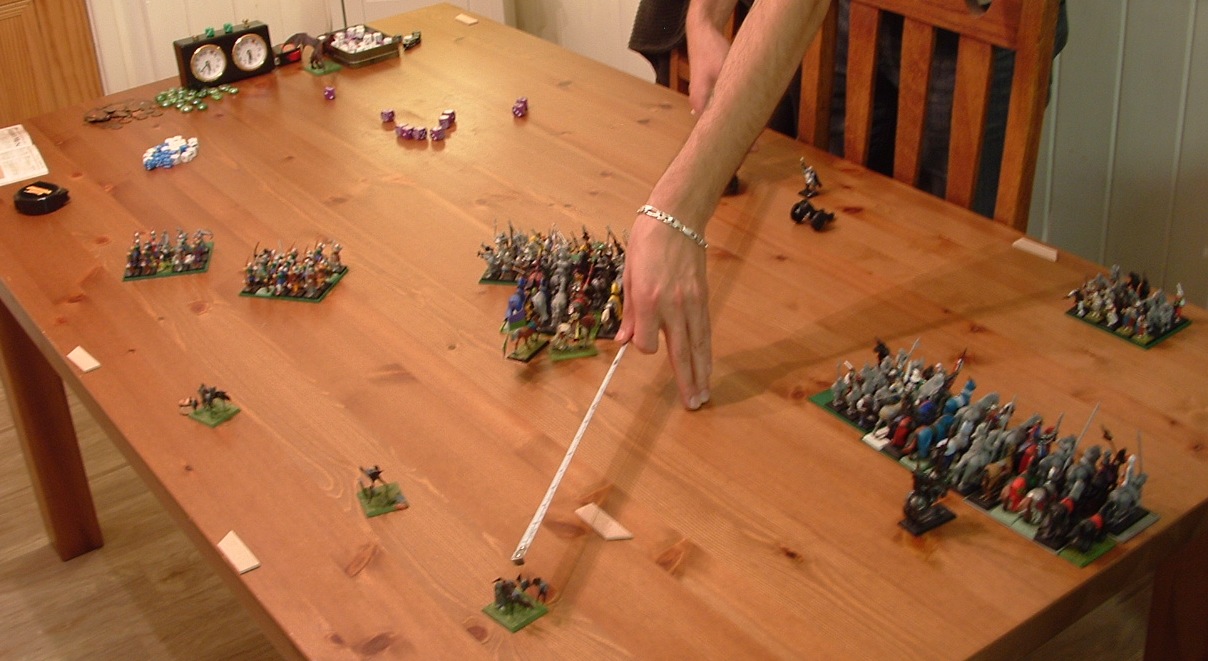
I doubt many casual players will bother with the chess clocks and timed turns (ostensibly the whole reason for the lack of player interaction), which is a pity as this is an interesting aspect and worth trying at least once. However, to give you an idea of how quickly KOW plays, we were experimenting with various timed games at the tournament and 30 minutes per player is reasonably tight for a 1,500 point game, but entirely possible. 45 minutes each is ample. This means that in a typical evening’s play I could easily fit in two whole games without being rushed.
The rules are simple, clearly written and easy to pick up. There are no mechanical surprises to speak of, so anyone with a bit of gaming experience should know what they’re doing by the end of their first game.
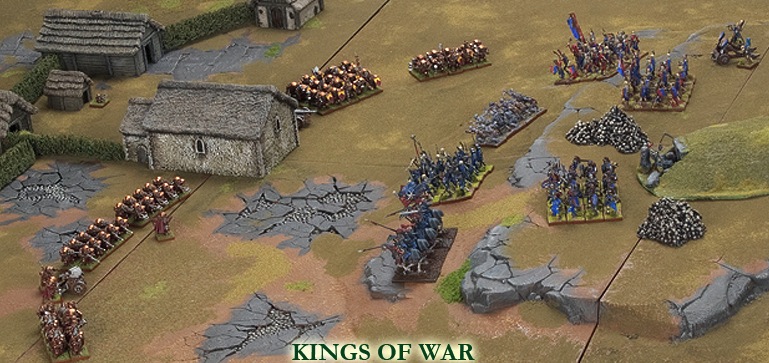
Anyone who has played a tabletop game will be familiar with the interplay of units, and the way infantry, cavalry and war engines interact is quite similar to games like Warhammer. Each arm does what you’d expect, which is good.
Conclusion – Casual Play
For casual play Kings of War should be very popular. It’s simple to pick up, fast to play and doesn’t require you to wade through a phone directory every 5 minutes to look things up.
If you already have a Warhammer army then I urge you to give it a go for yourself. If you’ve got a Mantic army, even better. It’s free, so what have you got to lose? Regardless of any gripes I may have, Kings of War is definitely worth a try.









 Quirkworthy