
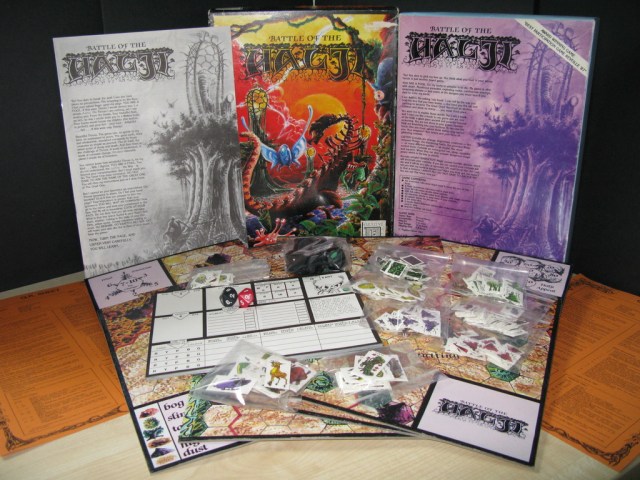
 As I mentioned earlier this week, Chris and I are running a competition to design a new rule set for Battle of the Halji’s 30th anniversary edition. Just so it’s all in one place, I’ve repeated the rules and reference files below.
So, if you’re interested in trying your hand at creating a new kind of mayhem with the Belge, the Naffle and all the rest of the menagerie, please be our guest 🙂
Competition Rules
- You must design a new game using only the components from the original box. No new components are allowed, though non-obvious use of what’s included in the box is entirely reasonable and somewhat encouraged. The more of the original components you use, the better.
- The new game must be set in the original theme. This does not mean it has to be exactly the same story, but must clearly be part of the same world.
- You can design any type of game you want as long as it sticks to (1) and (2).
- The rules must be written clearly, in English, and in a sensible font so our ancient eyes can read them. If we can’t read it, it’s unlikely to win. Remember, we’re not judging your layout skills, or your fancy graphics, just your game design.
- Your submission must be sent to us as an A4 pdf. If you win we will ask for it in Word so we can edit and lay it out.
- It costs £9 to enter (30p x 30). Payment details (Paypal) will be sent to entrants on application. You can get the details by emailing Jake.
- There is a maximum limit of 30 entries. First come, first served.
- If you don’t have a copy of Halji already, don’t worry. There are some links to a PDF version below, and a video of all the game contents so you can see what you have to work with.
- Entries must arrive by 9am Tuesday the 13th of September 2016 (UK time). Don’t ask.
- Copyright in the original game rules, game world, and distinctive terms and images remains with us. Copyright of your new design remain with you. By entering this competition you agree to allow us use your new rules in print and digital editions of the 30th Anniversary Limited Edition Rules for no charge.
- If you are the winner, in addition to getting your name (and game) in print, you’ll also get a one-day mentoring/consulting session with Jake, either in person or over Skype (depending on where you are). This would be ideal to discuss any game ideas you might have, and get the benefit of advice from someone with three decades’ experience in the games industry.
- Finally, we reserve the right to not declare a winner if there is no entry of sufficient quality. Conversely, if there is more than one stand-out submission we may decide to have more than one winner. The judges’ decision is final in this and all other competition matters.
If you’ve got any questions about this then drop us a comment below.
Thanks.
Reference files
There’s also a video of Chris unboxing the game to go through the components. Unfortunately, I can’t seem to link it here, so you’ll have to check it out on his site.
 The dirty white outer case popped off easily enough. Can’t see a use for that. The inner box has perforated sides that look like they should have some use, so I wanted to get into that. Fiddly stuff, but it came apart in the end.
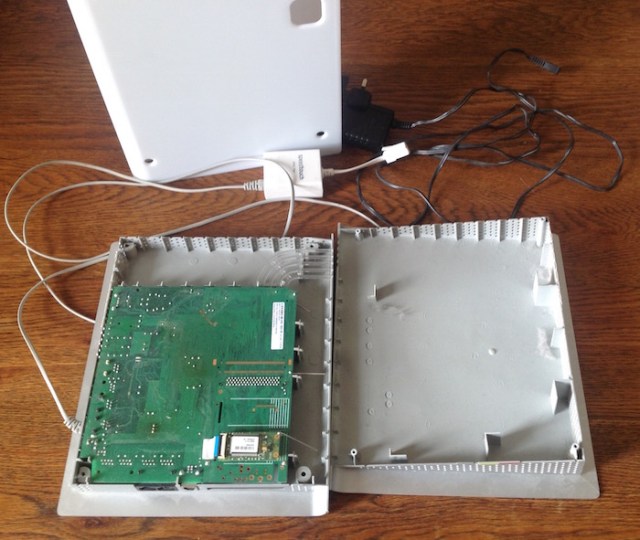 The PCB is mostly rubbish. I’ve seen them used on scenery before, and they look terrible. Just like giant PCBs, which is silly. The trick is to find something that’s got an interesting shape you wouldn’t be able to easily make, but which you can disguise in terms of scale and provenance.
 I’m liking the look of this clear plastic curvy pseudo piping. Not sure what it’s actually doing in here, though I can see it as piping on a tabletop.
 The other bits I like are the insides of the ports. These look like they might do as air-con units, or something like that once they’ve been taken off the board.
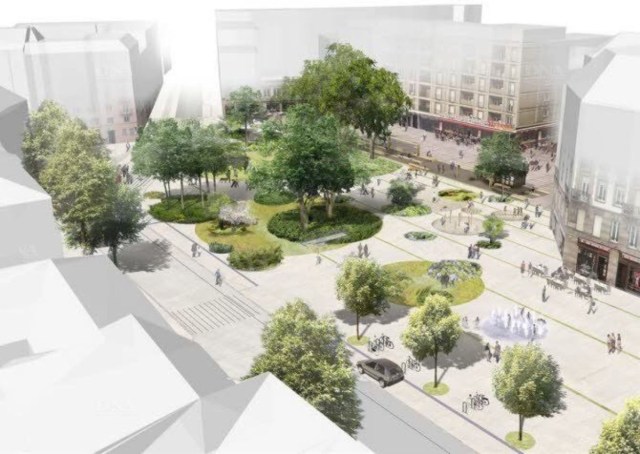
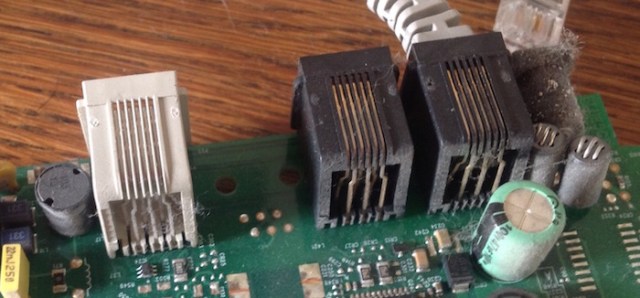 Then there’s the sides of the inner case, with their perforations. It’s nice and robust, so could be a wall of some sort. Might suit some part of my modernist Plaza.
 I’ve not quite finished hacking off the goodies and dumping the rubbish – I ran out of time before I had to write this. You can see where I’m going though. And this is fun too. You never know what you’re going to find when you crack something open!
 I’ve mentioned the idea of a Battle of the Halji competition a few times as something to mark its 30th anniversary, next year. Well Chris and I (mostly Chris, actually) have finally finished getting all the files and competition rules sorted out, so the competition is live as of now.
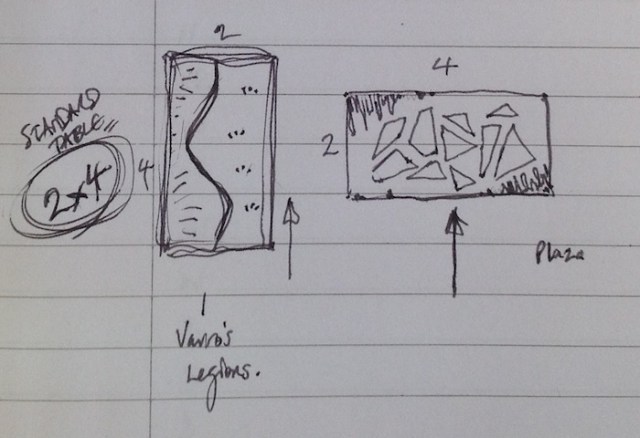 On the left is an idea based on what happened to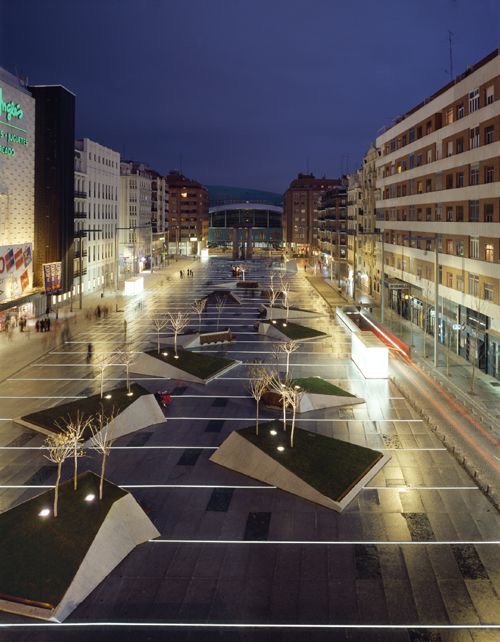




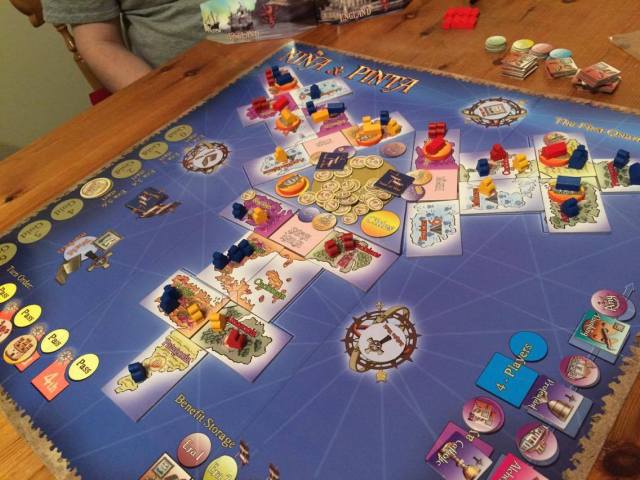 On first play, it felt like there were three broad stages to the game. The first when you’re exploring the maps, when you’re more interested in grabbing stuff than fighting; the second when you’re filling up the land and starting to squeeze each other for resources; and the end game when there was quite a bit of carnage.
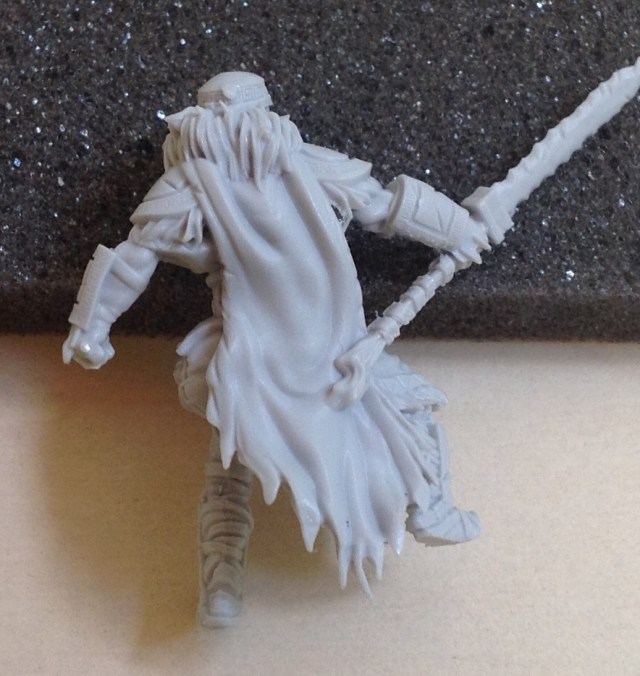
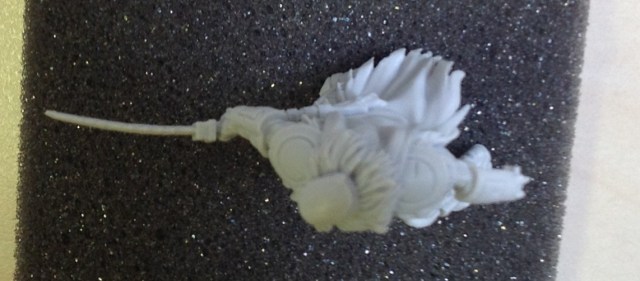 Bent sword.
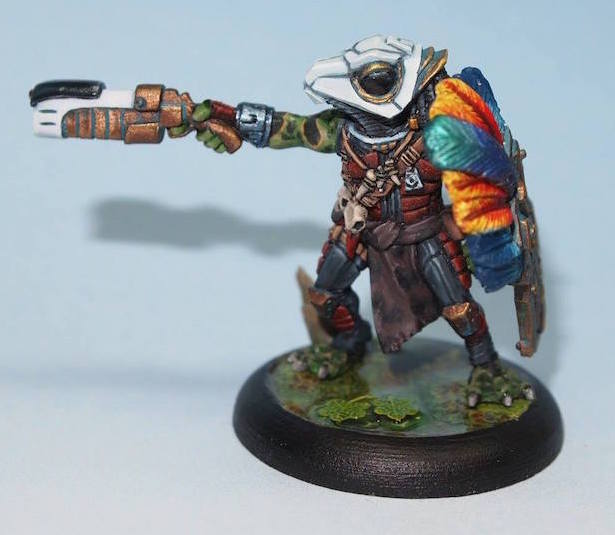
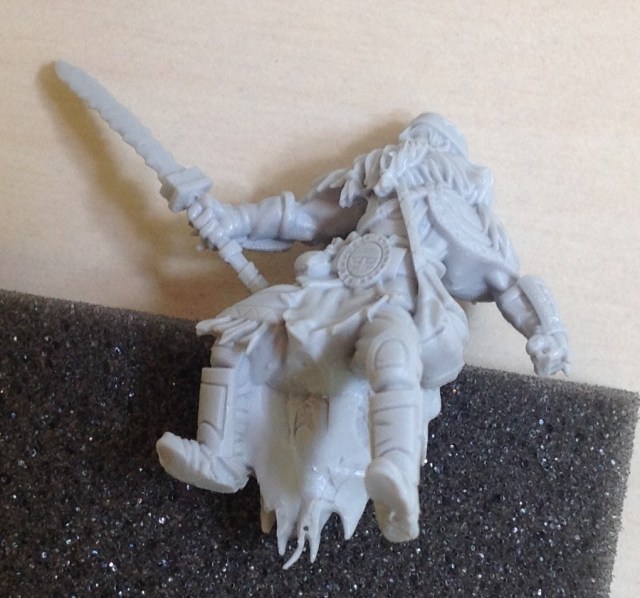 Backfills behind the loincloth and under the arm. Entirely normal for metal models, and presumably a thing of the past if you sculpt specifically for UniCast.
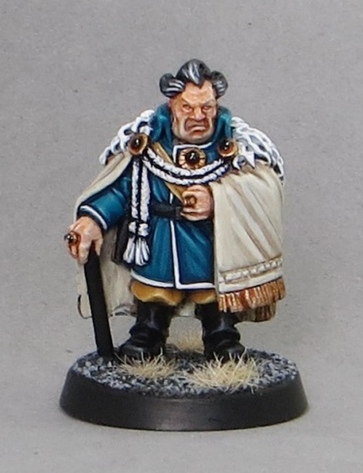 It was
 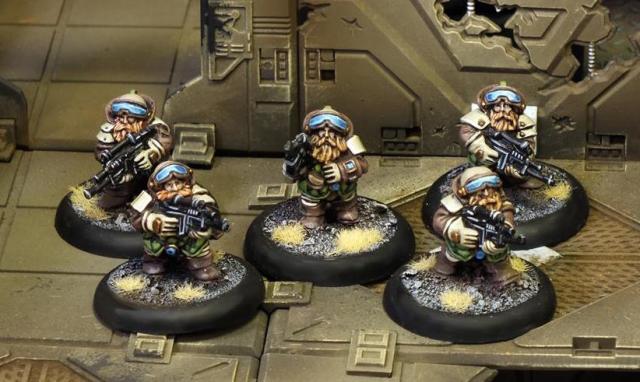 My aim is to avoid figures that remind me of other games I know well (because that’s distracting), so I probably won’t be using Necromunda figures, for example. That’s just me though, and the rules will allow you to include whatever you like.


 Quirkworthy
“I’ve heard it said that “looks pretty” is what sells games, and “plays well” is what creates retention and builds a community. I don’t know whether this is the case globally but it matches my experience.
As such, a pretty table with pretty models will draw people in and give them a flavourful first game, which is always worth doing because nobody ever plays a second game unles they enjoyed the first. However, as Thomas Cato says, one needs to examine the abstract game which lurks behind the prettiness. If you play any game for long enough you start to see the maths which lies behind it, and if this maths isn’t fun then the game isn’t fun – as you have memorably pointed out with Warhammer and mental geometry.
In this case, with small model counts and large open spaces, my intuition is that this abstract gameplay will be mostly about first-move advantage and firepower, rather than about morale or maneuver. This isn’t inherently a bad thing, but needs to be deliberate on your part rather than an emergent property of the assumptions you made.
I’m interested in seeing what your thoughts are about system…”
There are a number of things I’d like to pick up on here.
Firstly, the idea that pretty sells, and gameplay retains. I think that’s largely true, and like I said above, true whether you’re talking about computer games or board games. Tabletop games could be thought of as a slightly different kettle of fish because the gamer determines a fair slice of whether they are pretty or not themselves with their painting and modelling skills. Still, cack models and duff art won’t impress anyone, so I’d argue that it broadly holds up here too.
One conversation I often have with clients is about how “sticky” a game is, or could be made to be, and what makes it more or less so. By sticky they mean retains gamers, and keeps pulling them back for more. That’s probably a whole post on its own, though good game play, and replayability without becoming repetitive is probably a good starting point.
Having played games for a very long time, and spent so much time taking them apart for work, I find it hard not to see the underlying structure. And, in many ways, that’s where I find the attraction of many games. Some designers create such elegant and beautiful structures that I can’t help but admire them, even if I don’t actually like the game itself (for example, if the theme fails to appeal). That said, games should be about making interesting (and difficult or challenging) choices, and if a game fails to offer these then it doesn’t matter how clever the mechanics are.
So I agree with EJ that these two broad threads run through each design (pretty and game play). However, I don’t think he’s right in implying that we have to pick one or the other. I think we can have both. I certainly hope we can because that’s what I always aim for in my own work and would hate to be so fundamentally misguided 🙂
Of course, there are plenty of examples of pretty games you’d not want to play twice, or unattractive games which you play till they fall apart. Fewer games make it to be both really nice to look at and great to play again and again. That’s a shame, but being hard to do is no reason to give up trying to make them both.
As far as Old Skool Skirmish is concerned, I’m trying to make an engaging game because I’m writing it for me to play. Of course I want to play it repeatedly (and I have to in order to playtest it), and I’m not going to do that if I find it dull. I’m a fairly harsh critic too, and quick to see problems in a system, so I have set a fairly high bar for OSS to reach. But I would say that 🙂
As far as appearance goes, my comments about making it look really good are based on decades of looking at thousands of gaming tables, and 90% of the time being underwhelmed by what I saw. Again, I want to aim high for this new set of models and terrain I paint and build. I’ve not done any real painting or modelling for years, and so I’m coming at it all fresh. Sort of. I want to go for the ideal, and for me that is making something that looks like a great diorama – a diorama on which you can move the figures and play. I know this is an even higher bar, and I may not reach it. However, by trying for that ideal I may get somewhere close, and I can build on that.
EJ’s comment about “first move and firepower” is also interesting. I see where he’s coming from, and a low model count game could indeed end up not working, or having a single initiative roll which was overwhelmingly important. OSS doesn’t do things quite like that. It’s sequencing is done by a chit draw, and while there will obviously be someone that goes first, there is enough mud in the water for things to be quite tense as the turn unfolds. It’s a bit of a retro approach, and that’s deliberate. Perhaps it’s not as slick as some later mechanics I could think of, and again, that’s intentional. It does, however, allow for some gameplay which I haven’t worked out another way to replicate, and I really like that. I was going to explain a bit more, but this post’s already a bit long, so I’ll spare you the details for now. Suffice to say that yes, it’s a potential worry, but I think I’ve worked a way round it in OSS so the game can both look pretty and play nicely every time 🙂